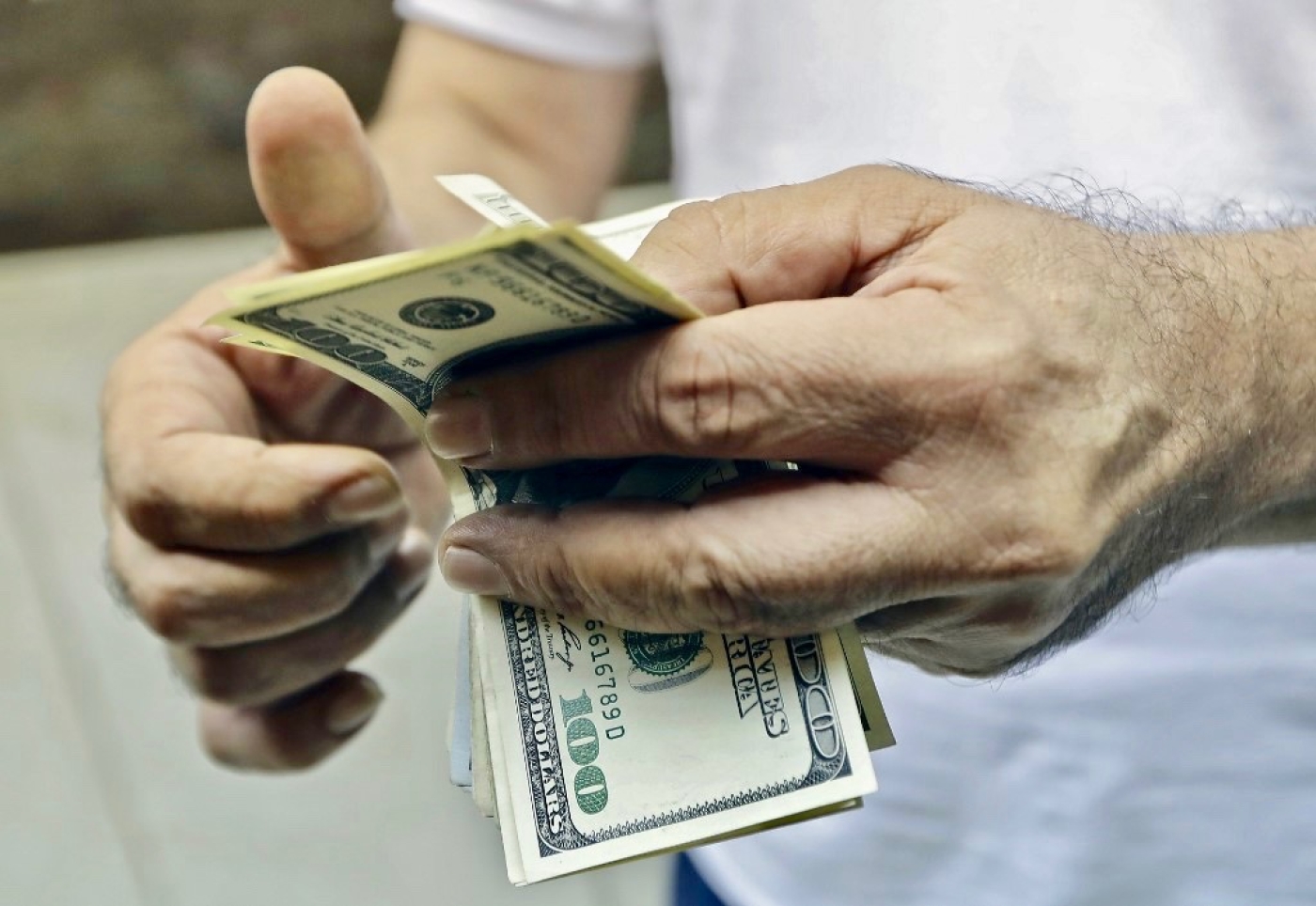
by middleeasteye.net -- Sixteen people in Lebanon, mostly Syrians, were arrested for money transfers and "illegal" currency exchange operations, the army said on Saturday, amid a government crackdown on exchange rate manipulation. The army said in a statement that it had arrested 13 Syrians and three Lebanese who were carrying out "money transfers and illegal currency exchange transactions, using licensed companies and offices as a front", AFP reported. The suspects used an "unlicensed online platform belonging to one of the financial companies" to carry out the financial transactions, the statement said. The Lebanese pound has been pegged to the dollar at 1,507 since 1997, but the country's worst economic crisis in decades has seen its value plunge to less than 4,000 on the black market.
The government has sought to stem the fall by launching a nationwide crackdown on money changers it alleges are exchanging the pound for dollars at a rate weaker than the 3,200 per dollar permitted by the central bank. During the arrests, the army seized "significant sums" and also computers and laptops used in the operations, the statement added, specifying that the arrests took place in 12 regions across Lebanon. The network sent dollars with motorists across the border to Syria, specifically to the northwestern province of Idlib, a security official said, referring to a region controlled by rebels. After land borders closed because of the coronavirus pandemic, the network started using an "illegal online platform" controlled by a Lebanese money changer, the official added.

by catholicleader.com.au -- Peter Bugden -- MARONITE Catholics of Brisbane are appealing for prayers for Lebanon, a nation in crisis. “We would like people to join us in prayers. Really, that’s the main thing that we need,” George Tawk, a Lebanese Catholic from the Maronite parish of St Maroun’s, Greenslopes, said. “Just we need them to join us in prayers for the safety of Lebanon, especially because Lebanon has the biggest Catholic community in the Middle East – next to where Jesus was born, next to the Holy Land. “What we really need, we need support through prayers and through emotional and sentimental support.” Mr Tawk, who is in daily contact with family members in Lebanon, keeps track of the nation’s woes as it suffers under a corrupt government and economic crisis. Nationwide protests erupted last October and continued until the outbreak of the COVID-19 pandemic. “People took to the streets from all religions – Christians, Muslims, Jews – everyone just got up and said that we should get rid of all these people, all these corrupt people, and come back with a new generation (of leaders) …,” Mr Tawk said. “There was two million people in the streets protesting against corruption. “And all these protests kept happening till the coronavirus hit.”
The protests stopped as citizens went into isolation. “But people were worried that during all the isolation, the government could be doing something in secret, especially because the value of our Lebanese lira went dramatically down. “And prices of (everything) including food, went up by three or four times. “So people decided, ‘Well, that’s it, even with the coronavirus, we’re going back onto the streets because we can’t support this anymore’. “It looks like the Lebanese people are really determined to go all the way, whatever the cost is”. Mr Tawk said his family indicated protesting was the people’s last resort. “In Lebanon, there is no other choice,” he said. “Going back is not an option because things can’t get any worse.”

by english.aawsat.com -- Lebanon is ready to terminate a 23-year-old dollar peg and float the pound, but only after it secures billions in aid, Finance Minister Ghazi Wazni said Friday. Speaking to AFP after talks started Wednesday with the International Monetary Fund on a plan to rescue Lebanon's crisis hit economy, he also said banking sector restructuring would entail halving the number of lenders. Foreign exchange shortages have in recent months severely strained the official rate of 1,507 to the dollar, with the pound losing well over half its black market value to trade at considerably beyond 4,000 against the greenback. "The IMF always asks for the freeing of the pound's exchange rate," Wazni said. But "we need to change the stabilization policy to one of a flexible exchange rate in a first stage and for the foreseeable future," he said, referring to an initial managed flotation. "When we receive financial support from abroad, we will transition to flotation" dictated by the market, he said. "The Lebanese government has asked for a transitional period to pass through a flexible exchange rate before we reach flotation," he added. Wazni said the first phase would involve a gradual depreciation of the Lebanese pound against the dollar, in coordination with the central bank. He said this was necessary because the government feared a "huge deterioration of the pound exchange rate" otherwise.
Merging banks
Lebanon, which was hit last autumn by unprecedented protests, asked the IMF for financial assistance on May 1 after laying out a much-awaited financial rescue plan. That plan aims to drum up billions of dollars in aid, reduce the deficit, restructure a colossal debt burden and slim down an oversized banking sector. Wazni said banking sector restructuring would be carried out "step by step", and possibilities included "merging" financial institutions. "Lebanon counts 49 commercial banks and it is normal for that number to decrease to around half of that in the next stage," he said. Wazni said that the IMF had however not set any political conditions for financial assistance. "No political conditions have been set," he said.

by middleeasteye.net -- Algeria's president, Abdelmadjid Tebboune, has launched an investigation into a wide-reaching scandal that has embroiled Algerian state energy firm Sonatrach for the last month in Lebanon. Lebanese officials have accused Sonatrach of delivering defective fuel to state-owned Electricity of Lebanon (EDL), and have made 20 arrests since April, including Sonatrach’s Lebanese representative, Tarek Faoual. Last week, Sonatrach denied “the inaccurate and untrue allegations about the involvement of a senior Sonatrach official in this case”, stating that Faoual was an independent maritime agent, working for a subsidiary on behalf of Sonatrach Petroleum Corporation (SPC). Algerian presidential spokesperson, Mohand Oussaid Belaid, on Wednesday described the scandal as a “Lebanese-Lebanese issue” and stated that "Algeria as a state will not be involved" but that "Algerian justice will take care of the part concerning Algeria”. SPC also released a press release to protest the "vile coordinated defamation campaign aimed at damaging the reputation of the company". Belaid’s comments came a week after Lebanese Minister of Energy and Water Raymond Ghajar received Algerian ambassador to Lebanon, Abdelkrim Rekibi, to discuss the case.
'Secret' contract
In the same week, Lebanese MP Paula Yacoubian blasted the "secret" nature of the contract signed between the Algerian national oil company and the Lebanese state in 2005, the same year Algeria announced that its extensive gas reserves were open for business. "The defective fuel case is a huge scandal, documented by numerous reports," Yacoubian stated at a press conference in parliament, denouncing how certain parties "are beginning work to bury it". "Petroleum waste is sent to Lebanon and the investigation into this must include the company that operates the central shipping," the lawmaker added, referring to Sonatrach, also accusing "community leaders and senior politicians” of involvement in the scandal. Last month, EDL informed Lebanese courts that the London branch of Sonatrach had delivered “defective” fuel in its two most recent shipments.
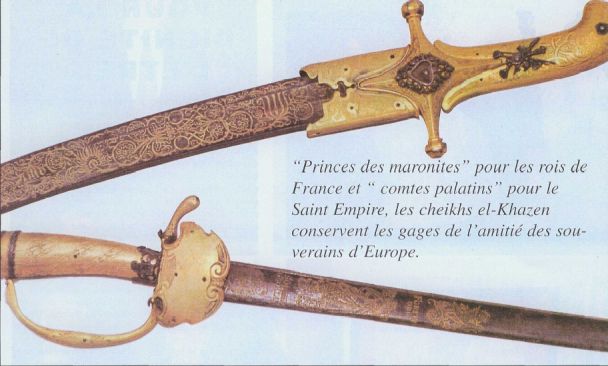
Population Movements to Keserwan - The Khazens and The Maans
ما جاء عن الثورة في المقاطعة الكسروانية
ثورة أهالي كسروان على المشايخ الخوازنة وأسبابها
Origins of the "Prince of Maronite" Title
Growing diversity: the Khazin sheiks and the clergy in the first decades of the 18th century
Historical Members:
Barbar Beik El Khazen [English]
Patriach Toubia Kaiss El Khazen(Biography & Life Part1 Part2) (Arabic)
Patriach Youssef Dargham El Khazen (Cont'd)
Cheikh Bishara Jafal El Khazen
Patriarch Youssef Raji El Khazen
The Martyrs Cheikh Philippe & Cheikh Farid El Khazen
Cheikh Nawfal El Khazen (Consul De France)
Cheikh Hossun El Khazen (Consul De France)
Cheikh Abou-Nawfal El Khazen (Consul De France)
Cheikh Francis Abee Nader & his son Yousef
Cheikh Abou-Kanso El Khazen (Consul De France)
Cheikh Abou Nader El Khazen
Cheikh Chafic El Khazen
Cheikh Keserwan El Khazen
Cheikh Serhal El Khazen [English]
Cheikh Rafiq El Khazen [English]
Cheikh Hanna El Khazen
Cheikha Arzi El Khazen
Marie El Khazen