by thenational.ae -- Lebanon's central bank head Riad Salameh on Wednesday defended his record after being accused by the prime minister of failing to take action to stop a dire economic crisis and allowing a massive slide in the national currency. In a rare, hour-long live television speech, the head of Banque Du Liban complained that there was a coordinated campaign against him, arguing that the bank’s role was to finance the state but that ultimately, politicians controlled how it was spent. Mr Salameh called on politicians to take overdue economic reforms but said it was not BdL's fault if successive governments have failed to take action. Lebanese law states that the central bank must finance the government at its request, he said. “We have contributed to reducing the cost of public debt by lending to the state at low-interest rates… The central bank has funded the state but not spent its money,” he said. He said that BdL is attempting to stabilise the price of the Lebanese pound as much as possible as it trades at exchanges at nearly 60 per cent below the official peg. He added that it wasn't the bank's actions that had driven up the price of medicine, wheat or fuel and assured banks that their deposits with BdL are still there.
The central bank was not the only one to finance successive Lebanese governments, he pointed out. Lebanon has received financial support from international institutions and foreign countries in the past decades. While this might be Mr Salameh’s strongest argument, it does not explain who will bear the losses caused by the current financial crisis, Lebanese economist Sami Nader said. “Who will bear the losses of a state accused of corruption, depositors?” Rumours of a “haircut” – a reduction on holdings - on bank accounts have been circulating these past months in Lebanon, increasing fears that people’s hard cash has evaporated. Banks have restricted access to cash and banned international transfers since to the public since last October. The crisis sparked nation-wide demonstrations, with protesters accusing politicians of corruption.
Beirut, Lebanon (CNN) -- By Tamara Qiblawi, CNN -- Cash-strapped Lebanon is facing growing turmoil after the fallout from the coronavirus outbreak sparked violent protests over rising hunger and poverty. Lebanon's economy, like many others around the world, was brought to a screeching halt by a government-imposed lockdown designed to stop the spread of Covid-19. But the restrictions have further exacerbated the country's deep and long-running financial crisis. Since a popular uprising gripped the country late in 2019, its currency has dropped and it defaulted on its debt for the first time. Now, after nearly two months of lockdown, food prices are soaring and the Lebanese lira is in free-fall.
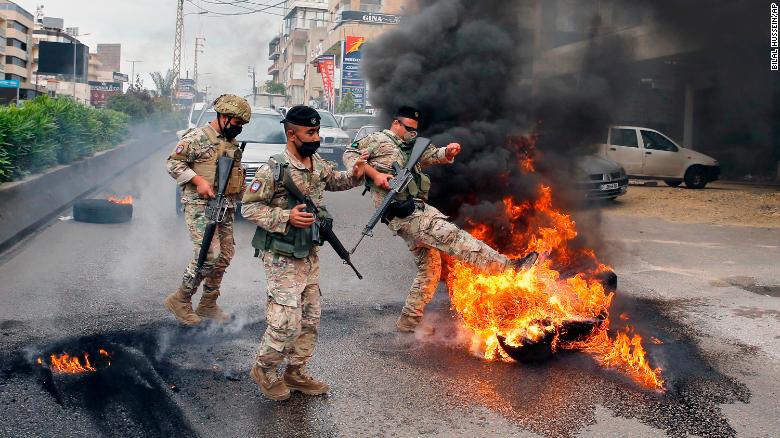
Prior to the Covid-19 outbreak, the World Bank projected that 45% of people in Lebanon would be below the poverty line in 2020. Now, the government believes that up to 75% of people are in need of aid, Social Affairs Minister Ramzi Musharrafieh told CNN. "We are hungry," came the resounding cries from angry protesters as they faced off with security forces during demonstrations that swept through Lebanon's major cities on Monday. Lebanese soldiers remove burning tires placed by anti-government protesters to block a road. One demonstrator, Fawaz Fouad al-Samman, died on Tuesday morning after sustaining gunshot wounds during clashes with the army in the northern city of Tripoli, his sister and a fellow protester said. The hospital that treated Samman's wounds confirmed his death to CNN. Protesters dubbed the 26-year-old as "the martyr of hunger." In a tweet, the Lebanese army said it was "deeply sorry for the falling of a martyr" during Monday's protests and said it has opened an inquiry into the death. The military added that rioting was carried out by "infiltrators," and stated that it "will not tolerate any person in breach of security and stability." Tripoli protester Ghassan, who did not want to disclose his full name for security reasons, was with Samman when he was injured. Referring to Lebanon's uprising, which began in October, Ghassan told CNN: "It was the worst battle we've seen since the start of the revolution."

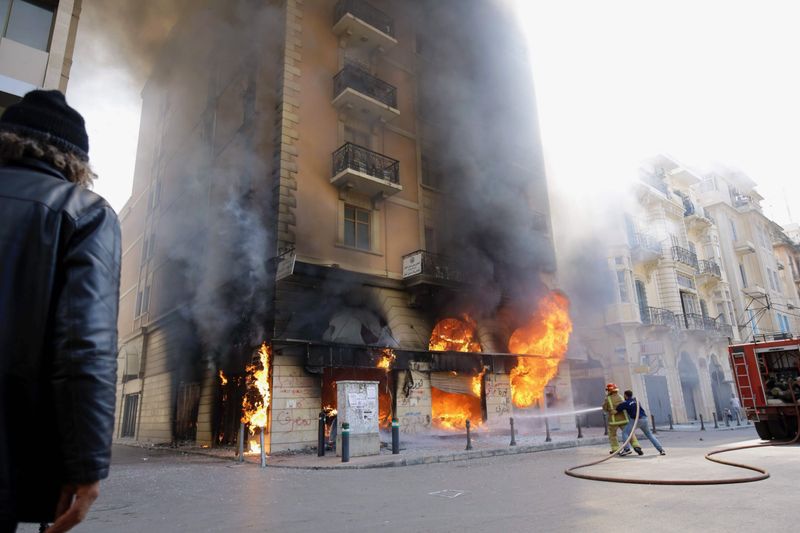
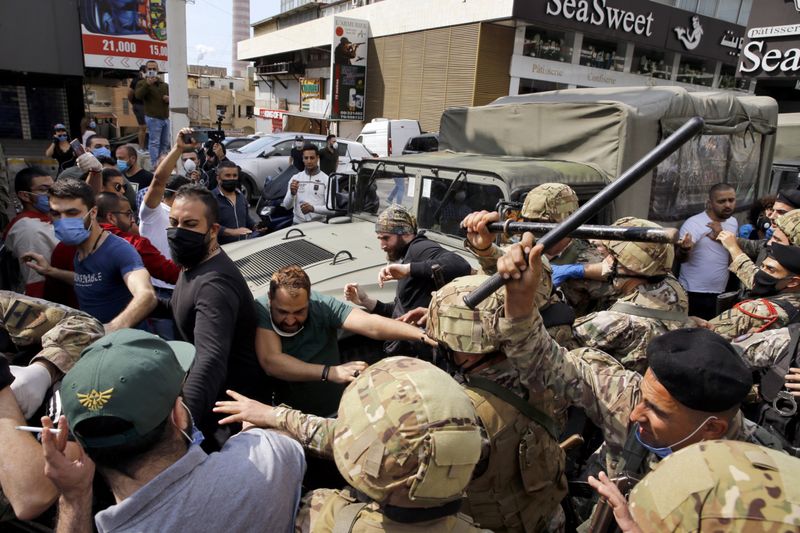
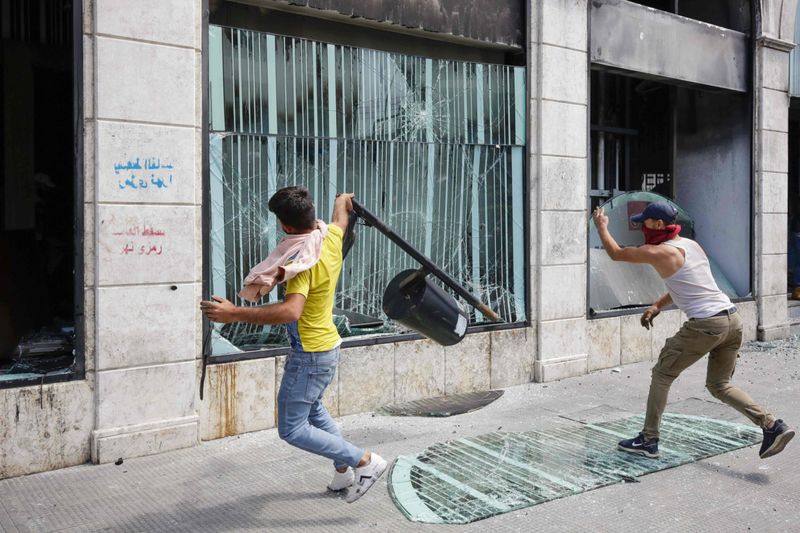
By Sarah Dadouch -- BEIRUT — Violence escalated Tuesday in the northern Lebanese city of Tripoli as protesters angered by the collapse of the country's currency and spreading economic upheaval burned down a series of banks and countered volleys of tear gas by pelting security forces with stones. These latest arson attacks came at the end of a large funeral for 26-year-old Fawwaz al-Samman, who died Monday from gunshot wounds, which his sister said on Facebook he had suffered during clashes with the army. The army released a statement Tuesday expressing regret for his death, without claiming responsibility, and announced it is opening an investigation into the incident. As mourners filled the streets of Tripoli for his funeral, they dubbed him “Martyr of the Hunger Revolution.” But shortly after the government announced Friday a five-phase plan to reopen the country, the protesters — overwhelmingly young and frustrated with the severe lack of job opportunities — emerged from their quarantine. Molotov cocktails destroyed a bank branch late on Saturday in the southern city Tyre. The following two nights, more banks were attacked and set on fire across the country. Protesters shut down highways. The army retaliated with tear gas and rubber bullets.
by AFP -- TRIPOLI: Lebanese protesters angered by a spiralling economic crisis clashed with security forces in the country´s north overnight as a months-old anti government movement gained new momentum despite a coronavirus lockdown. A 26-year-old protester died on Tuesday from a bullet wound he had sustained during the confrontations between the army and hundreds of demonstrators that rocked Lebanon´s second city of Tripoli. Sixty people were injured, including some 40 soldiers, during the exchange which saw protesters throw stones at troops who fired live rounds into the air to try to disperse the angry crowds under clouds of tear gas.
The overnight violence was the latest in a string of anti-government protests and social unrest fuelled by unprecedented inflation that this week saw a free-falling Lebanese pound reach record lows against the dollar. Angered by the financial collapse, demonstrators across Lebanon have rallied, blocked roads and vandalised banks for two days, re-energising a protest movement launched in October against a political class the activists deem inept and corrupt. “I came down to raise my voice against hunger, poverty and rising prices,” Khaled, a 41-year-old protester, told AFP from Tripoli, adding that he could no longer support his three children since he lost his job selling motorcycle spare parts. - ´Social explosion´
by Al Jazeera — Beirut, Lebanon – Lebanese authorities have started using forceful measures to try and bring the country’s rapidly …

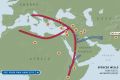
Population Movements to Keserwan - The Khazens and The Maans
ما جاء عن الثورة في المقاطعة الكسروانية
ثورة أهالي كسروان على المشايخ الخوازنة وأسبابها
Origins of the "Prince of Maronite" Title
Growing diversity: the Khazin sheiks and the clergy in the first decades of the 18th century
Historical Members:
Barbar Beik El Khazen [English]
Patriach Toubia Kaiss El Khazen(Biography & Life Part1 Part2) (Arabic)
Patriach Youssef Dargham El Khazen (Cont'd)
Cheikh Bishara Jafal El Khazen
Patriarch Youssef Raji El Khazen
The Martyrs Cheikh Philippe & Cheikh Farid El Khazen
Cheikh Nawfal El Khazen (Consul De France)
Cheikh Hossun El Khazen (Consul De France)
Cheikh Abou-Nawfal El Khazen (Consul De France)
Cheikh Francis Abee Nader & his son Yousef
Cheikh Abou-Kanso El Khazen (Consul De France)
Cheikh Abou Nader El Khazen
Cheikh Chafic El Khazen
Cheikh Keserwan El Khazen
Cheikh Serhal El Khazen [English]
Cheikh Rafiq El Khazen [English]
Cheikh Hanna El Khazen
Cheikha Arzi El Khazen
Marie El Khazen