by NAJIA HOUSSARI — arabnews.com —BEIRUT: Protesters in Lebanon have defied curfews and lockdowns and taken to the streets again — some …
by alaraby.co.uk -- Joe Macaron -- The Trump Administration quietly pulled a political and legal coup in Beirut in the short period between the Lebanese government's declaration of a health state of emergency on March 15 and its banning of all flights on March 19 due to the coronavirus outbreak in the country. After six months of detention in Lebanon, the Lebanese-American citizen Amer Fakhoury was released and evacuated from Lebanon in a quasi-clandestine operation, one that reflected the leverage Washington has in Beirut and the vulnerabilities of a Lebanese government struggling for political and financial survival. Dubbed "the butcher of Khiam" by Lebanese media, Fakhoury was arrested as he arrived at Rafic Hariri International Airport in Beirut in September 2019. The General Directorate of General Security issued a statement on September 13 noting that during his interrogation, Fakhoury confessed to collaborating with the Israeli army and that he was subsequently referred to the Lebanese military's office of the public prosecutor. Fakhoury, 57, was a senior warden in the infamous Khiam prison in south Lebanon that was run by the so-called South Lebanon Army, a militia group of Lebanese soldiers who had defected and then collaborated with Israel after its 1982 invasion of Lebanon. In 1985, the Israeli army turned the former Khiam military base into a prison camp that detained and tortured Lebanese who defied the Israeli occupation. Just before Israeli forces withdrew from Lebanon in 2000, Fakhoury fled to Israel then immigrated to the United States. He now holds both US and Israeli passports.
The controversy after Fakhoury's arrest revolved around who removed his name from the blacklist of those convicted in Lebanese courts for collaborating with Israel, a list that is typically disseminated to all border entry points. It appears that his conviction in absentia in 1998 for 15 years of hard labor in prison was rescinded. Fakhoury's family claims that Lebanese authorities "signed off" on his travel to Beirut. The most likely scenario might have been that high-level Lebanese officials were aware and played a role in removing Fakhoury's conviction and arrest warrant from his criminal record to facilitate his visit. However, things went wrong the moment he landed in Beirut.

This is an opinion article and may not necessarily represent khazen.org views
by thearabweekly.com -- Khairallah Khairallah -- The Lebanese only want to know one thing: When will banks release their hold on people’s deposits? It’s not just a question of freeing Lebanese and Arab deposits, but also of playing with the country’s fate. Of course everybody is now busy with the COVID-19 pandemic, but the Lebanese are also worried about the future of their country, not knowing if it can survive if its banking system collapses. It is no secret that Lebanon is a bank. It is primarily thanks to this role, in addition to its other roles since before independence in 1943, that the country has remained steadfast in spite of the ongoing war since 1975. What has enabled Lebanon to survive is its banking system and its continued efforts to protect a vibrant culture of life over the culture of death advocated by Hezbollah, and before it by Christian and Islamic militias and Palestinian factions. They all played a role in the destruction of Beirut, which the Syrian regime was able to fully exploit for a long time. Despite many trials and tribulations over the past 45 years, Lebanon has always kept the foundations of life in the country. Among these foundations are Beirut’s port and airport. Beirut itself was vibrant with life, with all of its newspapers, magazines, cultural life, cafes, hotels, restaurants and nightclubs. It was a city that loved life and people loved to live in it.
On the margins of the crisis of Lebanon’s banking sector, which is crucial to the country’s survival, there is one remark that must be made. It concerns the role of certain Christian groups in bringing the political situation in Lebanon to where it is now, that is to say, to having a “Hezbollah government” in place during this “Hezbollah era.” The original sin of Lebanese Christians is not just the acceptance by some of their senior leaders, including former President Camille Chamoun and Sheikh Pierre Gemayel, of the Cairo Agreement in 1969, but, to a greater degree, their acceptance of the election of Suleiman Franjieh as president in 1970, less than a year after the Cairo Agreement. No one doubts Franjieh’s patriotism and intimate sense of Lebanese identity, but 1970 was one of the most dangerous years in the Middle East. Egyptian President Gamal Abdel Nasser died that year, and Hafez Assad fomented a coup against his Baathist comrades as he prepared to become the first Alevi to take over the Syrian presidency in February 1971. In 1970, Jordanian King Hussein managed to preserve his throne and expel Palestinian fighters from the country. Miraculously, these fighters ended up in Lebanon at a time when the country was, more than ever, in need of political leadership that could understand the developments taking place in the region.
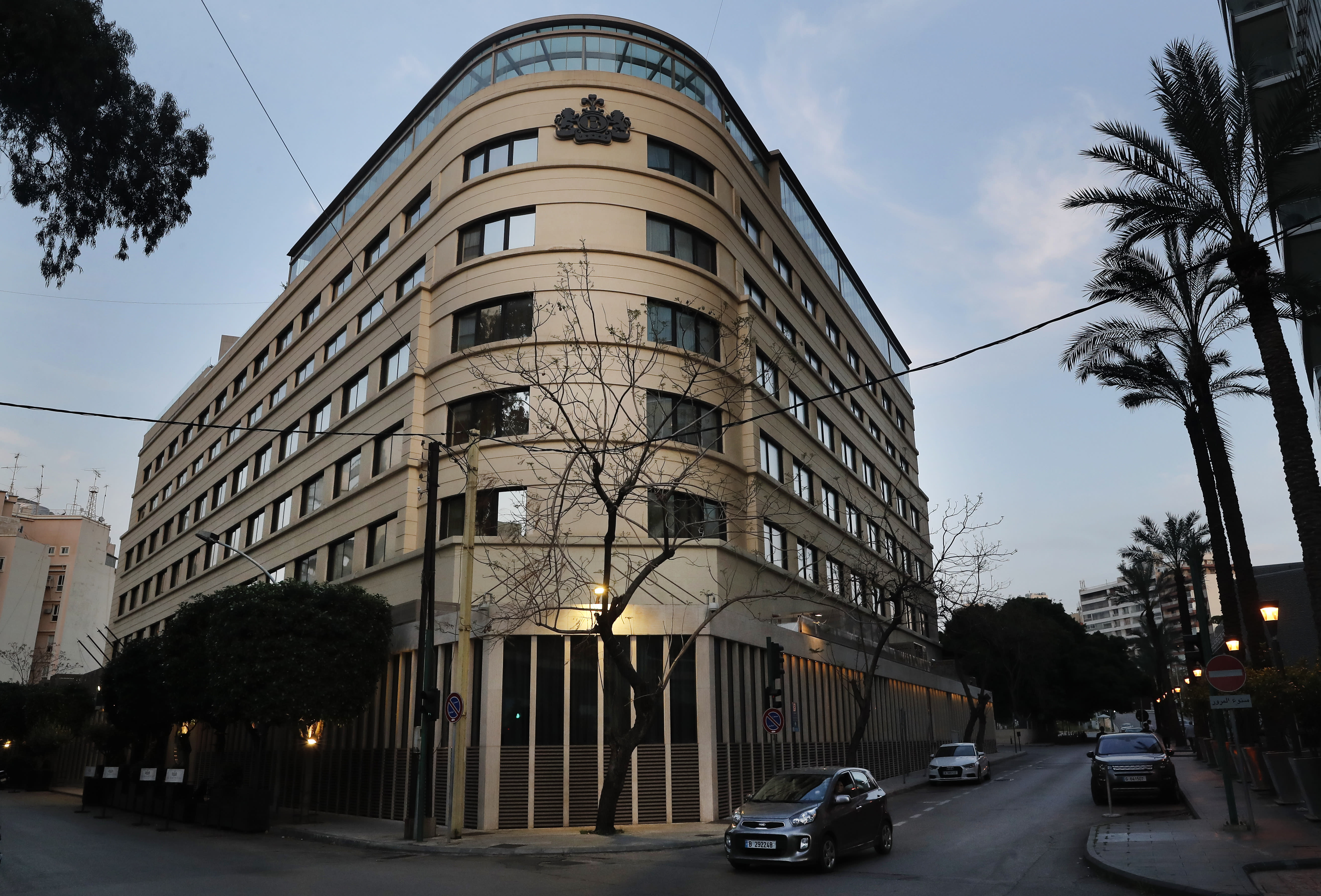
BEIRUT (AP) — One of Lebanon’s landmark hotels that survived the country’s bloody 15-year civil war and various other bouts of fighting is shutting down amid the country's economic crisis and coronavirus pandemic, a hotel executive said Saturday. The prestigious, nearly 70-year-old Le Bristol was closed temporarily as part of national measures to combat the spread of the virus. But Pascale Selwan Tabet, executive assistant manager, said the uncertainty gripping the world because of the virus coupled with the unprecedented economic crisis in Lebanon forced the owners to shut it down for good. Once a place where the country’s socialites mixed with royalty, the grand hotel was famous for its ballroom parties and distinguished cuisine. It also boasted the country's first ice skating ring. The hotel’s original design mixed eastern and modern styles preserved in a two-year renovation that added a contemporary touch. It is owned by the Doumet family, one of Lebanon’s richest. An official announcement of the closure, which affects around 120 employees, is expected next week, Tabet said. The hotel’s past and current staff already began posting messages of farewell on social media.
Lebanon has been facing its worst economic crisis in decades, with unemployment figures soaring and the local currency losing more than half of its value against the dollar. Protests broke out nationwide in October against government corruption, further deepening the economic slump. In February, the head of the hotel owners association said occupancy has fallen to between 10-15% in Beirut and much lower outside the capital. With the spread of the coronavirus, the country’s only airport was shut down and the government ordered Lebanon’s famous night clubs and restaurants to close, a major blow to the already staggering hospitality industry. “The succession of these dramatic events in town and globally has impacted the hospitality industry. Then the coronavirus pandemic ‘executed’ the tourism industry,” said Tabet. The decision to close wasn't an easy one for the owners. In 2013 the hotel closed for two years to undergo a major renovation, reopening with a major party attended by the country’s rich and famous and foreign dignitaries. The staff received their full salaries during those two years, Tabet said. It was the only two years the hotel shut its doors, with management resisting a shutdown during the country’s 1975 civil war, which lasted 15 years. The hotel is part of Lebanon’s history and political landscape, hosting weddings and meetings of the country’s political elites.
Population Movements to Keserwan - The Khazens and The Maans
ما جاء عن الثورة في المقاطعة الكسروانية
ثورة أهالي كسروان على المشايخ الخوازنة وأسبابها
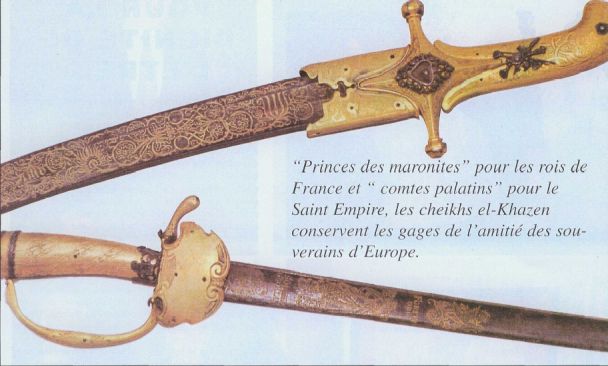
Origins of the "Prince of Maronite" Title
Growing diversity: the Khazin sheiks and the clergy in the first decades of the 18th century
Historical Members:
Barbar Beik El Khazen [English]
Patriach Toubia Kaiss El Khazen(Biography & Life Part1 Part2) (Arabic)
Patriach Youssef Dargham El Khazen (Cont'd)
Cheikh Bishara Jafal El Khazen
Patriarch Youssef Raji El Khazen
The Martyrs Cheikh Philippe & Cheikh Farid El Khazen
Cheikh Nawfal El Khazen (Consul De France)
Cheikh Hossun El Khazen (Consul De France)
Cheikh Abou-Nawfal El Khazen (Consul De France)
Cheikh Francis Abee Nader & his son Yousef
Cheikh Abou-Kanso El Khazen (Consul De France)
Cheikh Abou Nader El Khazen
Cheikh Chafic El Khazen
Cheikh Keserwan El Khazen
Cheikh Serhal El Khazen [English]
Cheikh Rafiq El Khazen [English]
Cheikh Hanna El Khazen
Cheikha Arzi El Khazen
Marie El Khazen