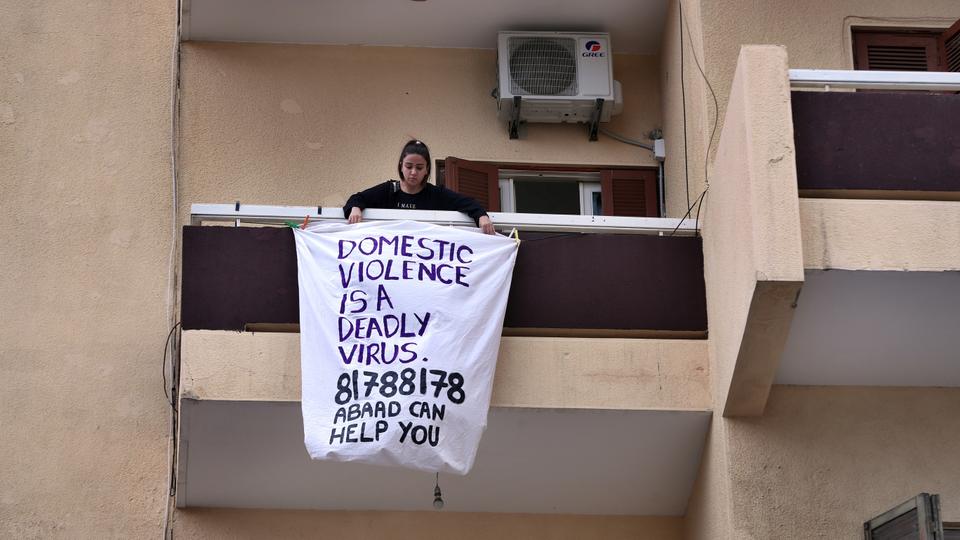
by AP -- Lebanese women banged pots and pans from their balconies in Beirut on Thursday to voice a resounding rejection of domestic violence. Reports of domestic violence in the Mediterranean country have surged after a nationwide lockdown forced families to largely stay at home. "This month there have been more than 230 (distress) calls so far, which is double the number (for the same period) last year," said Ghida Anani, the director of Abaad rights group. As the echoes from banging on the pots filled neighbourhoods, some women hung up banners from their balconies. "Lockdown not lockup," one banner read.
Other banners pointed women to a phone number that they can call for help. Anani said the Lebanese government "has not made violence against women a priority." But Abaad has worked with multiple UN agencies to present the government with a plan to combat domestic abuse. "We are asking the cabinet to adopt alternative steps to offer life-saving services for women in Lebanon," Anani said. Reports on domestic violence across Lebanon in 2016 showed that 44 percent of Lebanese people know a victim of domestic abuse. These numbers are still high considering the Lebanese parliament introduced a law aimed at protecting women and families from domestic violence and physical abuse in 2014.
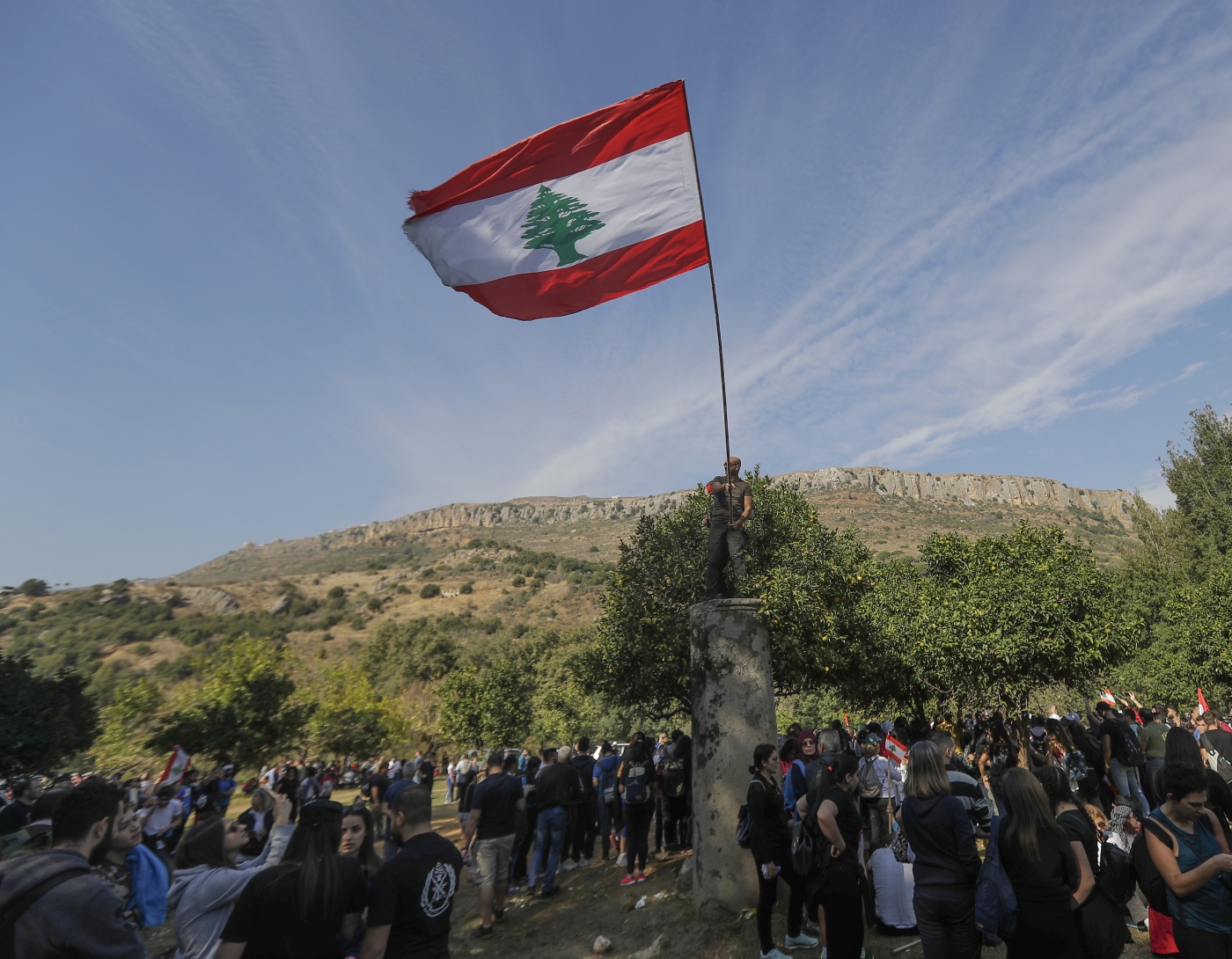
by middleeasteye.net -- A controversial dam project in a lush valley southwest of Beirut has suffered a major setback, after its main sponsor the World Bank called on the Lebanese government to hold an “open public dialogue” to address concerns raised by campaigners against the plan. The Bisri Dam Project, also known as the Lebanon Water Supply Augmentation Project, was first approved by the World Bank back in September 2014. The organisation had allocated funds for a loan amounting to $617 million, calling it one of their largest projects in Lebanon. By 2024, the World Bank promised in 2019, the dam would have helped the country secure “clean and reliable water supply to over 1.6 million people” living across the Great Beirut and Mount Lebanon region.
While the plan had received support from Lebanon's ruling political parties, it was met with uproar from environmentalists and local residents who feared irreversible damages to the region’s rich ecosystem. For years, campaigners have called for the project to be scrapped completely and for the site to be turned into a nature reserve. Now their voices seem to have been heard. On Thursday, the World Bank released a statement that put doubts on the project’s future. “Given strong stakeholder concerns about the [Bisri Dam] Project, the World Bank has requested the Government of Lebanon to launch an open and transparent public dialogue to address the concerns raised by citizens and civil society groups,” said Saroj Kumar Jha, World Bank Mashreq regional director. He also announced the re-channeling of $45.5m from two other projects' funding to help with Lebanon’s efforts to combat the coronavirus outbreak which - compounded by the ongoing economic crisis - has trapped the country in an “unprecedented crisis”. “The World Bank is open to government of Lebanon’s suggestions as to how the existing portfolio, including undisbursed amounts from the Bisri project, could be used more effectively to respond to the emerging needs of the Lebanese people,” Jha added. Small victories Prior to the latest announcement, the Lebanese government had begun work on the dam after receiving the first portion of the World Bank’s loans. The early stages of land clearance have already begun, although activists camping out in the valley during the country’s popular uprising that began last October have held back construction efforts. Lebanon’s collapsing economy and the Covid-19 outbreak have also helped stall the project.

by aawsat.com -- Lebanese Prime Minister Hassan Diab said on Thursday that 98 percent of the country's depositors will not be affected by an economic rescue plan, the draft of which included a proposal to fund some losses with a contribution from deposits. "I can announce today that the percentage of those who will be unaffected will be not less than 98 percent of depositors," Diab said in a televised address. The plan, which was discussed during a cabinet session chaired by President Michel Aoun at Baabda Palace on Thursday, has drawn nationwide opposition after it was leaked to the press and included clauses on a severe haircut to restructure the public debt and banking sector as well as salvage the Lebanese economy. The leaked plan reportedly includes a reference to imposing fees on banks’ “large depositors” — people who deposit between $100,000 and $1 million or more — to pay part of the state's debt.
by arabnews.com -- NAJIA HOUSSARI --BEIRUT: In light of the coronavirus disease (COVID-19) pandemic, Lebanon has decided to operate evacuation trips to repatriate Lebanese citizens living in the US. The citizens will travel through European and Arab countries after April 26, following the second lockdown period. Minister of Foreign Affairs Nassif Hatti revealed that the government is also contacting Canadian authorities in an attempt to repatriate the Lebanese living there. In the 1980s, Lebanon’s Middle East Airlines (MEA) was restricted from the US. This blockade was toughened after the 9/11 attacks. MEA’s last trip was organized in 1985, and ever since, it has only operated presidential trips to the US.
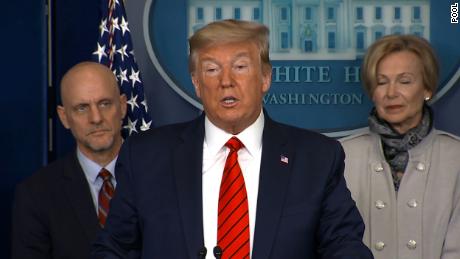
In a Cabinet session held on Thursday, Lebanon’s Prime Minister Hassan Diab said: “The measures we are taking to fight the pandemic have proved to be very successful in containing the virus. We must continue implementing them to prevent things from getting out of control.” Diab has also denied rumors about easing the curfew in Lebanon. He said: “It is not true that we are about to ease the lockdown. We might even impose more restrictive measures to prevent the virus from spreading by imposing two additional weeks of lockdown on April 26, allowing only few businesses to reopen within the prevention plan.” According to the daily report issued by the Health Ministry, the number of COVID-19 cases in the country has reached 663, including 5 new cases in the last 24 hours. The number of cases recorded in Saida and its governorate has reached 12, including four citizens who lived abroad and recently returned to Lebanon.




Population Movements to Keserwan - The Khazens and The Maans
ما جاء عن الثورة في المقاطعة الكسروانية
ثورة أهالي كسروان على المشايخ الخوازنة وأسبابها
Origins of the "Prince of Maronite" Title
Growing diversity: the Khazin sheiks and the clergy in the first decades of the 18th century
Historical Members:
Barbar Beik El Khazen [English]
Patriach Toubia Kaiss El Khazen(Biography & Life Part1 Part2) (Arabic)
Patriach Youssef Dargham El Khazen (Cont'd)
Cheikh Bishara Jafal El Khazen
Patriarch Youssef Raji El Khazen
The Martyrs Cheikh Philippe & Cheikh Farid El Khazen
Cheikh Nawfal El Khazen (Consul De France)
Cheikh Hossun El Khazen (Consul De France)
Cheikh Abou-Nawfal El Khazen (Consul De France)
Cheikh Francis Abee Nader & his son Yousef
Cheikh Abou-Kanso El Khazen (Consul De France)
Cheikh Abou Nader El Khazen
Cheikh Chafic El Khazen
Cheikh Keserwan El Khazen
Cheikh Serhal El Khazen [English]
Cheikh Rafiq El Khazen [English]
Cheikh Hanna El Khazen
Cheikha Arzi El Khazen
Marie El Khazen