/cdn.vox-cdn.com/uploads/chorus_image/image/66613261/1208351538.jpg.0.jpg)
by vox.com -- Jen Kirby -- British Prime Minister Boris Johnson has been moved to an intensive care unit after his coronavirus symptoms worsened. “Over the course of this afternoon, the condition of the prime minister has worsened and, on the advice of his medical team, he has been moved to the intensive care unit at the hospital,” a spokesperson for the prime minister’s office said in a statement on Monday. This is a troubling development for the leader of the United Kingdom, who confirmed on March 27 that he had tested positive for the coronavirus. At the time, Johnson, who is 55, said he had “mild symptoms,” including a fever and persistent cough. He said he would continue to run the country in self-isolation. In the days since his initial diagnosis, however, Johnson’s condition has apparently worsened. On Sunday evening, the prime minister was admitted to St. Thomas’s Hospital in London for treatment, shortly after Queen Elizabeth II delivered a rare address to the country about the coronavirus crisis. Less than 24 hours later, his spokesperson said he had been admitted to the intensive care unit. According to reports, Johnson is still conscious, but he’s been moved to the ICU as a precaution, in case he requires the aid of a ventilator. ITV reporter Robert Peston said that Johnson required the aid of oxygen on Monday, but the prime minister is not currently on a ventilator, as of Monday 5 pm ET. Still, this is a startling development, as the leader of the United Kingdom is now dealing with the same debilitating virus that is causing an unprecedented national emergency. Johnson’s condition adds more uncertainty to a national crisis The UK has been under strict stay-at-home orders since March 23.
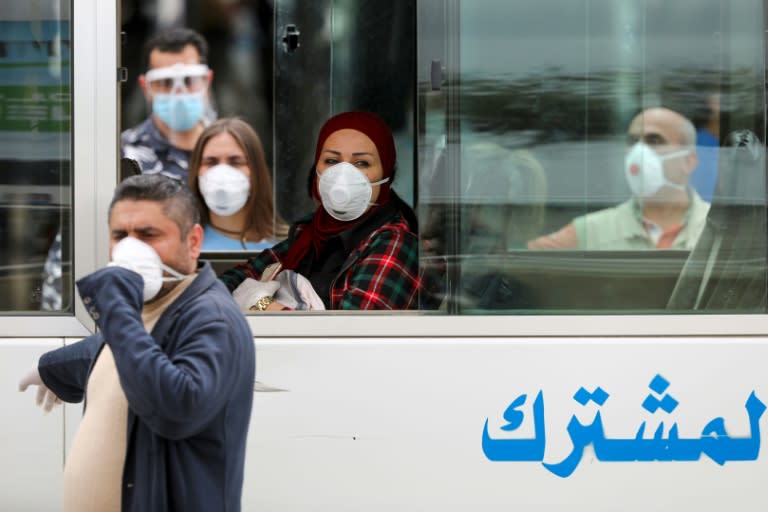
by thenational.ae -- The Lebanese government further restricted travel in the country on Sunday, setting strict rules about the time and days that vehicles can be on the road in a bid to stem the rising number of coronavirus cases. In a decree on Sunday, the Interior Ministry laid out rules when cars, public vehicles and lorries can be on the road based on their number plates. Vehicles with plate numbers that end with an odd number are allowed to travel on Mondays, Wednesdays and Fridays while those with plate numbers that end with an even number (including zero) are allowed to travel on only Tuesdays, Thursdays and Saturdays. No one is allowed to travel on a Sunday.
The only exemptions are for essential workers – including pharmacists, doctors and nurses, the Red Cross and the media – as well as security and diplomatic traffic. Deliveries for vital sectors – including meat, flour, tobacco, water, milk, medical and fuel – will also be exempt. The Lebanese government announced a daily curfew to try to stop the spread of the disease, as the number rose again on Sunday by seven, bringing the national total to 527. There was also a death, bringing the toll to 18. Interior Minister Mohammad Fahmi said the new measures were put in place because of a “large number of citizens not abiding by the quarantine measures and the curbs on movement”. The first flight bringing home Lebanese nationals stranded overseas landed in Beirut on Sunday afternoon from Saudi Arabia. Lebanese media quoted the ambassador to Saudi Arabia, Fawzi Kabbara, saying that 1,500 people in the kingdom wanted to return to Beirut.
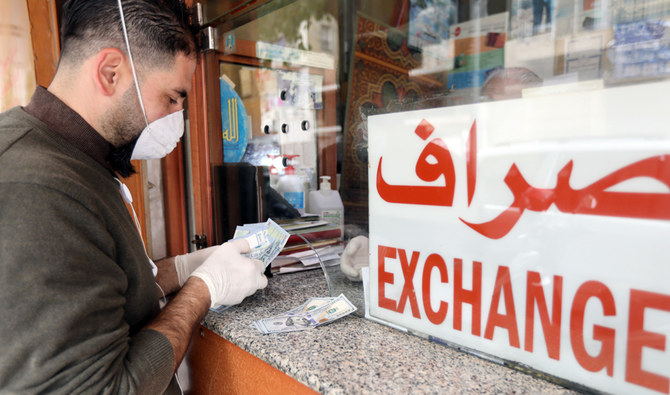
by arabnews.com -- NAJIA HOUSSARI -- BEIRUT: Lebanon is divided over the use of masks in the battle against coronavirus disease (COVID-19), with the government and medical professionals at odds over how useful they are in restricting the spread of the disease. The country has reported 17 deaths and 520 confirmed cases, an increase of 12 new cases in 24 hours. Last month, on March 15, the government imposed steps to check the spread of the virus. Measures included social distancing and wearing face masks and gloves. Doctors in TV interviews have, however, discouraged people from wearing face masks while outside because it sent the wrong message about safety and hand hygiene. “A customer would buy an average of seven masks a week in light of the circular that imposed wearing masks when going to a supermarket, bank or while driving,” pharmacist Robert Tenn told Arab News. He said the rise in the US dollar against Lebanon’s currency had led to a significant rise in the price of masks. “A box containing 50 masks is being sold for LBP100,000 ($66) when its earlier price never exceeded LBP15,000. We are referring to the regular medical mask and not the N95K, which is firmer and more effective in protecting against coronavirus and other viruses if used correctly. But nothing is a substitute for washing hands.” Lebanon was back to importing its needs from China after China resumed its exports, he added.
Architect Edgard Mekssas uses 3D printers to produce these masks. (Supplied) “There are new types of locally manufactured masks in Lebanon, and these are cheaper than the imported ones, but they lack medical standards, so I do not buy them to sell them to people. These are the product of personal efforts, and some are made of cloth that can be penetrated by viruses.” Many types of face masks have been seen in Lebanon, in different colors and designs such as khaki to suit military uniforms and black for security forces. There are also masks with logos of political parties. A Nabatiyeh-based media man, Samer Wehbe, said that the masks bearing party slogans are available in the market. He said the Amal movement is promoting green-colored masks, which is the color of the movement. “They may also use these masks with their slogan later,” he added. A resident of the southern suburb, Hassan, said: “There are street vendors offering colored masks at low prices but they are of very poor quality.” He did not rule out the possibility of political parties using their slogans on locally manufactured masks. “But people feel a bit shy using such masks publicly,” he added. The Internal Security Forces Directorate on Saturday tweeted a video showing inmates at Roumieh Central Prison making medical masks to be used by security forces and prisoners when needed. Others have also begun making masks.

by Makram Rabah -- thearabweekly.com/ -- In the first year of law school, students are taught that “a plaintiff will be unable to pursue legal remedy if it arises in connection with his own illegal act.” This legal doctrine, known as ex turpi causa non oritur actio, prevents someone from benefiting from wickedness and illegality, which Lebanon’s political elite have made fortunes from doing. This simple legal doctrine comes to mind when the Lebanese political elite try to justify the abysmal state of affairs and the economic collapse that they cheekily insist the Lebanese banking sector take full responsibility for. Ironically, this same banking sector has long been praised by the same political class as being the engine of Lebanon’s economy and a living testament to the myth of the country’s ingenuity and entrepreneurship — until it collapsed, that is.
The intention to scapegoat Lebanese banks is apparent from the rhetoric of the political elite, who always emphasise that banks have made millions of dollars and are thus compelled to give back to the country. In his latest televised speech, Hezbollah Secretary-General Hassan Nasrallah unleashed a new violent attack on the Lebanese banking sector with the intention or protecting small depositors, or so he claimed. Nasrallah’s sermon-style lectures have taken a clearly threatening tone. Most recently, he tacitly addressed bank owners themselves, saying: “How can we appeal to the humanity of these bank owners? I wish you [the public] can help me… figure how to address them.” “I do not want to open the many files [we have on] how they made their fortunes, although we might have to do so at a later time,” Nasrallah added.
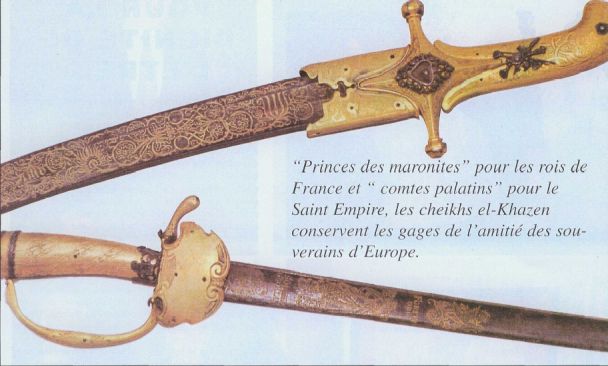
Population Movements to Keserwan - The Khazens and The Maans
ما جاء عن الثورة في المقاطعة الكسروانية
ثورة أهالي كسروان على المشايخ الخوازنة وأسبابها
Origins of the "Prince of Maronite" Title
Growing diversity: the Khazin sheiks and the clergy in the first decades of the 18th century
Historical Members:
Barbar Beik El Khazen [English]
Patriach Toubia Kaiss El Khazen(Biography & Life Part1 Part2) (Arabic)
Patriach Youssef Dargham El Khazen (Cont'd)
Cheikh Bishara Jafal El Khazen
Patriarch Youssef Raji El Khazen
The Martyrs Cheikh Philippe & Cheikh Farid El Khazen
Cheikh Nawfal El Khazen (Consul De France)
Cheikh Hossun El Khazen (Consul De France)
Cheikh Abou-Nawfal El Khazen (Consul De France)
Cheikh Francis Abee Nader & his son Yousef
Cheikh Abou-Kanso El Khazen (Consul De France)
Cheikh Abou Nader El Khazen
Cheikh Chafic El Khazen
Cheikh Keserwan El Khazen
Cheikh Serhal El Khazen [English]
Cheikh Rafiq El Khazen [English]
Cheikh Hanna El Khazen
Cheikha Arzi El Khazen
Marie El Khazen