by middleeasteye.net -- By Kareem Chehayeb -- Lebanese nationals stranded abroad amid the coronavirus pandemic may have to pay exorbitant prices to return home, with economy tickets costing as much as $1,800, a diplomatic source told Middle East Eye. According to another source close to the country's national carrier, Middle East Airlines, flights are expected to commence on 5 April and are priced in US dollars, ranging from $650-1,800 in economy class, and $1,300-3,900 in business. MEE spoke to more than 15 Lebanese nationals who had applied to return home since the country imposed a travel ban on 15 March. Several said they were left to fend for themselves without proper guidance or assistance from relevant authorities.
With the Lebanese currency, the lira, losing almost 50 percent of its value in recent months, a decision by the country's banks to restrict US dollar withdrawals and transfers abroad further compounded their problems. In an attempt to address the confusion, Information Minister Manal Abdel Samad told reporters on Wednesday that Lebanon would begin "three or four flights" from "three or four countries" on 5 April, however, she did not mention pricing. According to MEE's source, the flights will repatriate nationals from Nigeria, the Ivory Coast, Saudi Arabia, and the United Arab Emirates. None of the nationals MEE spoke to were notified that they would have to pay for their flights home.
Hesitant to repatriate nationals
Lebanon's fragile government has been hesitant to implement a repatriation plan, fearing further cases of the coronavirus. However, the cabinet was spurred into action following political pressure from several political leaders, including Speaker Nabih Berri, who threatened to suspend his party's' participation in the government if the stranded nationals were not brought home. Lebanon closed its international airport on 15 March, and has since renewed that lockdown for another two weeks, extending it into mid-April. Many of the Lebanese citizens interviewed by MEE said they were unable to get flights during a four-day grace period after the initial closure or did not anticipate the situation getting worse in their respective countries. According to local French newspaper L’Orient Le Jour, about 22,000 Lebanese had submitted forms on the Foreign Ministry's website over the past 14 days to return to Lebanon.

BY REBECCA COLLARD - Foreignpolicy.com --BEIRUT—Dozens of journalists piled into a convoy of Hezbollah-arranged vehicles on Tuesday to be transported to the movement’s newest front line: the fight against the coronavirus. Nearby, a line of dozens of paramedics stood ready but completely idle, posed in front of some of the 70 ambulances Hezbollah says it has prepared for epidemic. Trucks and men on foot from the Islamic Health Society sprayed the streets with disinfectant, filling the neighborhood of Borj el-Barajneh with the smell of chlorine. “Hezbollah is the only one doing anything. The government isn’t doing anything,” said one bystander, Hussein Zaaiter, sitting on a cement step watching the crowd of journalists next to the long row of posed paramedics and ambulances. “You can see these ambulances. You can see them disinfecting the streets.”
Zaaiter sat just a foot from his friend. Neither was wearing masks or gloves. Many on the streets of Borj el-Barajneh lingered around without masks or gloves, and pairs of young men zipped by on scooters, pressed up against each other sharing the seat. Hezbollah has also launched a large-scale awareness campaign. Others in the neighborhood seem split on who is doing what. Some say the Lebanese government is doing a good job of responding to the pandemic, but many complain of a complete lack of assistance from anyone as they face the double whammy of the coronavirus and a collapsing economy.
So far Lebanon has confirmed about 460 cases of the coronavirus and 11 deaths. The government, which includes Hezbollah, has declared a state of medical emergency, urged people to stay home, and sent the army to the streets to enforce it. But there is a very real concern that the country’s medical system will collapse under an outbreak. Lebanon has good doctors and hospitals, but the medical system is highly privatized, and the public system is poorly funded and suffers from the same sort of clientelism and patronage practices of most Lebanese institutions. Even in regular times, many Lebanese rely on the health services provided by political parties, rather than the government. The economic crisis has weakened it all. The government even put out a call to Lebanese expats to donate, including IBAN numbers for accounts in U.S. dollars and other currencies. In this new crisis, Hezbollah and Lebanon’s other traditional parties have a fresh opportunity to fill a void left by the state. And Hezbollah is stepping into the breach. “We have shed our blood in resistance, and we will not surrender in front of this epidemic,” said Hussein Fadlallah, Hezbollah’s representative for Beirut District, as he outlined the steps his organization is taking to prepare for the virus.

by washingtonpost.com --by Bill Gates -- There’s no question the United States missed the opportunity to get ahead of the novel coronavirus. But the window for making important decisions hasn’t closed. The choices we and our leaders make now will have an enormous impact on how soon case numbers start to go down, how long the economy remains shut down and how many Americans will have to bury a loved one because of covid-19. Through my work with the Gates Foundation, I’ve spoken with experts and leaders in Washington and across the country. It’s become clear to me that we must take three steps. First, we need a consistent nationwide approach to shutting down. Despite urging from public health experts, some states and counties haven’t shut down completely. In some states, beaches are still open; in others, restaurants still serve sit-down meals.
This is a recipe for disaster. Because people can travel freely across state lines, so can the virus. The country’s leaders need to be clear: Shutdown anywhere means shutdown everywhere. Until the case numbers start to go down across America — which could take 10 weeks or more — no one can continue business as usual or relax the shutdown. Any confusion about this point will only extend the economic pain, raise the odds that the virus will return, and cause more deaths. Second, the federal government needs to step up on testing. Far more tests should be made available. We should also aggregate the results so we can quickly identify potential volunteers for clinical trials and know with confidence when it’s time to return to normal. There are good examples to follow: New York state recently expanded its capacity to up to more than 20,000 tests per day. There’s also been some progress on more efficient testing methods, such as the self-swab developed by the Seattle Coronavirus Assessment Network, which allows patients to take a sample themselves without possibly exposing a health worker. I hope this and other innovations in testing are scaled up across the country soon.

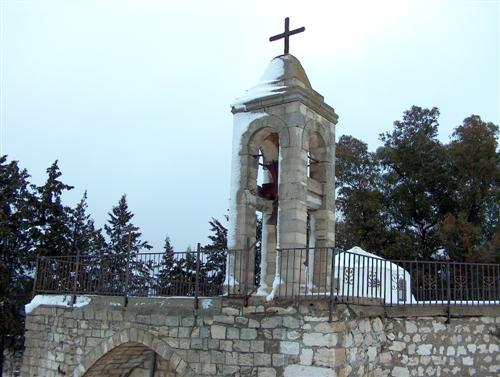
by npr.org -- High above the Mediterranean Sea, up a mountain wreathed in springtime mist and drizzle, is the monastery where the beloved Lebanese St. Charbel is buried. A hermit who died in 1898, Charbel was canonized in 1977. He is revered for his healing miracles among Lebanon's Christians, who likely number at least a million. In a country where a financial crisis has left health care threadbare and unreliable, many have begun turning to the saint to ward off the coronavirus. "He gives us faith and strength, especially in this time of sickness," said Elie Badr, standing by the tomb outside the monastery earlier this month. "He is the only cure, in my opinion."
A museum in the monastery's crypt exhibits prostheses and calipers — left behind by people who prayed to Charbel and recovered. The monastery itself is nearly 200 years old and follows the traditions of the Lebanese Maronite Order of monks, founded in 1695. Badr wore a mask, kept his distance and held a small bag of mud, which he had just scooped up with a spoon from the grave. He planned to boil it up at home. "St. Charbel instructed that the soil be boiled and drunk as it is a medicine," he said. He planned to give it to his elderly aunt and mother to drink. His faith in the saint is profound, but he also believes in medical science: he is an X-ray technician in a hospital. "We try as much as we can to help the sick and provide them with services," he said. "And with the strength of St. Charbel, we are able to do our part."

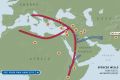
Population Movements to Keserwan - The Khazens and The Maans
ما جاء عن الثورة في المقاطعة الكسروانية
ثورة أهالي كسروان على المشايخ الخوازنة وأسبابها
Origins of the "Prince of Maronite" Title
Growing diversity: the Khazin sheiks and the clergy in the first decades of the 18th century
Historical Members:
Barbar Beik El Khazen [English]
Patriach Toubia Kaiss El Khazen(Biography & Life Part1 Part2) (Arabic)
Patriach Youssef Dargham El Khazen (Cont'd)
Cheikh Bishara Jafal El Khazen
Patriarch Youssef Raji El Khazen
The Martyrs Cheikh Philippe & Cheikh Farid El Khazen
Cheikh Nawfal El Khazen (Consul De France)
Cheikh Hossun El Khazen (Consul De France)
Cheikh Abou-Nawfal El Khazen (Consul De France)
Cheikh Francis Abee Nader & his son Yousef
Cheikh Abou-Kanso El Khazen (Consul De France)
Cheikh Abou Nader El Khazen
Cheikh Chafic El Khazen
Cheikh Keserwan El Khazen
Cheikh Serhal El Khazen [English]
Cheikh Rafiq El Khazen [English]
Cheikh Hanna El Khazen
Cheikha Arzi El Khazen
Marie El Khazen