by Massoud A. Derhally and Khaled Yacoub Oweis -- Abdul Halim Khaddam, a former Syrian vice president who turned against President Bashar Al Assad’s rule but was largely shunned by the opposition, died on Tuesday in France. His son Jihad confirmed Khaddam's death to The National from Istanbul. Khaddam was 88 years old. Salah Ayach, a close friend to Khaddam in exile, said he died at 5am of a heart attack. The former vice-president fled Syria after the killing of his Lebanese ally Rafik Hariri in February 2005. A UN investigation implicated senior Syrian security officials in the killing, and an international tribunal in the Netherlands indicted several Hezbollah operatives who are being tried in absentia.
Once seen as a possible successor to Hafez, instead he helped Bashar tighten his grip on power after he took office in June 2000. In the days following the elder Assad’s death, Khaddam pushed through decrees elevating Bashar’s military rank to general and making him commander of the armed forces — key moves in the uncertain process of succession. Khaddam went to Beirut to pay condolences to Hariri's family. He was the only Syrian official at the mourning and by the end of 2005 he relocated to Paris. UN investigators interviewed Khaddam as part of their probe into the assassination as someone with near unmatched insight of the functioning of the Syrian regime. A Baath Party stalwart, Khaddam was a provincial governor in charge of the Golan Heights during the 1967 Arab-Israeli war. Hafez Al Assad was defence minister at the time. The loss of the Golan to Israel did not prevent Hafez Al Assad from becoming president in 1970. Khaddam, a close ally of the new president, became foreign minister and the Syrian regime's softer face of its divide and conquer approach to Lebanon. He set up in France an opposition coalition to the regime that was buoyed by the US invasion of Iraq in 2003, expecting the repercussions to weaken Bashar Al Assad. A few months into the Syrian revolt, which broke out in March 2011, Khaddam said: “If the international community does not react to stop these crimes and protect civilians, the Syrians will be forced to take up arms to defend themselves.”
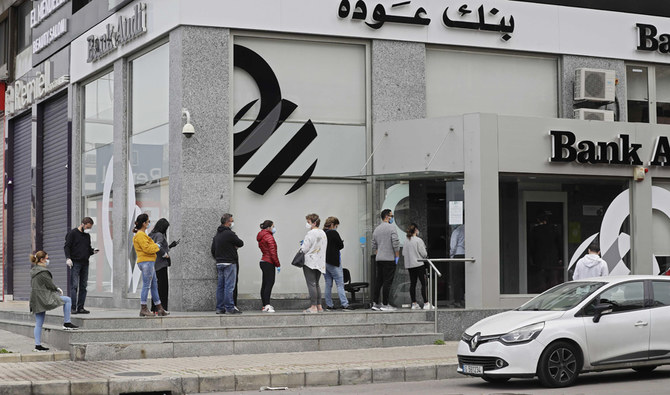
by arabnews.com -- NAJIA HOUSSARI -- BEIRUT: Lebanese quarantine rules were broken on Monday with hundreds heading to banks to collect their salaries in northern and southern Lebanon. Meanwhile, the Lebanese Army closed shops in violation of the shutdown laws in a Hezbollah security zone in the southern suburb of Beirut. The violations came as eight new confirmed cases of the coronavirus disease (COVID-19) were recorded in Lebanon on Sunday and Monday. However, this low number was not shared by the director of the Hariri Governmental University Hospital, Dr. Firas Al-Abyad, as most of the laboratories operate at half capacity on weekends. The number of COVID-19 deaths rose to 11. The Ministry of Health said that the latest fatality was a patient in her 80s suffering from chronic illnesses. A source at the hospital told Arab News: “The quarantine is beginning to show its results now and we have to wait to see the newly infected cases in the coming days. We may reach the peak stage and we are preparing for it medically.”
The Ministry of Health said that “out of 446 people infected with the coronavirus, there are 416 Lebanese and the rest are of 18 other nationalities.” It added: “Between Sunday and Monday, the Lebanese Red Cross transferred 430 suspected cases with COVID-19 symptoms and they are waiting for the results of their tests. There are 1,074 people still quarantined for contact with infected patients. There have been 32 cases of recovery so far.” On Monday, journalist May Chidiac was discharged from hospital after she was diagnosed with COVID-19. She spent a week in the hospital. She told Arab News that she did not need oxygen or a ventilator and that “the longest hour in my life was today when I waited for my sister to take me from hospital to home.”


by middleeasteye.net -- Cheering erupted from balconies and windows in Lebanon on Sunday evening, as the country's citizens celebrated their "heroic" medical workers battling the coronavirus pandemic. The initiative spread online with the Arabic hashtag "a cheer for the heroes", shared by public figures including journalists, actors and the Arab pop star Ragheb Alama. In one Beirut neighbourhood, a woman draped in a Lebanese flag sang the national anthem as her neighbours drummed on pots and pans, an AFP journalist said. Elsewhere, Lebanese played drums and blew vuvuzelas, sharing videos of the street performances online. Similar initiatives have gained attention from Italy to France but they have remained rare in the Arab world.

by AFP -- Lebanon Friday pledged to finalise a plan to restructure the country's massive debt by the end of 2020, just weeks after its first default in history. Finance Minister Ghazi Wazni promised "a full restructuring of the government debt –- both Lebanese pound and dollar denominated debt" as part of a wider economic recovery plan. "Our aim is to finalise this ambitious turnaround agenda before year-end 2020," he said during a presentation to investors by webcast. Describing the Lebanese economic model as "broken", he also pledged banking sector and fiscal reforms. One of the most indebted countries in the world, Lebanon is burdened by a public debt equivalent to more than 170 percent of GDP. On Monday, the finance ministry said it would discontinue payments on all of its outstanding dollar-denominated Eurobonds. This came after its first default in history on a $1.2 billion Eurobond originally due on March 9. The country is embroiled in one of its worst economic crises since the 1975-1990 civil war, now compounded by an outbreak of the novel coronavirus. In a bid to halt the spread of the illness, the government has ordered a lockdown until April 12 and ordered all non-essential businesses to close.

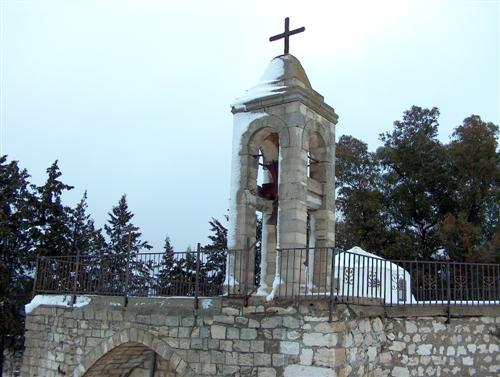
Population Movements to Keserwan - The Khazens and The Maans
ما جاء عن الثورة في المقاطعة الكسروانية
ثورة أهالي كسروان على المشايخ الخوازنة وأسبابها
Origins of the "Prince of Maronite" Title
Growing diversity: the Khazin sheiks and the clergy in the first decades of the 18th century
Historical Members:
Barbar Beik El Khazen [English]
Patriach Toubia Kaiss El Khazen(Biography & Life Part1 Part2) (Arabic)
Patriach Youssef Dargham El Khazen (Cont'd)
Cheikh Bishara Jafal El Khazen
Patriarch Youssef Raji El Khazen
The Martyrs Cheikh Philippe & Cheikh Farid El Khazen
Cheikh Nawfal El Khazen (Consul De France)
Cheikh Hossun El Khazen (Consul De France)
Cheikh Abou-Nawfal El Khazen (Consul De France)
Cheikh Francis Abee Nader & his son Yousef
Cheikh Abou-Kanso El Khazen (Consul De France)
Cheikh Abou Nader El Khazen
Cheikh Chafic El Khazen
Cheikh Keserwan El Khazen
Cheikh Serhal El Khazen [English]
Cheikh Rafiq El Khazen [English]
Cheikh Hanna El Khazen
Cheikha Arzi El Khazen
Marie El Khazen