by arabnews.com — BEIRUT: Lebanese MP Neemat Frem revealed a ventilator prototype on Wednesday, two weeks after launching an initiative to build …
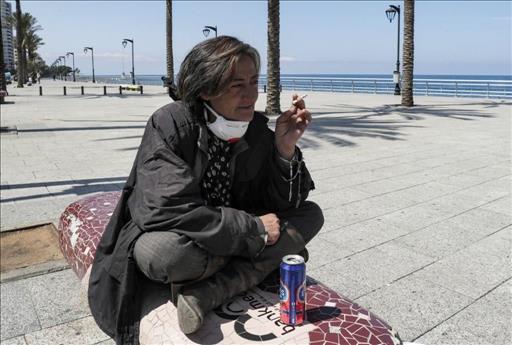
(MENAFN - Asia Times) TRIPOLI — On the eve of a nationwide Covid-19 lockdown, a group of men blocked off the modern gates of Tripoli, the stretch of highway leading to Lebanon's second-largest city. It was March 17, and the country's neglected northern metropolis, which looks out to the Mediterranean and borders Syria, still had not recorded any novel coronavirus cases. The impoverished protesters were incensed the government was threatening their livelihoods with a nationwide lockdown. 'Someone came to me asking for 1,000 LBP (50 cents) because he can't even buy bread for his kids. I had a package, so I gave it to him and kept three slices for my own kids. This is where we're at!? Isn't it shameful!' one man cried out in a video filmed on a mobile phone. 'I swear to God, I saw a guy sell his cooking gas canister to buy milk for his kids!' A young man, a struggling taxi driver in the city, lambasted the government for waiting a month after the first Covid-19 case was flagged to cut off air travel. 'If they were smart, they would have shut down the airport from the beginning, because it came from the airport, not the land border,' he said.
Lebanon's first cases of coronavirus were citizens flying back from Shiite religious pilgrimages to Iran, with the first positive test result announced February 21. At the time, Iran was not yet a global epicenter for Covid-19 – with less than two dozen cases – but in the three-and-a-half weeks that followed, alarm grew over daily flights from Qom and other Iranian cities. Residents of Tripoli, with its population overwhelmingly Sunni, appeared initially more insulated, but the Beirut-based outbreak has since made its way up the coast and to the mountainous districts above the city. Other cases later arrived via Egypt. On Tuesday, the confirmed cases had risen above 300. 'The government didn't act from the beginning. Now they want to fix it and be smart. So they put us in this health lockdown,' said the taxi driver. 'But if you want to do a lockdown, you need to give people the means to survive it. Tripoli isn't Beirut, we're living day by day.' 'They're saying it's going to be a 15-day shutdown,' another man chimed in. 'How are people supposed to eat if their shops are closed and they don't have work?'

By Emily Lewis BEIRUT saudigazette.com.sa -- Lebanon’s military and security forces deployed across the country Sunday after the government announced a clampdown on those not complying with orders aimed at slowing the spread of the novel coronavirus. Army helicopters toured the skies, calling on residents through loudspeakers not to venture out “in the interests of your own safety,” while soldiers set up roadblocks and carried out foot patrols on the streets. The Internal Security Forces said its members had begun taking “stricter measures” to ensure the public was following government orders to stay in their homes except in cases of “extreme necessity.” Those who fail to do so could be met with a fine and imprisonment of up to 3 years.
The ramping up of military and security presence to curb the COVID-19 coronavirus came in response to failure to heed official orders to stay inside, Interior Minister Mohamad Fahmi said. There were 248 confirmed cases of the COVID-19 coronavirus as of Sunday afternoon, according to the Health Ministry. Four people have died from the virus. “The number of people infected with the virus has increased dramatically, and we have moved beyond the stage of containment,” Fahmi said in a televised speech, in which he detailed the measures first announced by Prime Minister Hassan Diab a day earlier. “Any violation that poses a threat to public safety will be suppressed,” Fahmi added. All of the country’s security agencies will coordinate together with municipal authorities to ensure compliance with the rules. People will be able to buy essential goods such as food and medicine, but will be prevented from gathering in groups or spending time outside without a good reason, the minister said.
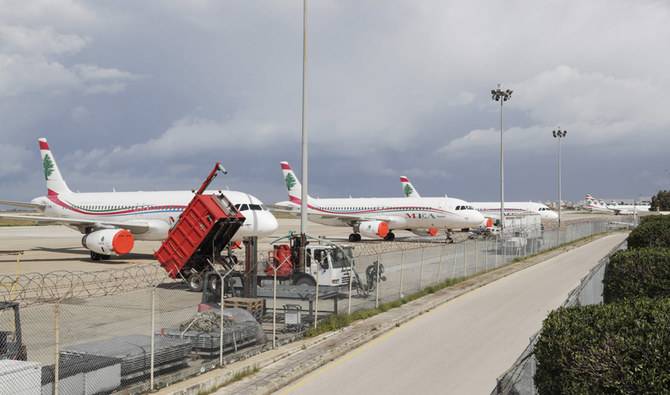
by arabnews.com -- NAJIA HOUSSARI -- BEIRUT: Lebanon remains open to naval and air shipping despite interruptions from the coronavirus (COVID-19) pandemic. Meanwhile, health and security authorities are struggling to prevent the virus from spinning out of control. On Monday, there was a slight increase in the number of new cases, with the Ministry of Health announcing that the total number of infections was 256 cases. Lebanese Minister of Health Dr. Hamad Hassan said: “80 of 160 beds are vacant in Rafik Hariri University Hospital, designated to receive cases of infection by the coronavirus.” Lebanese lawmaker Michel Moawad announced on Monday that the number of infections has increased in the northern district of Zgharta and that “a total lockdown will be imposed on the region.”
Lebanese people are still confining themselves to their homes under the monitoring of the army and security forces, which were put in charge of reporting any violation of the lockdown. Monday saw the first recorded case among UN Interim Force In Lebanon (UNIFIL) forces, with one of its soldiers contracting the virus. He was confined at the UNIFIL hospital in Naqoura. Andrea Tenenti, UNIFIL spokesperson, said that all precautions were taken to prevent the spread of the virus, adding that the soldier was on leave and returned on March 15, and that he was immediately quarantined. Four other soldiers who were in direct contact with the infected soldier were put in confinement. Tests were done on all four, with three testing negative. UNIFIL is still waiting for the result of the fourth soldier.
A meeting was held on Monday in the Port of Beirut to decide measures to prevent the spread of the virus. The port management declared its commitment to providing masks and other protection materials for visitors. Hassan Koraytem, managing director of the Port of Beirut, said: “The port building, offices and entrances controlled by the army, general security, customs and state security will all be sterilized.” He added that “a circular will be issued to all shipping and goods clearing companies not to deploy personnel who are more vulnerable to the disease than others, especially people above 60 with chronic diseases.” On Monday, there was a slight increase in the number of new cases.




Population Movements to Keserwan - The Khazens and The Maans
ما جاء عن الثورة في المقاطعة الكسروانية
ثورة أهالي كسروان على المشايخ الخوازنة وأسبابها
Origins of the "Prince of Maronite" Title
Growing diversity: the Khazin sheiks and the clergy in the first decades of the 18th century
Historical Members:
Barbar Beik El Khazen [English]
Patriach Toubia Kaiss El Khazen(Biography & Life Part1 Part2) (Arabic)
Patriach Youssef Dargham El Khazen (Cont'd)
Cheikh Bishara Jafal El Khazen
Patriarch Youssef Raji El Khazen
The Martyrs Cheikh Philippe & Cheikh Farid El Khazen
Cheikh Nawfal El Khazen (Consul De France)
Cheikh Hossun El Khazen (Consul De France)
Cheikh Abou-Nawfal El Khazen (Consul De France)
Cheikh Francis Abee Nader & his son Yousef
Cheikh Abou-Kanso El Khazen (Consul De France)
Cheikh Abou Nader El Khazen
Cheikh Chafic El Khazen
Cheikh Keserwan El Khazen
Cheikh Serhal El Khazen [English]
Cheikh Rafiq El Khazen [English]
Cheikh Hanna El Khazen
Cheikha Arzi El Khazen
Marie El Khazen