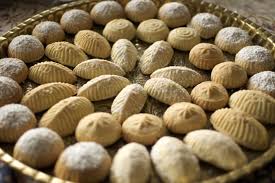
By Nahia Houssari -- arabnews.com -- BEIRUT: As the women gather around the table to make maamoul cookies for Easter, they all feel that this year’s celebrations will be different, and probably for the worse. Hala Dagher, speaking on behalf of her sisters, said: “This year we decided to split the cost of maamoul and only make half of the usual quantity. “Maamoul cookies represent blessings and we cannot celebrate Easter without them, even in a small amount.”
The Lebanese are known for their attachment to family and traditions, especially on special occasions and holidays. One of the country’s traditions, especially at Easter, is that women gather a few days before the big weekend to make maamoul cookies filled with walnuts, pistachios, or dates. The cookies are among the most famous Lebanese sweets prepared for Easter. The dough is made of semolina, sugar, butter, rose water and blossom water, and can be covered in icing sugar. The dough is traditionally made on Good Friday and the cookies baked the following day. However, austerity has hit many Lebanese homes as all ingredients are priced in US dollars. Very few people have decorated for Easter this year, and many will not be buying eggs to paint as a symbol of resurrection and life. Those who buy chocolate eggs are rare as the treats have become too expensive.
By Saundra Latham, Editor at LinkedIn News — Call it Dara Khosrowshahi’s “Undercover Boss” moment. The Uber CEO told The Wall Street …
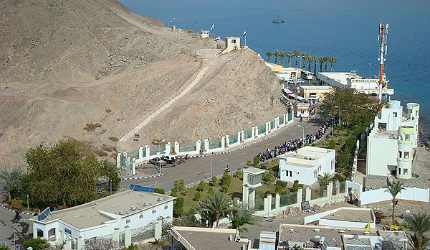
By Lucy Williamson & David Gritten - BBC News, in Jerusalem and London -- The Israeli military has accused the Palestinian militant group Hamas of firing dozens of rockets from southern Lebanon into northern Israel. It said most of the 34 rockets were intercepted but that six hit Israeli territory, causing damage to buildings. One man was lightly wounded by shrapnel, according to medics. Hamas said it had no information about who fired the missiles. The attack was the biggest single barrage from Lebanon in 17 years. It comes at a time of rising tensions. There has been outrage in the region at the actions of the Israeli police, who have raided the al-Aqsa mosque in Jerusalem - Islam's third holiest site - for the past two nights, triggering violent confrontations with Palestinians inside.
Palestinian militants in the Gaza Strip, which is controlled by Hamas, have also fired 25 rockets at Israel over the same period, and the Israeli military has carried out air strikes there in response. Late on Thursday, the Israel Defense Forces (IDF) said they were "currently striking in Gaza". A number of explosions were heard in Gaza, and AFP news agency reported that multiple Hamas training sites had been hit. Earlier on Thursday, air raid sirens sounded in communities across northern Israel after rockets were launched from Lebanon while Israelis celebrated the Jewish festival of Passover. The Israeli military did not say where the six rockets that struck Israeli territory landed. But photographs showing damage to several buildings in the border town of Shlomi, including a bank, and a car in the village of Fassuta. "We heard booms, and sirens. A rocket hit the roof of a car as it was passing my house, but the rocket didn't explode. When I went after the car, I saw someone was injured," one eyewitness said.
A car in the village of Fassuta was damaged by one of the rockets Israel's Magen David Adom ambulance service treated a man with shrapnel injuries, a woman who was injured while running to a shelter, and another woman who had stress symptoms. Israeli military spokesman Lt Col Richard Hecht said they believed Hamas was behind the attack and that it was possible the militant group Islamic Jihad was also involved. He added that they assumed the Lebanese militant group Hezbollah, which fought a month-long war with Israeli in 2006, knew about the attack, and that they suspected there was Iranian involvement.
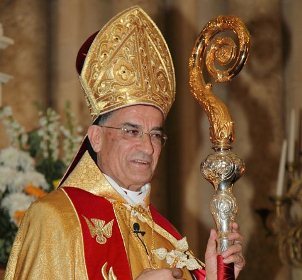
By Najia Houssari - arabnews.com -- BEIRUT: A spiritual retreat on Wednesday was attended by Lebanon’s Maronite Patriarch Bechara Al-Rahi and Christian deputies in a bid to resolve a six-month stalemate over the election of a new president for the crisis-hit country. The gathering in Harissa came as separate meetings between Qatar’s Minister of State in the Ministry of Foreign Affairs Mohammed bin Abdulaziz bin Saleh Al-Khulaifi and Lebanese officials and political leaders failed to address the ongoing political vacuum. A total of 53 deputies from the Free Patriotic Movement, Lebanese Forces, Kataeb Party, and Marada Movement took part in the retreat.
Eleven deputies were absent, including FPM-backed deputy parliament speaker, Elias Bou Saab, and reformist deputies who favor political dialogue to break the deadlock. MPs Melhem Khalaf and Najat Aoun Saliba were also absent, as they entered the 77th day of their parliament protest over the issue, while MP Paula Yacoubian said she would “not participate in any activity that is based on sectarian division.” In a statement delivered to the deputies, Al-Rahi said: “The policy adopted by the ruling power erroneously is incapable of taking care of others. It grinds the poor, takes advantage of the land, faces challenges, and doesn’t know how to hold a dialogue. “What progress did you allow the people to make? What positive forces did you liberate? What did you do to elect a president?”
Hezbollah and the Amal Movement have chosen to back Suleiman Frangieh for the presidency in a move rejected by Christian MPs. The head of the Progressive Socialist Party, Walid Jumblatt, wants to elect a centrist president. Frangieh is a prominent Christian figure, backed by Hezbollah and its allies that consider the Lebanese Forces and opposition nominated MP Michel Mouawad to be a “defiant candidate.” For 11 parliamentary sessions, Hezbollah’s deputies cast blank votes and withdrew from the second rounds of voting, leading to a loss of quorum. Neither candidates will be able to become president, as both political camps are incapable of securing the 65 votes needed to win in a parliament comprising 128 deputies. Meanwhile, Al-Khulaifi reiterated Qatar’s commitment to helping Lebanon elect a president and urged officials to implement the reforms required by the international community to kickstart an economic recovery process.




Population Movements to Keserwan - The Khazens and The Maans
ما جاء عن الثورة في المقاطعة الكسروانية
ثورة أهالي كسروان على المشايخ الخوازنة وأسبابها
Origins of the "Prince of Maronite" Title
Growing diversity: the Khazin sheiks and the clergy in the first decades of the 18th century
Historical Members:
Barbar Beik El Khazen [English]
Patriach Toubia Kaiss El Khazen(Biography & Life Part1 Part2) (Arabic)
Patriach Youssef Dargham El Khazen (Cont'd)
Cheikh Bishara Jafal El Khazen
Patriarch Youssef Raji El Khazen
The Martyrs Cheikh Philippe & Cheikh Farid El Khazen
Cheikh Nawfal El Khazen (Consul De France)
Cheikh Hossun El Khazen (Consul De France)
Cheikh Abou-Nawfal El Khazen (Consul De France)
Cheikh Francis Abee Nader & his son Yousef
Cheikh Abou-Kanso El Khazen (Consul De France)
Cheikh Abou Nader El Khazen
Cheikh Chafic El Khazen
Cheikh Keserwan El Khazen
Cheikh Serhal El Khazen [English]
Cheikh Rafiq El Khazen [English]
Cheikh Hanna El Khazen
Cheikha Arzi El Khazen
Marie El Khazen