
by arabnews.com -- NAJIA HOUSSARI --BEIRUT: Activists in Lebanon, in particular those who speak out against Hezbollah, continue to face physical attacks, arrest, psychological pressure and threats to their families. The individuals being targeted include lawyers, journalists, media personalities and writers. On Monday, Asrar Shebaro, a correspondent for An-Nahar newspaper, was attacked in a public place. It happened while she was working at Rafic Hariri International Airport in Beirut covering the arrival of a flight from Iran as part of a story about the response of Lebanese authorities to the coronavirus threat A video she filmed showed an unidentified young man attacking her and taking her phone by force. He told her she was not allowed to film in the airport because these were “families” there, which is a term Hezbollah uses to describe its supporters. The man deleted a number of videos Shebaro had filmed of passengers arriving from Iran. When she asked him under whose authority he was acting and who he represented, he said that he belonged to a political party. In a message posted on the An-Nahar website, the newspaper said: “The bullying of the media and the truth will not dissuade this newspaper from completing its message by accurately conveying information and holding those responsible for their fragile measures taken to combat the Coronavirus.”
Activists in Lebanon, especially Shiites, have faced threats as the protests against corruption, the financial crisis in the country, high levels of unemployment and the lack of basic services escalated. Some told Arab News they have been prevented from visiting their families in the southern suburbs of Beirut, and that pressure has been put on their relatives. In some cases, protesters have been forced to sleep in tents at protest sites or other locations. “The pressure and attacks have diminished after a decision was taken to prevent the supporters of the Amal Movement and Hezbollah from confronting activists in the protest squares, but this does not stop moral pressure,” said activist Mohamed Kassem, who is a secondary school teacher. Protester Mahmoud Fakih, who lives in Beirut, said he avoids neighborhoods dominated by the Amal Movement and Hezbollah. “At the beginning of the revolution, the pressure on us was great but it decreased with the decline of the movement,” he said. “Yet, we are still cautious. For example, I do not go to my village in the south. There is real social hostility to us there. We were previously attacked in the Zuqaq Al-Blat area but nobody documents these attacks.”
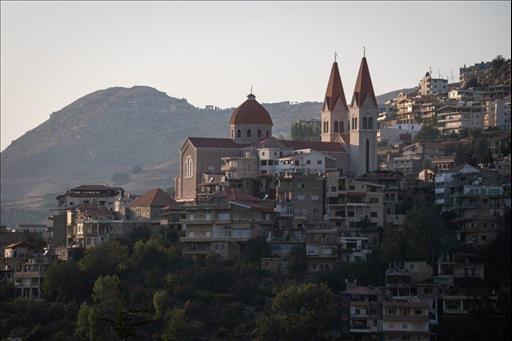
by MENAFN - Brazil-Arab News Agency (ANBA)) Isaura Daniel -- São Paulo – GoToBEY, a division of Líder Corporate Eventos & Lazer travel agency, will take tourists from Brazil to Lebanon in June and September. The itineraries include visits to their family's hometowns, local cuisine classes, walks on the beach, and leisure and shopping trips to Syria. GotoBEY is in São Paulo and 'BEY' refers to Beirut, Lebanon's capital city. One of the agency's owners, Marcos Destro, says that Lebanese descendants, even if they are the grandchildren or great-grandchildren of immigrants, feel a strong connection to Lebanon. 'It's passed from generation to generation,' he says. So, GoToBEY decided to offer packages that included a visit to their family's hometown. Even if the travelers don't keep in touch with their family members, the agency prepares an itinerary, drives and specifics.
The packages, though, aren't sold just for Lebanese descendants but anyone interested in visiting Lebanon going from Brazil. Destro says that the Brazilians that don't have family ties to the country and seek these trips usually have Lebanese descendant friends. 'That talk about Lebanon non-stop,' he jokes. Another possibility is taking a Lebanese cooking class in a school in the country. You can choose between a Brazilian and a Lebanese chef as a teacher. They both teach in Portuguese, Destro says. GoToBEY also offers the possibility to visit the coastal city of Anfeh, which has a crystal-clear water and white sand, reminding of the Greek beaches, the agency reports. Staying in the region five more days and visiting Damascus, Syria, is another alternative. It's just a 114-Km drive from the Lebanese capital to the Syrian capital. Destro says that the itinerary includes a visit to tourist and history landmarks, such as palaces, mosques and markets, and Damascus is also a good shopping destination. 'It's very cheap,' he says, explaining that the Lebanese themselves usually go to the neighbor country to shop thanks to the low prices.
by albawaba.com & Daily Sar.com.lb — Gathering under the slogan, “You will pay the price,” demonstrators assembled at Verdun and Sassine, and …

by Samar Kadi -- thearabweekly.com -- BEIRUT - The Lebanese government is undecided whether to default on a Eurobond debt payment for the first time to preserve declining foreign currency reserves amid growing popular uproar against uncontrolled increases in prices of basic consumer goods. Lebanon asked seven firms and the International Monetary Fund for advice on dealing with the country’s worst economic and financial crisis in decades, including options regarding its 2020 Eurobond maturities. The first Eurobond, worth $1.2 billion, matures March 9. Lebanese protesters demonstrated outside the Ministry of Economy and Trade in Beirut calling for tighter measures to monitor rocketing prices and protect consumers from “greedy” merchants.
The unemployment rate in Lebanon hit dangerous levels, reaching an unprecedented 40% within a period of four months, a study by Infopro Centre for Economic Information stated. “It is estimated that from October 17, 2019, until the end of January 2020, more than 220,000 jobs have been temporarily or permanently lost, a 38% increase from a survey in November,” Infopro Founder Ramzi el-Hafez said. The study said that during that period, of 300 surveyed companies, 12% had ceased or suspended operations, a 20% increase since November. “The fragility of the private sector had started since the beginning of 2019, with companies reducing their overhead and number of employees and lowering salaries,” Hafez said. “By October 17, most companies had already depleted their reserves and many had lost their ability to resist the crisis.” Tony Ramy, president of the Syndicate of Owners of Restaurants, Cafes, Night-clubs and Pastries in Lebanon, said 785 institutions dealing with food and drink closed from September 2019-February 2020.




Population Movements to Keserwan - The Khazens and The Maans
ما جاء عن الثورة في المقاطعة الكسروانية
ثورة أهالي كسروان على المشايخ الخوازنة وأسبابها
Origins of the "Prince of Maronite" Title
Growing diversity: the Khazin sheiks and the clergy in the first decades of the 18th century
Historical Members:
Barbar Beik El Khazen [English]
Patriach Toubia Kaiss El Khazen(Biography & Life Part1 Part2) (Arabic)
Patriach Youssef Dargham El Khazen (Cont'd)
Cheikh Bishara Jafal El Khazen
Patriarch Youssef Raji El Khazen
The Martyrs Cheikh Philippe & Cheikh Farid El Khazen
Cheikh Nawfal El Khazen (Consul De France)
Cheikh Hossun El Khazen (Consul De France)
Cheikh Abou-Nawfal El Khazen (Consul De France)
Cheikh Francis Abee Nader & his son Yousef
Cheikh Abou-Kanso El Khazen (Consul De France)
Cheikh Abou Nader El Khazen
Cheikh Chafic El Khazen
Cheikh Keserwan El Khazen
Cheikh Serhal El Khazen [English]
Cheikh Rafiq El Khazen [English]
Cheikh Hanna El Khazen
Cheikha Arzi El Khazen
Marie El Khazen