BEIRUT, Feb. 7 (Xinhua) — Lebanese President Michel Aoun assured on Friday that he will not allow the security situation to get …
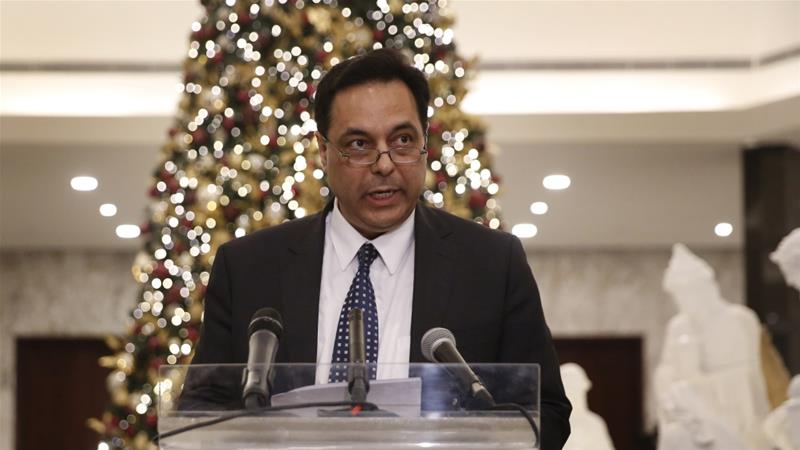
By Najia Houssari Financial Prosecutor Judge Ali Ibrahim on Thursday met with the Banking Control Commission of Lebanon (BCCL) to discuss claims that the owners of five Lebanese banks had moved personal funds worth $2.3 billion abroad. The meeting took place on the same day as Lebanon’s new Cabinet approved a policy statement aimed at rescuing the debt-ridden country from one of its worst economic crises in decades. The ministerial statement will now be submitted for discussion at a session of Parliament planned for next week. Parliament Speaker Nabih Berri on Wednesday revealed the bankers’ transfers and expressed his “concern over the fate of the depositors’ money.”
The BCCL has described the information on the transfers as “inaccurate” and pointed out that “all banks have made transfers, and the law does not have the right to learn who the owners are.” Berri is opposed to any attempt by banks to impose capital controls on clients’ deposits despite savings restrictions and limits on dollar transfers abroad having been in place since November last year. Meanwhile, activists in the country’s civil movement have called for new street protests against the ministerial statement which they have branded as “a revised version of the previous government’s data that does not take peoples’ demands into consideration.”

By AJ Naddaff BEIRUT (AP) — At a Beirut hospital ward, five Lebanese protesters with bandaged eyes and faces huddled in a circle, their arms wrapped around each other, and they vowed to be back on the streets soon, despite their wounds from recent clashes with police. “We are coming back,” said one of them, 20-year-old Charbel Francis. Such resolve by some protesters signals that demands for sweeping government reforms won’t be squashed easily, even as security forces throw up cement barriers and resort to more violent means of crowd control, such as rubber bullets. But the recent descent into clashes after three months of peaceful protests has also triggered introspection and divisions among the demonstrators about their next moves. More than 500 people, including over 100 security forces, have been injured in confrontations outside the Parliament building in downtown Beirut last month.
Most of the injuries occurred on January 18. For hours, protesters hurled stones, firecrackers and flares at police who responded by firing tear gas, water cannons and shooting rubber bullets. More than 150 people were injured that night, many of them struck in the head and eyes. It was a shocking reversal for a popular uprising against a corrupt political class that started in mid-October and had been characterised by its striking peacefulness — particularly compared to the bloodbath in Iraq, where a similar uprising has resulted in the death of more than 500 protesters since October, most of them shot dead by security forces.
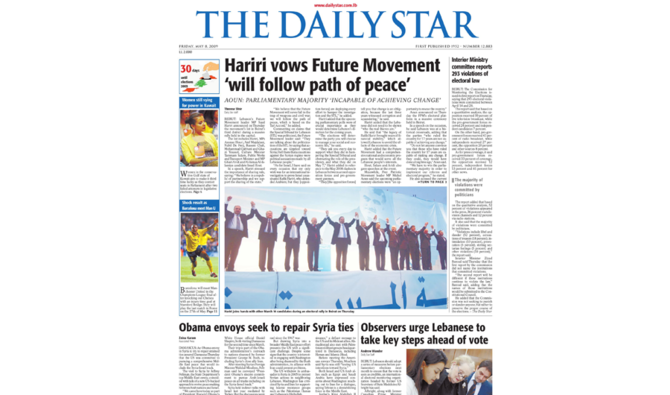
by AFP --- BEIRUT: Lebanon’s English-language The Daily Star suspended its print edition Tuesday, the latest casualty in the collapse of the country’s once-flourishing press. The newspaper, which is co-owned by the family of former Prime Minister Saad Hariri, said on its website the temporary halt of the printing presses was a result of the economic downturn. It cited “the financial challenges facing the Lebanese press which have been exacerbated by the deterioration of the economic situation in the country.” It said the temporary suspension came after “a drop to virtually no advertising revenue in the last quarter of 2019, as well as in January of this year.” In recent months, employees at the newspaper had complained of not being paid, with one departing journalist reporting in December that some were owed up to half a year in wages. A series of prominent dailies in Lebanon have disappeared from print due to funding shortages in recent years.
The Daily Star is the latest media outlet linked to the former premier to be struggling. In September last year, Hariri announced the suspension of Future TV, his ailing mouthpiece whose employees had been on strike over unpaid wages. In January 2019, the Hariri family’s Al-Mustaqbal newspaper issued its last print version, 20 years after it was established. Saudi Oger, a once-mighty construction firm that was the basis of the Hariri business empire, collapsed in 2017, leaving thousands jobless. Hariri stepped down as prime minister in late October following unprecedented natio
Population Movements to Keserwan - The Khazens and The Maans
ما جاء عن الثورة في المقاطعة الكسروانية
ثورة أهالي كسروان على المشايخ الخوازنة وأسبابها
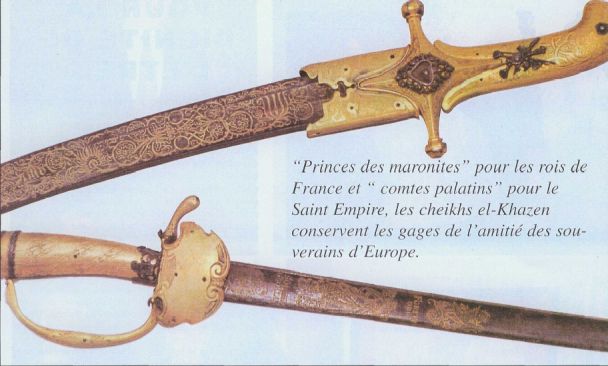
Origins of the "Prince of Maronite" Title
Growing diversity: the Khazin sheiks and the clergy in the first decades of the 18th century
Historical Members:
Barbar Beik El Khazen [English]
Patriach Toubia Kaiss El Khazen(Biography & Life Part1 Part2) (Arabic)
Patriach Youssef Dargham El Khazen (Cont'd)
Cheikh Bishara Jafal El Khazen
Patriarch Youssef Raji El Khazen
The Martyrs Cheikh Philippe & Cheikh Farid El Khazen
Cheikh Nawfal El Khazen (Consul De France)
Cheikh Hossun El Khazen (Consul De France)
Cheikh Abou-Nawfal El Khazen (Consul De France)
Cheikh Francis Abee Nader & his son Yousef
Cheikh Abou-Kanso El Khazen (Consul De France)
Cheikh Abou Nader El Khazen
Cheikh Chafic El Khazen
Cheikh Keserwan El Khazen
Cheikh Serhal El Khazen [English]
Cheikh Rafiq El Khazen [English]
Cheikh Hanna El Khazen
Cheikha Arzi El Khazen
Marie El Khazen