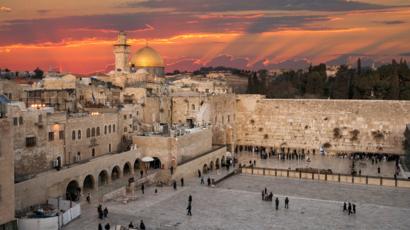
by catholicherald.co.uk -- The proposed Israeli-Palestinian peace plan announced this week is “no solution,” Catholic bishops of the Holy Land said on Wednesday. “This plan will bring no solution but rather will create more tensions and probably more violence and bloodshed,” read a statement on Wednesday from the Assembly of Catholic Ordinaries of the Holy Land, which represents Christians from Latin, Melkite, Maronite, Syrian, Armenian, and Chaldean churches in communion with Rome. The ordinaries said that the plan was one-sided in favor of Israel’s traditional demands for a two-state solution and was a “unilateral initiative” that did not involve the agreement of the Palestinians, nor respected their “equal rights and dignity.” “It is to be considered a unilateral initiative, since it endorses almost all the demands of one side, the Israeli one, and its political agenda,” the statement read. “On the other hand, this plan does not really take into considerations the just demands of the Palestinian people for their homeland, their rights and dignified life.”
The proposed “Peace-to-Prosperity” plan, announced on Wednesday by U.S. President Donald Trump and Israeli Prime Minister Benjamin Netanyahu, outlined a path to statehood for Palestine as part of a “two-state solution.” Tuesday’s proposal is open to acceptance by Palestinian leaders for a four-year term. It would set up borders for a new Palestinian state with its capital of “al-Quds,” the Arabic name for Jerusalem, encompassing parts of East Jerusalem. However, the rest of the city—including the Old City—would remain part of Israel. Israel would also keep around a third of the West Bank, including existing settlements and the Jordan Valley. There would be a four-year halt to an expansion of Israeli settlements into the proposed Palestinian territory, but there is no freeze on settlements within Israel’s proposed future boundary in the West Bank. Appearing with President Trump on Tuesday at the White House, Netanyahu said that Israel would not wait to “apply its laws” to areas that would fall under its control in the proposed boundaries, including the Jordan Valley and Jewish communities in Judea and Samaria.
by aawsat.com — The Lebanese state is seeking to control the rise in the value of the US dollar against the local …
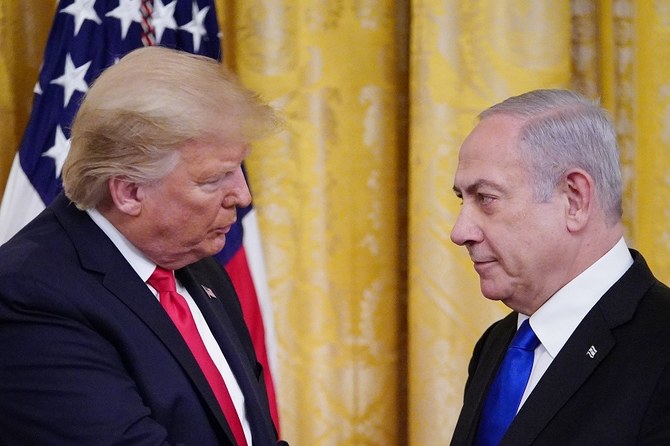
by arabnews.com -- NAJIA HOUSSARIBEIRUT: In response to the unveiling of US President Donald Trump’s Middle East peace plan on Tuesday, politicians and activists in Lebanon reiterated their support for the right of Palestinians to return to their homeland, and said they would reject any attempt to permanently resettle refugees on its soil. Trump’s plan includes billions of dollars of investment in the Palestinian territories and neighboring countries, including Lebanon, which is grappling with an unprecedented economic crisis. Some are worried that the investment might be an inducement to accept the permanent settlement of Palestinian refugees, sparking renewed fears of a shift in the country’s Christian-Muslim balance. Lebanon hosts 12 refugee camps for Palestinians. A day of protest about the Trump plan was due to take place in the camps on Wednesday, including a general strike, marches and rallies.
Figures from the Lebanese Ministry of Interior reveal that the country hosted almost 600,000 Palestinian refugees between 1948 and 2016. The number registered with The United Nations Relief and Works Agency for Palestine Refugees (UNRWA) is 459,292. A census carried out in 2017 by Lebanon’s Central Statistics Department and the Palestinian Central Bureau of Statistics in 2017 found that 174,422 refugees lives in the camps. “Lebanon does not currently have any strategy on how to face this difficult moment,” said Hassan Mneimneh, head of the Lebanese–Palestinian Dialogue Committee (LPDC), an inter-ministerial government body. “The Ministry of Foreign Affairs has not prepared any strategy on how to deal with any attempt to impose resettlement as a fait accompli. We, as Lebanese, must strive to confront this long path because resettlement will not happen overnight, and Lebanon must refuse any trade off between its faltering economic situation and the resettlement issue. There should be no compromise on this matter at all. “The solutions to the economic crisis must be far removed from the temptations that might be offered to Lebanon in exchange for resettlement.”
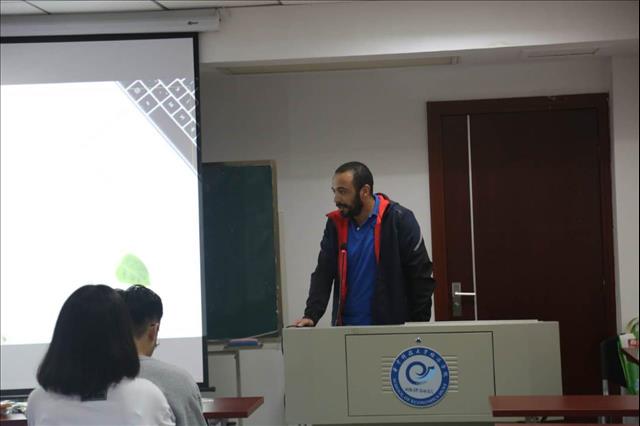
(MENAFN - Asia Times) Lebanese student Adham al-Sayed was completing the last four months of his PhD in Wuhan, China this week, when instead of a quiet Lunar New Year of thesis work, he found himself at the epicenter of the coronavirus outbreak, cordoned off in a province on lockdown. Chinese authorities on January 22 ordered a "sanitary cordon" of Hubei province, shutting down transportation routes and effectively sealing off more than 50 million people, including thousands of foreign students studying in the capital city Wuhan. "The first day was crazy. Everyone was going to the shops to stock up on supplies. We were afraid that the next day, there wouldn't be water," Sayed told Asia Times via Whatsapp call from his international students' dormitory.
Wednesday, Sayed says, was the first time he dared to leave his small apartment since the start of the province-wide quarantine, aimed at halting the spread of the epidemic, which has killed more than 100 people and infected thousands of others in China and beyond. With a black protective mask on his face and hood over his head, the 32-year-old, one of thousands of foreign students in the city, filmed his venture into the streets of Wuhan on Facebook live. While the streets appear mostly deserted, vegetable markets and pharmacies, he shows, are open and operating on normal business hours to serve the handful of people venturing out to re-stock. Pointing to a four pack of 2-liter water bottles he has just purchased, he explains they are still being sold at their pre-epidemic price of ¥10 ($1.44). "I wanted to kiss him, but I can't," he laughs, speaking of the mini-market owner through a protective mask.




Population Movements to Keserwan - The Khazens and The Maans
ما جاء عن الثورة في المقاطعة الكسروانية
ثورة أهالي كسروان على المشايخ الخوازنة وأسبابها
Origins of the "Prince of Maronite" Title
Growing diversity: the Khazin sheiks and the clergy in the first decades of the 18th century
Historical Members:
Barbar Beik El Khazen [English]
Patriach Toubia Kaiss El Khazen(Biography & Life Part1 Part2) (Arabic)
Patriach Youssef Dargham El Khazen (Cont'd)
Cheikh Bishara Jafal El Khazen
Patriarch Youssef Raji El Khazen
The Martyrs Cheikh Philippe & Cheikh Farid El Khazen
Cheikh Nawfal El Khazen (Consul De France)
Cheikh Hossun El Khazen (Consul De France)
Cheikh Abou-Nawfal El Khazen (Consul De France)
Cheikh Francis Abee Nader & his son Yousef
Cheikh Abou-Kanso El Khazen (Consul De France)
Cheikh Abou Nader El Khazen
Cheikh Chafic El Khazen
Cheikh Keserwan El Khazen
Cheikh Serhal El Khazen [English]
Cheikh Rafiq El Khazen [English]
Cheikh Hanna El Khazen
Cheikha Arzi El Khazen
Marie El Khazen