foxnews.com —The daughter of an American citizen held hostage in Lebanon called on President Trump and his administration to take action. Appearing …
by reuters — Some protesters among the hundreds who had gathered for a planned march managed to open a metal gate blocking …

BEIRUT Reuters Tom Arnold — Lebanese consumers feeling the pinch from rising living costs amid an economic crisis are likely to be squeezed even tighter as more local pounds and less U.S. dollars come into circulation, pushing up inflation. Lebanon has long relied on a steady flow of dollars from its overseas diaspora to help fund its financial system. But that has been choked off as faith in the political elite crumbled. People have been hit by what economists estimate is a 30% annual rise in inflation during the crisis that escalated in October. The pound has collapsed against the U.S. dollar in the parallel market and a liquidity crunch has bitten. That slashed consumer purchasing power and prompted some to withdraw pounds from banks as unofficial capital controls shattered confidence in the banking system and restricted access to dollars.
Arlette Mattar, 54, a midwife and mother of three, has cut back to basics, eliminating sweets and restricting purchases of items like tissues and toiletries. "The cost of living is high now," she said outside a supermarket in a middle-class Beirut neighbourhood. "Now when I shop I get only what I need." While the pound, pegged against the dollar for 22 years, is the official currency, the greenback has long been used as an alternative for transactions. Some consumers who were buying with dollars say they now use pounds. "Today you know the most important thing is food, it is necessary for one to live, so this affected all Lebanese families," said a beautician and mother of two who asked only to be identified by her surname, Boutros. She had tightened spending on goods like cleaning products. The Lebanese economy relies on imports.

BEIRUT (Reuters) - Lebanon’s new government must reassure international donors it is serious about reforms to tackle a financial crisis as it looks initially to secure up to $5 billion in soft loans for basic goods, its finance minister said on Thursday. The government that took office on Tuesday faces an emergency in which banks have imposed controls, the Lebanese pound has weakened and protesters have turned to violence which a senior U.N. official described as “politically manipulated”. “The entire international community has its eye on what this government will do,” Finance Minister Ghazi Wazni said in televised comments. “What is its programme, what are the reform steps, is it ready for support or no?” Lebanon is looking to secure $4 billion to $5 billion in soft loans from international donors to finance purchases of wheat, fuel and medicines, The Daily Star newspaper had earlier quoted the minister as saying. “This injection will cover the country’s needs for one year,” said Wazni.
Bank restrictions on access to cash, inflation and job losses have hit people hard. Increasingly violent though more limited protests have replaced jubilant demonstrations against a political elite blamed for driving Lebanon towards collapse. Interior minister Mohammed Fahmi said the state would not tolerate attacks on security forces who he said would protect people’s rights, including freedom of expression. On Wednesday, protesters broke stone slabs off buildings in a luxury commercial district of Beirut to hurl at barricades guarded by security forces blocking paths to parliament. “This looks more like a political manipulation to provoke the security forces, to undermine civil peace, to fan up sectarian strife,” Jan Kubis, U.N. special coordinator for Lebanon, wrote on Twitter, mentioning attacks on security forces and vandalism of state institutions and private property. The new government was set up with backing from the powerful Iran-backed group Hezbollah and its political allies. Major political parties that have Western backing, including that of former premier Saad al-Hariri, are not part of the cabinet.
RESCUE PLAN

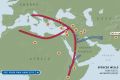

Population Movements to Keserwan - The Khazens and The Maans
ما جاء عن الثورة في المقاطعة الكسروانية
ثورة أهالي كسروان على المشايخ الخوازنة وأسبابها
Origins of the "Prince of Maronite" Title
Growing diversity: the Khazin sheiks and the clergy in the first decades of the 18th century
Historical Members:
Barbar Beik El Khazen [English]
Patriach Toubia Kaiss El Khazen(Biography & Life Part1 Part2) (Arabic)
Patriach Youssef Dargham El Khazen (Cont'd)
Cheikh Bishara Jafal El Khazen
Patriarch Youssef Raji El Khazen
The Martyrs Cheikh Philippe & Cheikh Farid El Khazen
Cheikh Nawfal El Khazen (Consul De France)
Cheikh Hossun El Khazen (Consul De France)
Cheikh Abou-Nawfal El Khazen (Consul De France)
Cheikh Francis Abee Nader & his son Yousef
Cheikh Abou-Kanso El Khazen (Consul De France)
Cheikh Abou Nader El Khazen
Cheikh Chafic El Khazen
Cheikh Keserwan El Khazen
Cheikh Serhal El Khazen [English]
Cheikh Rafiq El Khazen [English]
Cheikh Hanna El Khazen
Cheikha Arzi El Khazen
Marie El Khazen