The Daily Star BEIRUT: Washington does “not know the answer yet” if it will work with the new Lebanese government, U.S. Secretary …

by National -- Lebanon’s new Prime Minister Hassan Diab formed a government late on Tuesday, 34 days after he was nominated. The former university professor will have to address Lebanon’s worst economic crisis since the end of the civil war in 1990, amid nationwide protests. Mr Diab was intent on forming a government of 18 ministers but caved in at the last minute to political pressure and added two more to his Cabinet. Many had already taken to the streets on Tuesday to reject his government, which they consider to be of “one colour”. That meant it is backed by President Michel Aoun and his allies, including Iran-aligned Hezbollah, and does not include western-supported parties such as former prime minister Saad Hariri’s Future Movement.
The National asked three Lebanon experts for their take on the new government. “The government today is an interesting mix between specialists and others who are affiliated with political parties,” including advisers to former ministers, said Maha Yahya, director of the Carnegie Middle East Centre. Ms Yahya said one name stood out: Foreign Affairs Minister Nassif Hitti, a Maronite Christian and formerly Lebanon’s ambassador to the Arab League. “He is quite highly regarded and a good former diplomat,” she said. This is the first Lebanese Cabinet to include six women, including the first female Defence Minister, Zeina Akar. Ms Akar, a Greek-Orthodox Christian, is also the country's first female Deputy Prime Minister. “Her appointment came out of left field. Nobody saw this coming,” Ms Yahya said. “She has never occupied a public office before.” But she criticised the process of forming the government, which was conducted as usual through back-door negotiations between political parties. “This is just not what protesters were aspiring to so I don’t think it’s going to end well,” Ms Yahya said. She also said the government might not be up to the task of addressing Lebanon’s rapidly deteriorating economic situation. “I cannot underestimate the size of the challenges that the country is facing on economic and fiscal terms, and their repercussions on society, on the standards of living, and in the medium term, on the stability of the country,” Ms Yahya said.
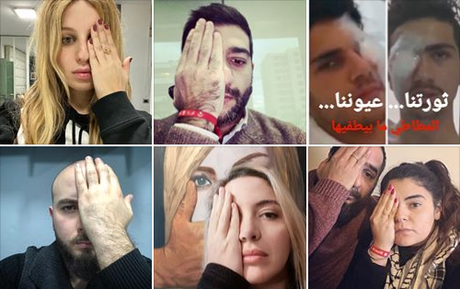
by naharnet.com -- Lebanese activists on Monday launched a social media campaign to express outrage and solidarity with anti-government protesters who lost eyes after being hit by rubber bullets fired by riot police. The activists posted pictures of themselves covering one eye under the Arabic hashtag “Our Revolution Is Your Eyes”. Two protesters reportedly lost an eye each after being hit by rubber bullets in Sunday evening’s demo in central Beirut. In another show of defiance, demonstrators who said they took part in the weekend protests used the Arabic hashtag "The Infiltrator Is Me" and disclosed their full personal details in response to accusations by authorities that “infiltrators” are taking part in the demos. More than 540 people, including protesters and security forces, were wounded in the weekend violence in central Beirut, according to a toll compiled by AFP from figures provided by the Red Cross and Civil Defense.
Lawyers and rights groups have condemned "excessive" and "brutal" use of force by security forces, who they said hit protesters on the head, face and genitals. Human Rights Watch accused riot police of "launching tear gas canisters at protesters' heads, firing rubber bullets in their eyes and attacking people at hospitals and a mosque." The violence also drew condemnation from the United Nations, which called the crackdown "unacceptable." A 22-year-old protester, who asked not to be named for security reasons, said he was severely beaten by security forces until he was bleeding in the head. "Four of them were beating me with batons," said the man, who has been in the hospital since Saturday. "Then they dragged me on the ground before they started kicking me," he told AFP. "One of them slammed the base of a tear gas launcher against my mouth, another jabbed my face."
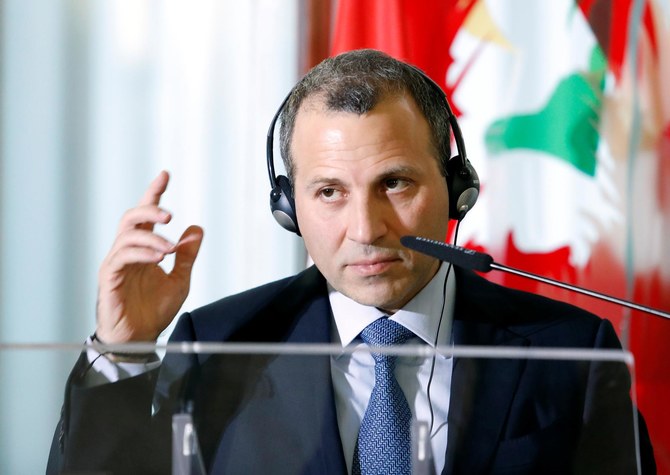
by Tarek Ali Ahmed -- arabnews.com -- DAVOS: Lebanese have erupted in anger after the country’s caretaker foreign minister was announced as a participant at the World Economic Forum conference in Davos. Activists have started an online petition called “No to Gebran Bassil at WEF”. “It's a shame that the international community fails to see Gebran Bassil amongst the pool of failed politicians who have lead to the crisis Lebanon witnesses today,” Chermine Haidar, a Lebanese student at SOAS University in London, told Arab News. “He has for years incited sectarian violence in Lebanon, and today he is turning a blind eye to the devastating violence against civilians we're witnessing,” she added. Bassil, who has been one of the protesters’ main targets, is set to speak in a panel session called “The Return of Arab Unrest” along with Hussain Sajwani, chairman of Dubai-based developer Damac Properties, Rached Ghannouchi, speaker of the Tunisian assembly and the Dutch trade minister Sigrid Kaag.
The panel, moderated by CNBC anchor Hadley Gamble, will discuss the rise of popular protests across the Middle East and how they can “be translated into a practical roadmap for positive change,” according to the session description. “What positive change will Gebran Bassil be talking about?” asked George Azzi on Twitter. “How to ignore protesters and oppress them? “There is a revolution against him in Beirut and he is invited to speak about a ‘practical roadmap to avoid past pitfalls?’ This panel is shameful!”
Another Lebanese expat, Catherine Warde, also reacted with disbelief at Bassil’s appearance. “How can someone who is so hated by their own people go and speak at the World Economic Forum when the people that they should be representing are being shot and tear gassed because of orders they gave out?” she said. The Lebanese protests erupted at the weekend into the worst violence since the demonstrations began in October. Hundreds of people were injured during clashes with riot police and the army. The online petition, which has reached more than 5,000 signatures, says: “We the People urge the World Economic Forum to rethink Mr Bassil’s invite and listen to the People of Lebanon, listen to their voice, the voice of truth, the voice of justice.” “He should not be present at a prestigious international forum such as Davos in our name. He should not be given a legitimate platform to cement his power and to speak on behalf of a nation that has rejected him and accuses him of flagrant corruption.” One Lebanese twitter user, Rula El-Halabi, tweeted a poll that asked Lebanese citizens whether they agree with Bassil representing Lebanon at the forum. Some 76 percent out of the 17,551 who responded voted “No.”


Population Movements to Keserwan - The Khazens and The Maans
ما جاء عن الثورة في المقاطعة الكسروانية
ثورة أهالي كسروان على المشايخ الخوازنة وأسبابها
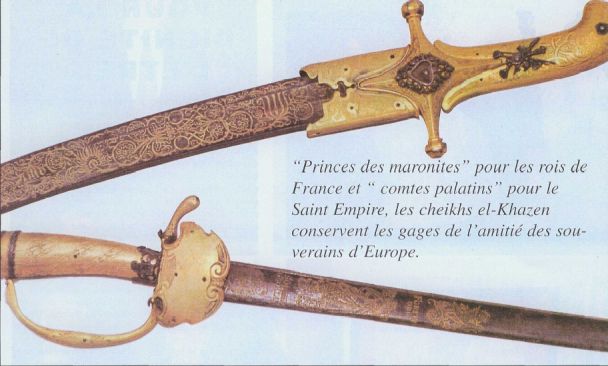
Origins of the "Prince of Maronite" Title
Growing diversity: the Khazin sheiks and the clergy in the first decades of the 18th century
Historical Members:
Barbar Beik El Khazen [English]
Patriach Toubia Kaiss El Khazen(Biography & Life Part1 Part2) (Arabic)
Patriach Youssef Dargham El Khazen (Cont'd)
Cheikh Bishara Jafal El Khazen
Patriarch Youssef Raji El Khazen
The Martyrs Cheikh Philippe & Cheikh Farid El Khazen
Cheikh Nawfal El Khazen (Consul De France)
Cheikh Hossun El Khazen (Consul De France)
Cheikh Abou-Nawfal El Khazen (Consul De France)
Cheikh Francis Abee Nader & his son Yousef
Cheikh Abou-Kanso El Khazen (Consul De France)
Cheikh Abou Nader El Khazen
Cheikh Chafic El Khazen
Cheikh Keserwan El Khazen
Cheikh Serhal El Khazen [English]
Cheikh Rafiq El Khazen [English]
Cheikh Hanna El Khazen
Cheikha Arzi El Khazen
Marie El Khazen