
by thearabweekly.com -- Makram Rabah -- When the French Mandate founded “Grand Liban” — the State of Greater Lebanon — almost a century ago, it was never assumed that the small merchant republic would someday reach rock bottom. Decades of unheeded political corruption, coupled with Beirut’s inability to maintain solid connections with its regional Arab allies, left Lebanon desperate for a lifeline from the international community, primarily France. The International Support Group for Lebanon (ISG), led by France and the United Nations, met December 11 in Paris to discuss options to help Lebanon in its predicament. Observers said the ISG was a first step towards Lebanon’s economic salvation because France would lead an international effort to inject much-needed funds into the Lebanese economy, which collapsing towards a total meltdown.
Time and again, French President Emmanuel Macron has shown remarkable resolve in supporting the government of Lebanese Prime Minister Saad Hariri, including sponsoring the CEDRE donor conference in April 2018, which earmarked $11 billion to overhaul Lebanon’s decaying infrastructure and jump-start its ailing economy. However, the CEDRE funds were part of a wide reform package that the Lebanese state had publicly subscribed to, which included administrative, fiscal and budgetary reform, none of which were implemented by Hariri’s cabinet, leaving the $11 billion in limbo. Despite visits by French envoy Pierre Duquesne and his repeated urging to Lebanese officials of the importance of the reforms, the recommendations were ignored and the Hariri government failed to address key challenges, primarily reform of the electricity sector and the proper passing of the annual budget. Lebanon’s lack of seriousness, its irresponsible attitude and its refusal to heed the warnings of the international community were penalised in Paris when the ISG convened without any serious Lebanese presence. Beirut was represented by token senior diplomats and a few Hariri advisers.
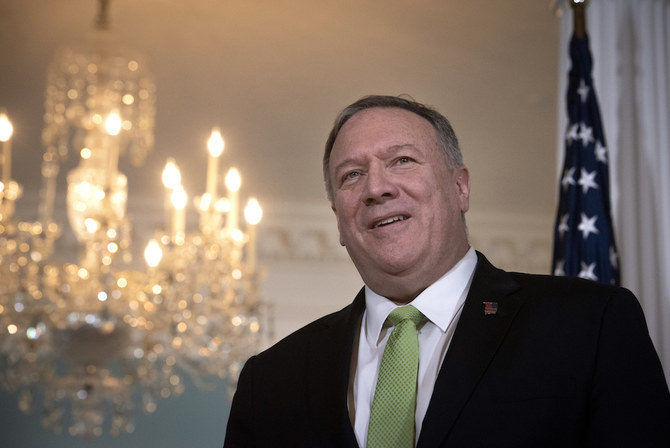
by arabnews.com -- BEIRUT: US Secretary Mike Pompeo said on Friday that the US supported the Lebanese people in their fight against government corruption and terrorist threats. Pompeo took to Twitter on Friday, where he posted: We stand with the people of #Lebanon to fight against corruption and terrorism. Today we designated two prominent Lebanese businessmen whose illicit financial activity supports Hizballah. We will continue to use all the tools at our disposal to counter the threat Hizballah poses.
On Friday, the US Treasury Department imposed new sanctions against two alleged Hezbollah money launderers and financiers, including a diamond trader who collected art. It accused Lebanon-based Nazem Said Ahmad, whose art collection includes works by Pablo Picasso and Andy Warhol, and his companies of helping to launder large sums of money for the group. “Ahmad, who has a vast art collection, is one of Hezbollah’s top donors, generating funds through his longstanding ties to the ‘blood diamond’ trade,” it said. A second man based in the Democratic Republic of Congo, Saleh Assi, was sanctioned for laundering money through Ahmad’s diamond business and supporting another alleged financier already under sanctions. Pompeo's comments came as the head of Hezbollah, Hassan Nasrallah, warned that the formation of a new cabinet desperately needed to redress a tumbling economy could take time.
Lebanon has been swept by unprecedented nationwide protests since October 17, demanding the complete overhaul of a political class deemed inept and corrupt. The government stepped down on October 29, but bitterly divided political parties have failed to agree on a new premier ever since. Hezbollah chief Nasrallah spoke ahead of parliamentary consultations to nominate a new prime minister on Monday. “The consultations are supposed to take place on Monday and we hope that whoever receives most votes will be designated to form a government,” he said in a televised address. “But the formation will be no easy feat,” he warned.
by AFP — BEIRUT — Dozens of young people opposed to Lebanon’s anti-government protest movement clashed with riot police in Beirut on …
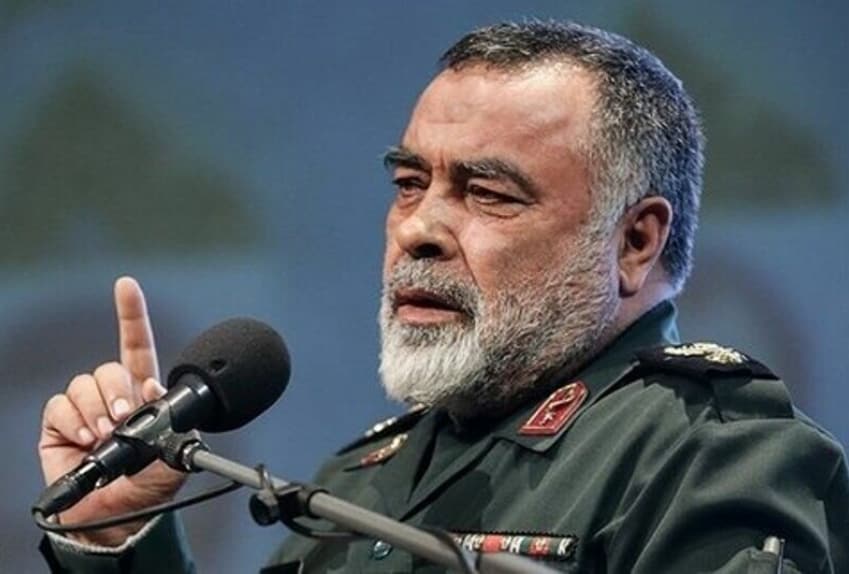
by memri.org -- On December 12, 2019, Morteza Ghorbani, a senior advisor in Iran's Islamic Revolutionary Guards Corps (IRGC), threatened that Iran could attack Israel from Lebanese soil. Responding to the Israeli foreign minister's remark that an Israeli attack on Iran was "an option," Ghorbani stated: "If the Zionist regime makes [even] the smallest mistake vis-à-vis Iran, we will level Tel Aviv to the ground, from Lebanon, without having to launch a single missile or any [other] device from Iran... God knows that if, one night, Iran's leader [Ali Khamenei] will order a missile attack [on Israel], those Zionists will all surrender... Today, the hearts and spirits of the Yemeni, Syrian, Iraqi, Lebanese and Gazan peoples are with Iran."[1] Ghorbani's statement evoked outrage among many Lebanese officials. A conspicuous response was that of Defense Minister Elias Bou Saab, considered to be close to Hizbullah. He said that, if Ghorbani had indeed made the statement, it was very saddening and was an infringement of Lebanon's sovereignty. Other officials said that Lebanon was not a no-man's-land to be used by Iran, or a conduit for relaying IRGC threats to other countries. Describing the statement as a violation of Lebanon's honor and dignity, some called to demand an explanation for Ghorbani's statement from the Iranian ambassador and even to expel the ambassador.
Criticism of Ghorbani's remarks was also expressed in Lebanese press articles, which condemned not only Ghorbani but also Lebanese officials, for failing to respond to such Iranian statements and allowing Iran to trample Lebanon's sovereignty. In response to the uproar, IRGC spokesman Ramezan Sharif issued a denial, stating that Ghorbani's remarks had been "distorted and misconstrued by the media." Sharif added that "Ghorbani does not currently serve as an IRGC advisor but serves in other capacities in the armed forces."[2] The following are excerpts from some of the Lebanese responses to Ghorbani's statement.
Lebanese Officials: Ghorbani's 'Unacceptable' Statement Is A Violation Of Lebanon's Sovereignty; Lebanon Is Not A Conduit For Conveying IRGC Messages Lebanese Defense Minister Elias Bou Saab tweeted on December 10: "Assuming Ghorbani... indeed made the statements attributed to him, they are very saddening and unacceptable, and are an infringement of the sovereignty of Lebanon, which has friendly relations with Iran. Lebanon's independent decision-making must not be harmed in any way."[3]




Population Movements to Keserwan - The Khazens and The Maans
ما جاء عن الثورة في المقاطعة الكسروانية
ثورة أهالي كسروان على المشايخ الخوازنة وأسبابها
Origins of the "Prince of Maronite" Title
Growing diversity: the Khazin sheiks and the clergy in the first decades of the 18th century
Historical Members:
Barbar Beik El Khazen [English]
Patriach Toubia Kaiss El Khazen(Biography & Life Part1 Part2) (Arabic)
Patriach Youssef Dargham El Khazen (Cont'd)
Cheikh Bishara Jafal El Khazen
Patriarch Youssef Raji El Khazen
The Martyrs Cheikh Philippe & Cheikh Farid El Khazen
Cheikh Nawfal El Khazen (Consul De France)
Cheikh Hossun El Khazen (Consul De France)
Cheikh Abou-Nawfal El Khazen (Consul De France)
Cheikh Francis Abee Nader & his son Yousef
Cheikh Abou-Kanso El Khazen (Consul De France)
Cheikh Abou Nader El Khazen
Cheikh Chafic El Khazen
Cheikh Keserwan El Khazen
Cheikh Serhal El Khazen [English]
Cheikh Rafiq El Khazen [English]
Cheikh Hanna El Khazen
Cheikha Arzi El Khazen
Marie El Khazen