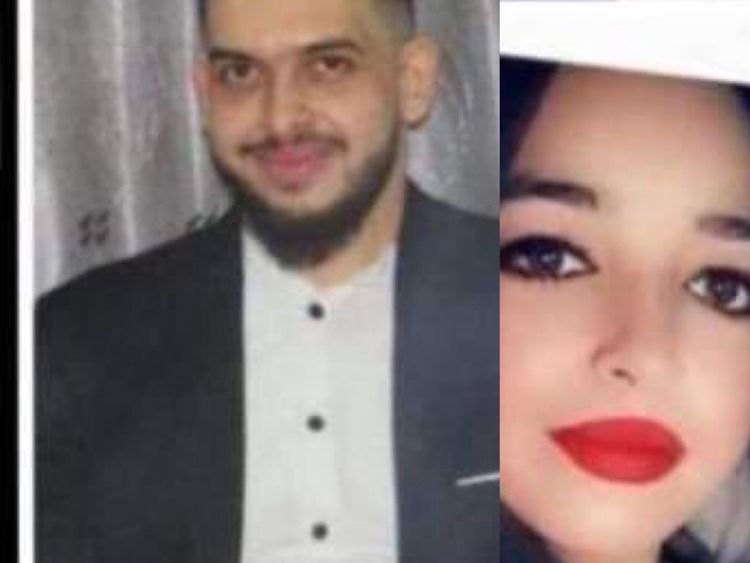
by gulfnews.com - Bassam Za za --- Abdul Rahman Kakheya, 25, and his 22-year-old sister, Rama, died in the northern Lebanese city of Tripoli. The engagement party of Abdul Rahman and his fiancé, Mariam, was scheduled for December 13. The victims’ sister escaped with a shoulder injury after she miraculously pulled her way out of the house in Al Asafiri neighbourhood of Al Mina area. After the deaths, angry protesters attacked the municipality headquarters in Tripoli Tuesday, smashing windows and setting a room on fire. The attack in the country’s north came as heavy rainfall blocked roads and strained major infrastructure across Lebanon. The country is already roiled by anti-government protests since October 17 and a plunging economy.
Negligence
Locals told the local LBC TV station that the collapse was the result of negligence, saying that the municipality has repeatedly ignored calls by the owners to renovate the old house. The victims’ neighbours and friends were quoted as claiming that the family had lodged a request to have their poorly-maintained house renovated, but Al Mina Municipality rejected this, saying that a special permission was required for this as the site was important from an archeological perspective. “I cannot comment on whether or not the victims’ family approached Al Mina Municipality to have their house renovated. However, I can confirm that there are several properties in different neighbourhoods within our jurisdiction that have been categorised as archeological sites, and require written permissions to be renovated. There will be an investigation … God bless the victims’ souls,” an official at Al Mina Municipality told Gulf News over the phone.
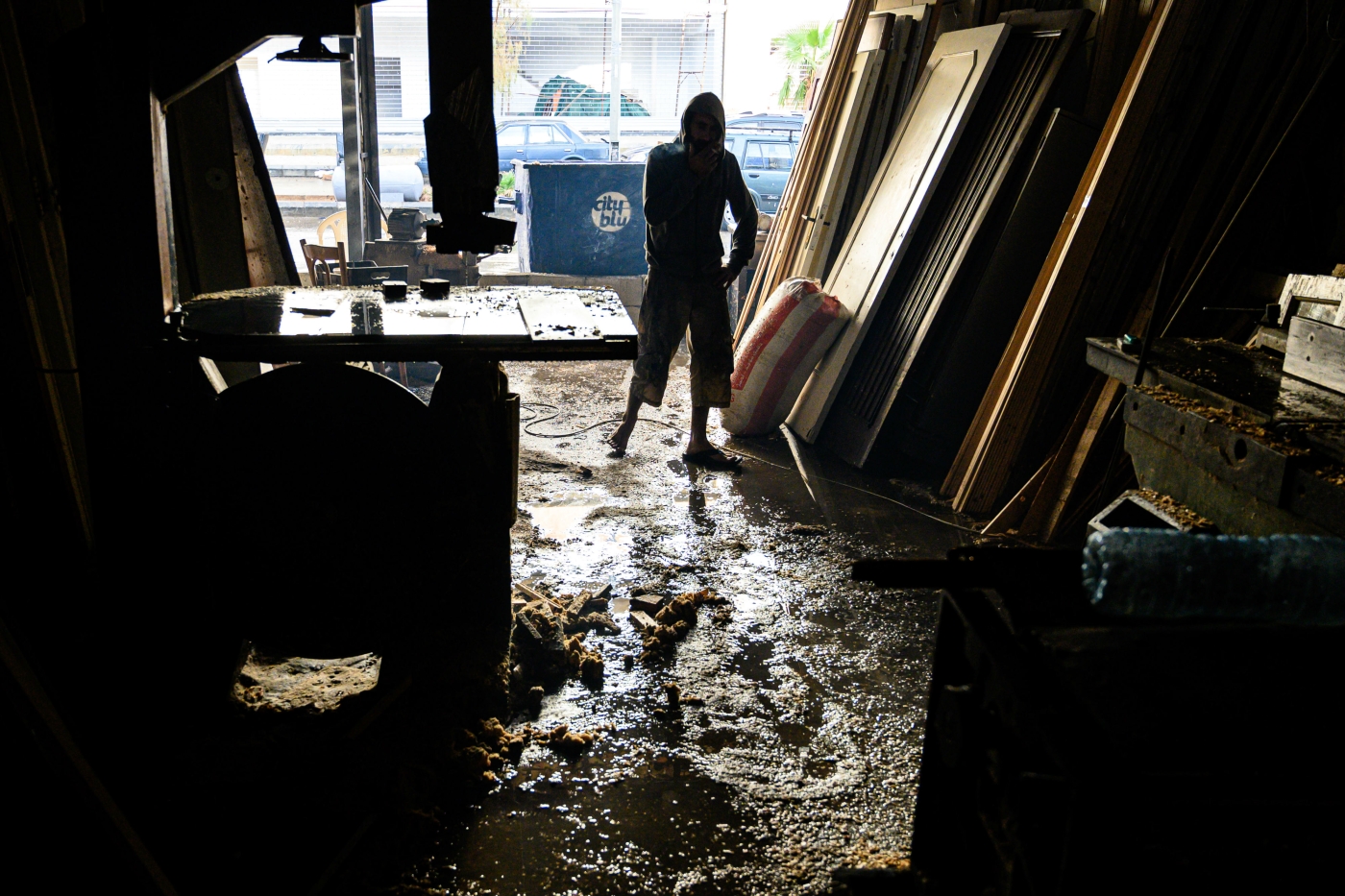
by middleeasteye.net -- Finbar Anderson -- When the waters finally receded, Lebanese in the south Beirut suburb of Jnah were left looking at a carpet of brown sludge and stains running up every wall. “The guys and I have been working for hours to clean this up,” said Mohammad, a 22-year-old man working in a glazing shop. He swept as he talked, a grim look on his face as he assessed the damage to his stock. Everything from power saws to wood had been swept away in the flooding that hit the neighbourhood on Monday. Rains turned the roads into rivers, with Mohammad estimating the water reaching a height of around 1.5 metres. The damage to the tools and glass ran well into thousands of dollars, he estimated.
Mohammad’s neighbour, also a glazier, cleaned his store wearing just one shoe. The other had been swept away, along with much of his stock. That which hadn’t been lost to the waters was ruined. He held out his sodden receipts book, showing how ink and pages had been moulded together into one mass. In a nearby carpenter’s shop, every one of its four large saws was now broken. Damp sawdust covered the floor and the planks of wood lining the walls all bore a distinctive mark where they had been soaked in floodwater.
For many Lebanese, the flooding is yet another example of their leaders' chronic mismanagement of the country - a situation that has taken protesters to the streets daily since 17 October. “The state, the government, doesn’t do anything,” a passerby said. Questions over infrastructure While the neighbourhood has flooded before, Monday’s storms were particularly severe. “It usually happens once or twice a year, but this is the first time we’ve had to send the children home,” said Taghrid Hussein, the headmistress of a local school. The few children that remained in the early afternoon helped to sweep water from the school’s entrance.

by dailystar.com.lb -- Emily Lewis -- BEIRUT: Caretaker Energy Minister Nada Boustani Monday awarded Lebanese company ZR Energy the contract for importing 150,000 tons of gasoline on behalf of the state to avoid a fuel crisis, after the announcement was delayed a week. ZR Energy offered to provide 95 octane gasoline at market price, plus $38.90 per ton, with a fee of $0.80 for discharge at any additional port. The caretaker minister was originally set to announce the winning bid on Dec. 2, but decided to postpone the conclusion of the bidding by a week to “allow more competition,” after only two companies submitted offers. Three companies had submitted bids to the state tender by Monday: ZR Energy, Lebneft FZE and Oman Trading International. A fourth company, which Boustani did not identify, also submitted a bid but did not provide the correct documents as outlined in the book of terms. Boustani had published the book of terms and opened the offers live on television in an effort to “increase transparency.”
Oman Trading International offered to provide gasoline at market rate, plus $46.80 and $1 for discharge at an additional port, while Lebneft FZE offered $39.36 with $0.75 for an additional port. The 150,000 tons make up around 10 percent of Lebanon’s annual gasoline consumption. According to the minister, this first attempt to hold tenders for the state to import gasoline was a “trial run” to decide whether the state could in the future be responsible for purchasing a larger share of Lebanon’s fuel needs. “Congratulations to the winning company and to the Lebanese people, the state has entered the market,” Boustani said after she announced the winning offer put forward by ZR Energy.
ZR Energy, registered in Dubai, is owned by Lebanese businessmen Teddy and Raymond Rahme, who founded the ZR Group in 2005 and are stakeholders in several Lebanese banks. Raymond Rahme is implicated in a U.S. lawsuit involving the death of American businessman and arms dealer Dale Stoffel in 2004 in Iraq, where he allegedly acted as a middle man between Iraqi Defense Ministry officials and Stoffel’s company. The $25 million paid to Rahme’s Lebanese account by Iraqi officials was never transferred to Stoffel, who was assassinated on Dec. 8, 2004. Rahme is also implicated in a lawsuit filed by Kuwaiti logistics firm Agility and French telecoms company Orange for the misappropriation of millions of dollars. The Daily Star could not reach Rahme for comment Monday. Boustani said at Monday’s news conference that “the market is always open to any company that wants to import petroleum products,” and that the ministry would announce a tender for the import of diesel Wednesday. She repeated her assertion that the first shipment of gasoline should arrive within 15 days “if the procedures are finished quickly.” However, according to the tender documents, the shipment may not arrive in Lebanon until Jan. 6.
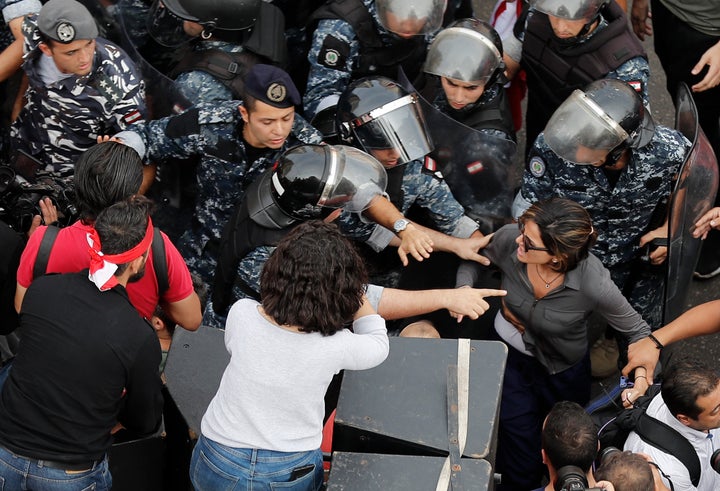
BEIRUT (AP) Bassem Mroue— Lebanese journalists are facing threats and wide-ranging harassment in their work — including verbal insults and physical attacks, even death threats — while reporting on nearly 50 days of anti-government protests, despite Lebanon’s reputation as a haven for free speech in a troubled region. Nationwide demonstrations erupted on Oct. 17 over a plunging economy. They quickly grew into calls for sweeping aside Lebanon’s entire ruling elite. Local media outlets — some of which represent the sectarian interests protesters are looking to overthrow — are now largely seen as pro- or anti-protests, with some journalists feeling pressured to leave their workplaces over disagreements about media coverage.
The deteriorating situation for journalists in Lebanon comes despite its decades-old reputation for being an island of free press in the Arab world. Amid Lebanon’s divided politics, media staff have usually had wide range to freely express their opinions, unlike in other countries in the region where the state stifles the media. The acts of harassment began early in the protests. MTV television reporter Nawal Berry was attacked in central Beirut in the first days of the demonstrations by supporters of the militant group Hezbollah and its allies. They smashed the camera, robbed the microphone she was holding, spat on her and kicked her in the leg. “How is it possible that a journalist today goes to report and gets subjected to beating and humiliation? Where are we? Lebanon is the country of freedoms and democracy,” Berry told The Associated Press.
Outlets like MTV are widely seen as backing protesters’ demands that Lebanon’s sectarian political system be completely overturned to end decades of corruption and mismanagement. Rival TV stations and newspapers portray the unrest — which led to the Cabinet’s resignation over a month ago — as playing into the hands of alleged plots to undermine Hezbollah and its allies. Many of those outlets are run by Hezbollah, President Michel Aoun’s Free Patriotic Movement and the Amal Movement of Parliament Speaker Nabih Berri. These media regularly blast protesters for closing roads and using other civil disobedience tactics, describing them as “bandits.”
For Berry, the media environment worsened as the unrest continued. On the night of Nov. 24, while she was covering clashes between protesters and Hezbollah and Amal supporters on a central road in Beirut, supporters of the Shiite groups chased her into a building. She hid there until police came and escorted her out. “I was doing my job and will continue to do so. I have passed through worse periods and was able to overcome them,” said Berry, who added she is taking a short break from working because of what she passed through recently.
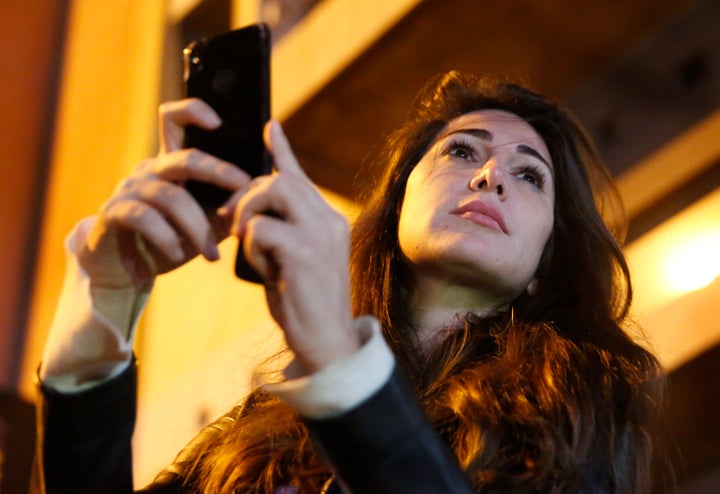
Hezbollah supporters also targeted Dima Sadek, who resigned last month as an anchorwoman at LBC TV. She blamed Hezbollah supporters for stealing her smartphone while she was filming protests, and said the harassment was followed by insulting and threatening phone calls to her mother, who suffered a stroke as a result of the stress. “I have taken a decision (to be part of the protests) and I am following it. I have been waiting for this moment all my life and I have always been against the political, sectarian and corrupt system in Lebanon,” said Sadek, a harsh critic of Hezbollah, adding that she has been subjected to cyberbullying for the past four years. “I know very well that this will have repercussions on my personal and professional life. I will go to the end no matter what the price is,” Sadek said shortly after taking part in a demonstration in central Beirut.

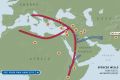
Population Movements to Keserwan - The Khazens and The Maans
ما جاء عن الثورة في المقاطعة الكسروانية
ثورة أهالي كسروان على المشايخ الخوازنة وأسبابها
Origins of the "Prince of Maronite" Title
Growing diversity: the Khazin sheiks and the clergy in the first decades of the 18th century
Historical Members:
Barbar Beik El Khazen [English]
Patriach Toubia Kaiss El Khazen(Biography & Life Part1 Part2) (Arabic)
Patriach Youssef Dargham El Khazen (Cont'd)
Cheikh Bishara Jafal El Khazen
Patriarch Youssef Raji El Khazen
The Martyrs Cheikh Philippe & Cheikh Farid El Khazen
Cheikh Nawfal El Khazen (Consul De France)
Cheikh Hossun El Khazen (Consul De France)
Cheikh Abou-Nawfal El Khazen (Consul De France)
Cheikh Francis Abee Nader & his son Yousef
Cheikh Abou-Kanso El Khazen (Consul De France)
Cheikh Abou Nader El Khazen
Cheikh Chafic El Khazen
Cheikh Keserwan El Khazen
Cheikh Serhal El Khazen [English]
Cheikh Rafiq El Khazen [English]
Cheikh Hanna El Khazen
Cheikha Arzi El Khazen
Marie El Khazen