By BASSEM MROUE and MARIAM FAM -- BEIRUT (AP) — Young men chanting the “people want to bring down the regime” gathered outside the office of Lebanese legislator Mohammed Raad, the powerful head of Hezbollah’s parliamentary bloc. One shirtless man grabbed a metal rod and swung it at the sign bearing Raad’s name, knocking it out of place as others cheered. It was a rare scene in the southern market town of Nabatiyeh, a Hezbollah stronghold. The protests engulfing Lebanon have united many across sectarian lines and shattered taboos, with some taking aim at leaders from their own sects, illustrating a new, unfamiliar challenge posed to the militant group.
Iranian-backed Hezbollah built a reputation among supporters as a champion of the poor and a defender of Lebanon against Israel’s much more powerful military. It and its Shiite ally, the Amal party, have enjoyed overwhelming backing among the Shiite community since the end of the 1975-1990 civil war, making them a political powerhouse that, along with allies, has dominated recent governments. But now many protesters group Hezbollah into the ruling class they are revolting against, blaming it for wrecking the economy with years of corruption and mismanagement. Protesters want that entire political elite out. Hezbollah’s leader, Hassan Nasrallah, and Amal’s chief, Parliament Speaker Nabih Berri, have not been spared. “All of them means all of them, and Nasrallah is one of them,” protesters have chanted at some Beirut rallies. The demonstrations that erupted Oct. 17 spread throughout the country, including predominantly Shiite areas in the south and the eastern Bekaa Valley. “The heavy participation of the Shiites ... posed a main challenge: that there’s a large number from the sect that doesn’t accept the current situation,” said Hilal Khashan, professor of political science at the American University of Beirut. “That’s why there was a swift and decisive decision to nip this in the bud.” In several instances, men suspected of being Hezbollah and Amal supporters beat up protesters and destroyed their tents. Some of those who had criticized Nasrallah and Berri on social media appeared in videos, after apparently being beaten, to apologize for what they did. Amal denied any link to those behind the beatings, saying in a statement that they should be arrested and that they violated the movement’s belief in freedom of opinion. Hezbollah has survived many threats over the past years, including charges by a U.N.-backed tribunal for the killing of former Prime Minister Rafik Hariri in February 2005 — an accusation Hezbollah strongly denies — a ruinous war with Israel in 2006 and the war in neighboring Syria, where Hezbollah has sent thousands of fighters to back President Bashar Assad, losing an estimated 2,000 men.

by thenational.ae -- Sunniva Rose -- As Lebanese politicians seemed to be caught in a disastrous deadlock on Sunday, the anti-establishment protest movement scored its first electoral win, voting in an independent to lead the Beirut Bar Association. Melhem Khalaf won by a comfortable margin against Nader Gaspard, a candidate backed by the Free Patriotic Movement, Lebanese Forces, Progressive Socialist Party and the Future Movement. Pierre Hanna, previously backed by the LF, PSP and Future Movement, withdrew his candidacy in favour of Mr Gaspard to try to secure his win. “We hope this day will renew democracy within Lebanon’s institutions,” Mr Khalaf said in his victory speech. Until now, the Beirut Bar Association had not taken a formal stance on the month of mass protests against corruption, poor governance and a crumbling economy.
But as Mr Khalaf’s name was announced, many in the crowd of lawyers at the tally cheered and broke into chants of "thowra", or revolution. Meanwhile, a plan by parties to form a new government to tackle the dire economic situation and address the demands of protesters appeared to fall apart. Two days after he was chosen by Lebanon’s most powerful political parties to be the country’s next prime minister, veteran politician Mohammad Safadi withdrew his candidacy on Saturday evening. As the country faces a possible “total economic meltdown with potential violence”, its political system is “completely paralysed” by the mass protests that started on October 17, analyst Imad Salamey said. After resigning on October 29, caretaker Prime Minister Saad Hariri had reportedly agreed to meet protesters half-way by forming a small government of technocrats. An apolitical government is one of the key demands of protesters. Triggered by a suggested tax on WhatsApp calls, the protest movement quickly became a rejection of the entire Lebanese political system, based on sectarianism. But Mr Hariri’s proposal was reportedly dismissed by President Michel Aoun, who wants politicians to be part of the new government.

by AFP -- BEIRUT: The US embassy in Lebanon said on Saturday it supported the one-month-old anti-government protest movement in Lebanon. “We support the Lebanese people in their peaceful demonstrations and expressions of national unity,” the embassy said on Twitter. Lebanon has since Oct 17 been swept by an unprecedented cross-sectarian protest movement against the entire political establishment, which is widely seen as irretrievably corrupt and unable to deal with a deepening economic crisis. The government stepped down on Oct 29 but stayed on in a caretaker capacity, and an economic crisis has also battered the country.
Some local players, notably the powerful pro-Iranian Shiite movement Hezbollah, have accused “external parties” and Western embassies of supporting the popular uprising, including through financial backing. Several mass rallies are planned for Sunday in cities across Lebanon to keep up the pressure on the country’s ruling class. On Saturday, an initiative dubbed the “revolution bus” traversed the country. Leaving Akkar region in the north in the morning, the bus – decorated with the names of protest hotbeds in the multi-confessional country – arrived early in the evening in the southern city of Sidon. According to protesters, the initiative sought to break down geographical and sectarian barriers and overcome the collective trauma of the 1975-1990 civil war. In an incident that became emblematic of inter-sectarian schisms during that deadly conflict, a bus was strafed by gunfire.

by Nicky Harley -- thenational.ae -- Former finance minister Mohammad Safadi has withdrawn his candidacy to be prime minister of the next Lebanese government. In a statement, Mr Safadi said it would have been difficult to form a “harmonious” cabinet supported by all parties. He said he hoped outgoing prime minister Saad Hariri would be designated again for the post. On Thursday, three of Lebanon's main political parties agreed on the 75-year-old billionaire businessman as their choice to become Lebanon’s new prime minister. Caretaker Foreign Minister Gebran Bassil, head of the Free Patriotic Movement (FPM), had confirmed on Friday that Mr Safadi would be nominated for the post when formal deliberations on forming the next government begin in parliament on Monday. But on Saturday evening Mr Safadi said in a statement that he had decided to withdraw following consultations with political parties and a meeting on Saturday with Mr Hariri. "It is difficult to form a harmonious government supported by all political sides that could take the immediate salvation steps needed to halt the country's economic and financial deterioration and respond to the aspirations of people in the street," the statement said.
By Ahiza Garcia, CNN Business – San Francisco (CNN Business)Bill Gates is back on top. On Friday, Gates surpassed Amazon (AMZN) CEO …
Population Movements to Keserwan - The Khazens and The Maans
ما جاء عن الثورة في المقاطعة الكسروانية
ثورة أهالي كسروان على المشايخ الخوازنة وأسبابها
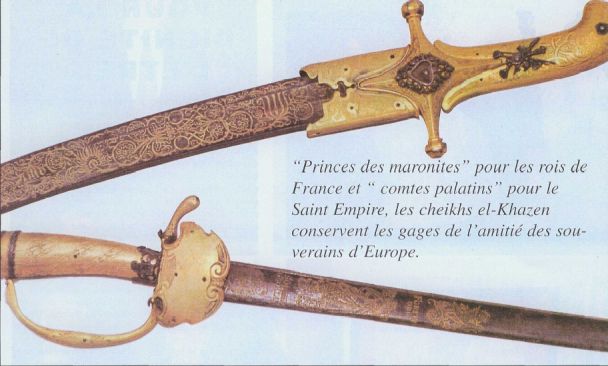
Origins of the "Prince of Maronite" Title
Growing diversity: the Khazin sheiks and the clergy in the first decades of the 18th century
Historical Members:
Barbar Beik El Khazen [English]
Patriach Toubia Kaiss El Khazen(Biography & Life Part1 Part2) (Arabic)
Patriach Youssef Dargham El Khazen (Cont'd)
Cheikh Bishara Jafal El Khazen
Patriarch Youssef Raji El Khazen
The Martyrs Cheikh Philippe & Cheikh Farid El Khazen
Cheikh Nawfal El Khazen (Consul De France)
Cheikh Hossun El Khazen (Consul De France)
Cheikh Abou-Nawfal El Khazen (Consul De France)
Cheikh Francis Abee Nader & his son Yousef
Cheikh Abou-Kanso El Khazen (Consul De France)
Cheikh Abou Nader El Khazen
Cheikh Chafic El Khazen
Cheikh Keserwan El Khazen
Cheikh Serhal El Khazen [English]
Cheikh Rafiq El Khazen [English]
Cheikh Hanna El Khazen
Cheikha Arzi El Khazen
Marie El Khazen