by news.mb.com.ph -- Nearly four weeks into nationwide protests calling for the ouster of the ruling elite, radical changes demanded by demonstrators have not been implemented. The peaceful protests against corruption and sectarianism have paralysed Lebanon, worsening an economic crisis that has brought the country to the brink of default. Central bank governor Riad Salameh — increasingly under fire for his monetary policies — insisted however that deposits were safe and the country’s currency would remain pegged to the dollar. “The central bank’s first and foremost goal is to protect the Lebanese pound’s stability,” he told a news conference.
The bank has taken measures “to protect depositors and protect deposits”, he said. Salameh said he had asked local banks to lift restrictions imposed after protests started on October 17. Recent decreases in capital inflows have cause dollar shortages, leading banks to cap withdrawals. On the unofficial market, the greenback has sold at up to 20 percent more than its official rate. While Salameh insisted the financial sector would remain solvent, trust in the central bank has plummeted and outside the news conference dozens of protesters voiced their anger. “All of them means all of them. Salameh’s one of them,” they chanted, in a variation of a common call for all political figures to resign.
– Victory of sorts –
If a post shared on Instagram gets zero likes, did the moment even really happen? Instagram’s chief, Adam Mosseri, announced that beginning …
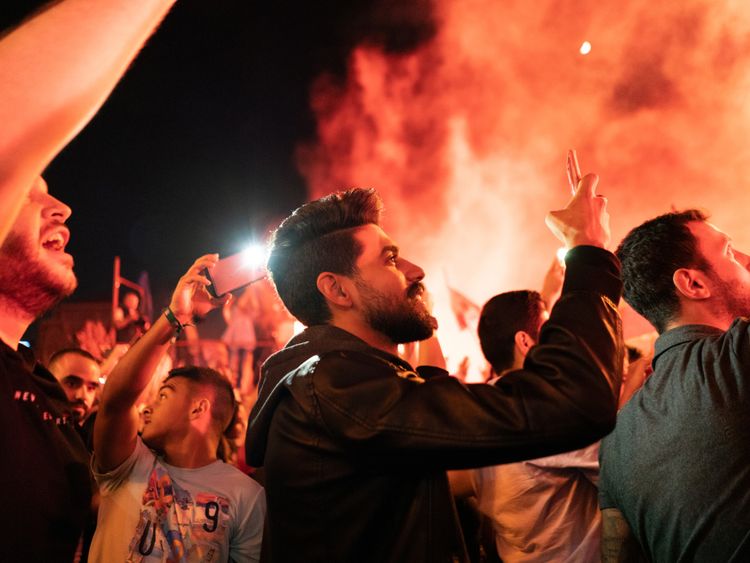
by gulfnews.com -- Beirut: Beirut is a city awash with construction sites. Sleek condominium buildings are constantly being erected, towering over a population that increasingly cannot afford the cost of living. Developers have gobbled up the city’s public space and privatised beaches. But in recent weeks, protesters have begun reclaiming their city, tearing down the metal slats that boarded up the abandoned Grand Theatre, a pre-civil-war relic, and taking over the Egg, an oddly-shaped unfinished cinema, empty for more than 50 years. On the first two nights of unrest last month, the protesters hid in the abandoned structures from police wielding tear gas and batons. Wael Zorkot, 24, hunkered down with them until a column of security forces flushed them out and forced them down the street. He had been with the protesters from the beginning, airing his frustration over the political and economic conditions in his country.
Zorkot said he works at least four days a week bartending at two bars to pay for his education and living expenses, typically finishing at 4am and catching some sleep before going to class. His father owns three stores in their hometown of Zrarieh in southern Lebanon, selling clothes, toys and motorcycles, but life is still tough. His mother is battling cancer and flies to France every four months for treatment because it is too expensive in Lebanon. “I have a lot of plans,” he said about the future. “But not here.” Dozens of young protesters, when asked about their futures, also said they want to emigrate.
The Lebanese economy on average creates no more than 3,000 jobs a year, said Jad Chaaban, an economics professor at the American University of Beirut, but the need is at least 20,000. “There’s a huge mismatch, because of the bad situation in the country, the lack of economic reforms that stimulate job creation, the fact that the government is very corrupt and only invests in projects that are not geared for job creation,” Chaaban said. Lebanese college students benefit from a good education system but at graduation cannot find suitable jobs. He said they endure a period known as “waithood” - waiting for visas to emigrate and for things to change - and grow frustrated with the economic situation.
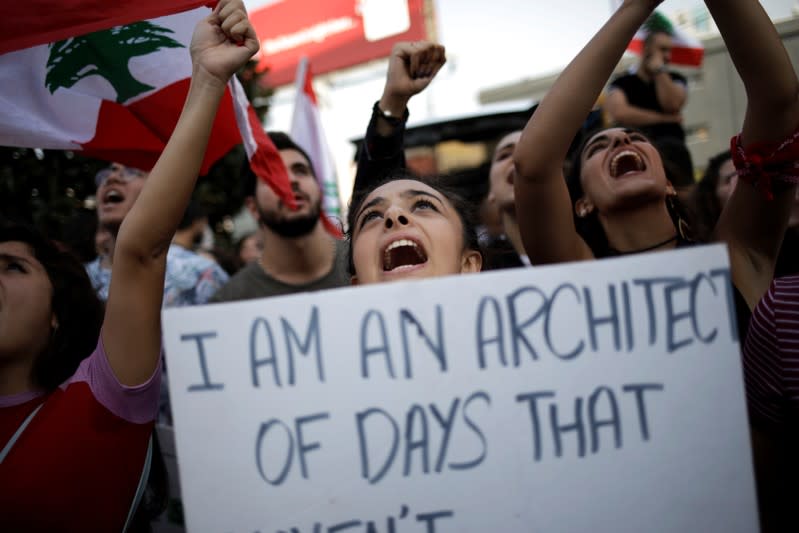
By Ellen Francis, Reuters -- BEIRUT (Reuters) - Lebanese are protesting outside failing state agencies they see as part of a corrupt system in the hands of the ruling elite, as well as at banks they deem part of the problem. Protesters accuse sectarian political leaders of exploiting state resources for their own gain through networks of patronage and clientelism that mesh business and politics. Where have Lebanese protested and why?
ELECTRICITE DU LIBAN (EDL)
Lebanon's electricity sector is at the heart of its financial crisis, bleeding some $2 billion in state funds every year while failing to provide 24-hour power. "This is one of the peak symbols of corruption," said Diyaa Hawshar, an electrician protesting outside state power firm EDL in Beirut. "We pay two bills, one for the government and another for generators." "It's about carving up the cake, with deals on power barges and overhauling power plants, shady deals in public and under the table," he said. "Every minister who comes makes promises. They come and go." Power cuts can last several hours every day. People and businesses rely on so-called "generator mafias" who often have political ties and charge hefty fees to keep the lights on. The average household ends up paying $300 to $400 a month on average for electricity, said Jad Chaaban, economics professor at the American University of Beirut. Lebanon's minimum wage is the equivalent of $450 a month. "It is an insult for a lot of people to keep paying for services that are dysfunctional and at the same time funding the parties and travel of corrupt leaders," he said.
The government has for years touted plans to overhaul the sector including new power stations, fixing the grid and stopping electricity theft. But the Lebanese saw no tangible progress by the time the prime minister resigned last week. "People have to beg for their rights...for a few hours of electricity at home," said Mia Kozah, a university student. "It should be one of the simplest matters. Enough humiliation."
MOBILE OPERATORS

Population Movements to Keserwan - The Khazens and The Maans
ما جاء عن الثورة في المقاطعة الكسروانية
ثورة أهالي كسروان على المشايخ الخوازنة وأسبابها
Origins of the "Prince of Maronite" Title
Growing diversity: the Khazin sheiks and the clergy in the first decades of the 18th century
Historical Members:
Barbar Beik El Khazen [English]
Patriach Toubia Kaiss El Khazen(Biography & Life Part1 Part2) (Arabic)
Patriach Youssef Dargham El Khazen (Cont'd)
Cheikh Bishara Jafal El Khazen
Patriarch Youssef Raji El Khazen
The Martyrs Cheikh Philippe & Cheikh Farid El Khazen
Cheikh Nawfal El Khazen (Consul De France)
Cheikh Hossun El Khazen (Consul De France)
Cheikh Abou-Nawfal El Khazen (Consul De France)
Cheikh Francis Abee Nader & his son Yousef
Cheikh Abou-Kanso El Khazen (Consul De France)
Cheikh Abou Nader El Khazen
Cheikh Chafic El Khazen
Cheikh Keserwan El Khazen
Cheikh Serhal El Khazen [English]
Cheikh Rafiq El Khazen [English]
Cheikh Hanna El Khazen
Cheikha Arzi El Khazen
Marie El Khazen