by linked-in –– Facebook took another aim at Snapchat by announcing a new messaging app for Instagram users. Threads, the name of …
(Reuters) - Some members of Saudi Arabia’s ruling family and business elite have expressed frustration with the leadership of Crown Prince Mohammed bin Salman following the largest-ever attack on the kingdom’s oil infrastructure last month. It has sparked concern among several prominent branches of the ruling Al Saud family, which numbers around 10,000 members, about the crown prince’s ability to defend and lead the world’s largest oil exporter, according to a senior foreign diplomat and five sources with ties to the royals and business elite. All spoke on condition of anonymity. The attack has also fanned discontent among some in elite circles who believe the crown prince, known in the West by the initials MbS, has sought too tight a grip on power, the sources said. Some of these people said the event has also fueled criticism among those who believe he has pursued an overly aggressive stance towards Iran. “There is a lot of resentment” about the crown prince’s leadership, said one of the sources, a member of the Saudi elite with royal connections. “How were they not able to detect the attack?”
This person added that some people in elite circles are saying they have “no confidence” in the crown prince, an assertion echoed by the four other sources and the senior diplomat. The crown prince nonetheless has staunch supporters. A Saudi source within circles loyal to the crown prince said: “The latest events won’t affect him personally as a potential ruler because he is trying to stop the Iranian expansion in the region. This is a patriotic issue, and so he won’t be in danger, at least as long as the father lives.” A second senior foreign diplomat said ordinary Saudis still want to unite behind MbS as a strong, decisive, dynamic leader.
The Saudi government media office did not respond to detailed questions from Reuters for this article. The crown prince, during a television interview aired Sunday by U.S. broadcaster CBS, said that defending Saudi Arabia was difficult because of the kingdom’s large size and the scale of threats it faces. “It’s challenging to cover all of this fully,” he said. He also called for “strong and firm” global action to deter Iran but said he preferred a “peaceful solution” to a military one.
(Bloomberg) -Dana Khraiche- Lebanon’s slow-churning currency crunch is fast engulfing Bashar Boubess’s business. The miller pays for wheat imports in dollars but bakeries buy his flour in Lebanese pounds. For weeks now, the bank has refused to exchange those pound earnings back into the hard currency he needs to replenish supplies. His wheat stocks have dropped 30%. Boubess has turned to money changers to keep his business alive, but it’s expensive: they demand more pounds for every dollar than the increasingly unrealistic official rate. “If I sell to the bakeries in dollars, I’d just be transferring the problem to them,” said Boubess, owner of Modern Mills of Lebanon. “I don’t know if we can last the week. What am I supposed do?” More than two decades after Lebanon pegged its pound to the dollar, providing an anchor of stability as the economy emerged from civil war, the moment of reckoning may finally be arriving.
The central bank on Tuesday announced that it will guarantee a supply of dollars at the official rate of 1,507.5 pounds to cover imports of wheat, gasoline and pharmaceuticals, which retail at government-regulated prices. The measure could go some way to averting social upheaval, after weeks of strikes and protests, but it also amounts to a tacit acknowledgement that everyone else is working to a parallel rate. The divergence is small -- Boubess, for instance, said he last paid 1,595 per dollar to buy $50,000 at an exchange bureau -- and top officials including Prime Minister Saad al-Hariri have said the peg is a red line. But the widening imbalance has raised fears among Lebanese that a steeper slide is now only a matter of time.
The central bank’s reserves have fallen some $4 billion in the last two years to reach about $37 billion in July. As confidence has plummeted, even ordinary people have begun to transfer their dollar savings abroad or hide notes under their mattresses. “You can’t help but be affected by what people are are saying and I’ve thought of transferring my money abroad,” said Rose, a widow who’s living on her late husband’s retirement savings and declined to give her name for privacy. “But if everyone withdraws their money, what will happen? There’ll be a crisis?”
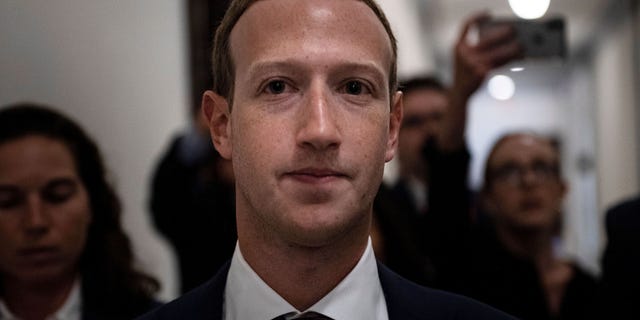
by foxnews.com -- Chris Ciaccia - Leaked audio comments from Facebook CEO Mark Zuckerberg include him saying that the tech company would likely have no choice but to sue the U.S. government to stave off being broken up if Elizabeth Warren becomes president. The comments, obtained by The Verge, span a wide range of topics and deep insight into Zuckerberg's thinking, going much further than the usually stoic CEO appears in public. "You have someone like Elizabeth Warren thinks that the right answer is to break up the companies … I mean, if she gets elected president then I would bet that we will have a legal challenge, and I would bet that we will win the legal challenge," Zuckerberg is quoted as saying in two Q&A sessions with Facebook employees during July. "And does that still suck for us? Yeah. I mean, I don’t want to have a major lawsuit against our own government. I mean, that’s not the position that you want to be in when you’re, you know, I mean … It’s like, we care about our country, and want to work with our government and do good things. But look, at the end of the day, if someone’s going to try to threaten something that existential, you go to the mat and fight."
Zuckerberg, who met with President Trump and several D.C. lawmakers last month, also said that the company's size has helped it fight election interference while noting that its rival, Twitter, has been inadequate at fighting interference because of fewer resources. “It’s why Twitter can’t do as good of a job as we can,” Zuckerberg said. “I mean, they face, qualitatively, the same types of issues. But they can’t put in the investment. Our investment on safety is bigger than the whole revenue of their company.”
The 35-year-old tech titan publicly acknowledged on Tuesday that the comments were indeed his, saying that he often shares "openly what I'm thinking on all kinds of projects and issues." "The transcript from one of my Q&As a few months ago just got published online -- and even though it was meant to be internal rather than public, now that it's out there, you can check it out if you're interested in seeing an unfiltered version of what I'm thinking and telling employees on a bunch of topics like social responsibility, breaking up tech companies, Libra, neural computing interfaces, and doing the right thing over the long term," Zuckerberg wrote on Facebook.


Population Movements to Keserwan - The Khazens and The Maans
ما جاء عن الثورة في المقاطعة الكسروانية
ثورة أهالي كسروان على المشايخ الخوازنة وأسبابها
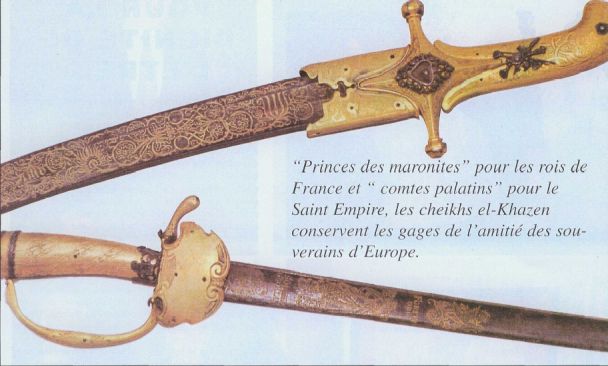
Origins of the "Prince of Maronite" Title
Growing diversity: the Khazin sheiks and the clergy in the first decades of the 18th century
Historical Members:
Barbar Beik El Khazen [English]
Patriach Toubia Kaiss El Khazen(Biography & Life Part1 Part2) (Arabic)
Patriach Youssef Dargham El Khazen (Cont'd)
Cheikh Bishara Jafal El Khazen
Patriarch Youssef Raji El Khazen
The Martyrs Cheikh Philippe & Cheikh Farid El Khazen
Cheikh Nawfal El Khazen (Consul De France)
Cheikh Hossun El Khazen (Consul De France)
Cheikh Abou-Nawfal El Khazen (Consul De France)
Cheikh Francis Abee Nader & his son Yousef
Cheikh Abou-Kanso El Khazen (Consul De France)
Cheikh Abou Nader El Khazen
Cheikh Chafic El Khazen
Cheikh Keserwan El Khazen
Cheikh Serhal El Khazen [English]
Cheikh Rafiq El Khazen [English]
Cheikh Hanna El Khazen
Cheikha Arzi El Khazen
Marie El Khazen