by dailystar.com.lb -- BEIRUT: When Hamza Shamas first moved to Beirut, he was overwhelmed. The constant bustle of the city’s busy Downtown was a far cry from the quiet village of Boudai, where he grew up. In his village, Shamas’ identity revolved around his tribe, but in Beirut he felt adrift.He settled in Hay al-Sellom, a low-income neighborhood in the southern suburbs made up almost entirely of residents from rural Lebanon, and soon discovered that despite the noise and crowding, his community in Beirut was really a microcosm of village life. More and more people originally from Lebanon’s rural population are finding themselves in cities. The United Nations Human Settlements Program (U.N.-Habitat) estimates that by 2020, 88.6 percent of Lebanon’s population will live in urban areas, the fourth-highest in the Arab world after Gulf states Kuwait, Qatar and Bahrain.
The vast majority of this urban shift is focused on Beirut. A 1996 survey by the Social Affairs Ministry and the United Nations Population Fund, UNFPA, found that 20 percent of Lebanese living in the Beirut governorate were born elsewhere, along with 31 percent in the Mount Lebanon governorate, which encompasses Beirut’s dense suburbs. This greatly exceeds the proportion in other governorates, at 8 percent in the north and 2 percent in the south. In the intervening two decades, the proportion of Lebanese migrants to the Beirut area has only increased, said Suzanne Menhem, a sociology professor at the Lebanese University. She is in the midst of a yearlong study of Lebanon’s internal migration, a woefully understudied phenomenon, she told The Daily Star. “We have no statistics,” she said. “We base it on the study and by estimation.” Lebanon’s last official census was in 1932. Since then there have only been scattered studies of the country’s demography. Menhem is still in the initial stages of her project, but she already knows that the trend of rural-to-urban migration is a strong one. “I’m sure that this phenomenon is increasing with time,” she said.
by businessinsider.com —Saudi Aramco on Monday said it agreed to acquire a 20% stake in Reliance Industries’ refining and petrochemicals business, valued …
by naharnet — Maronite Patriarch Beshara al-Rahi on Sunday said Lebanese politicians are “experts in creating and resolving obstacles,” referring to the …
BEIRUT (Reuters) – Lebanon’s cabinet met on Saturday for the first time since late June, a day after steps were taken to …

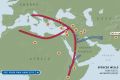

Population Movements to Keserwan - The Khazens and The Maans
ما جاء عن الثورة في المقاطعة الكسروانية
ثورة أهالي كسروان على المشايخ الخوازنة وأسبابها
Origins of the "Prince of Maronite" Title
Growing diversity: the Khazin sheiks and the clergy in the first decades of the 18th century
Historical Members:
Barbar Beik El Khazen [English]
Patriach Toubia Kaiss El Khazen(Biography & Life Part1 Part2) (Arabic)
Patriach Youssef Dargham El Khazen (Cont'd)
Cheikh Bishara Jafal El Khazen
Patriarch Youssef Raji El Khazen
The Martyrs Cheikh Philippe & Cheikh Farid El Khazen
Cheikh Nawfal El Khazen (Consul De France)
Cheikh Hossun El Khazen (Consul De France)
Cheikh Abou-Nawfal El Khazen (Consul De France)
Cheikh Francis Abee Nader & his son Yousef
Cheikh Abou-Kanso El Khazen (Consul De France)
Cheikh Abou Nader El Khazen
Cheikh Chafic El Khazen
Cheikh Keserwan El Khazen
Cheikh Serhal El Khazen [English]
Cheikh Rafiq El Khazen [English]
Cheikh Hanna El Khazen
Cheikha Arzi El Khazen
Marie El Khazen