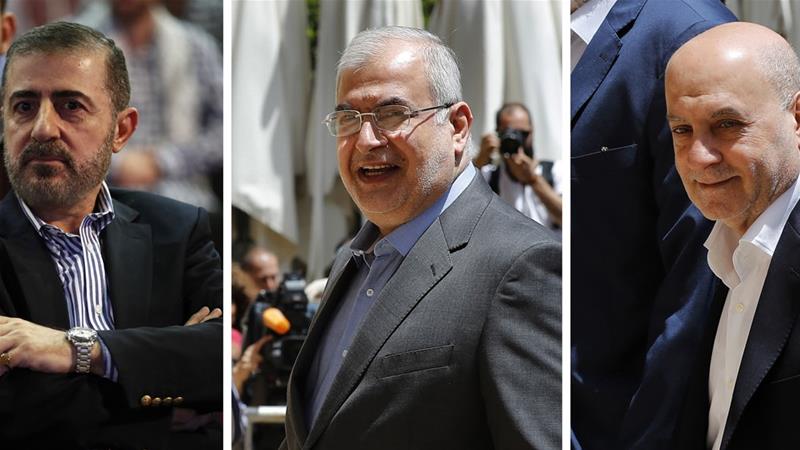
by Dana Halawi BEIRUT, (Xinhua) -- Lebanese analysts have voiced different views about the reasons behind the sanctions imposed earlier this week by the United States against Hezbollah officials and the impact of this move on Lebanon and its economy. "This move must be put in the context of the escalation taking place between Washington and Tehran and it should not be tackled as a pure Lebanese issue," Sami Nader, director of Levant Institute for Strategic Affairs in Lebanon, told Xinhua. Nader explained that U.S. sanctions against Hezbollah's officials are mainly caused by the radical change in the American administration's policy towards Iran and the Middle East in general. "The U.S. administration has stopped distinguishing between the political and military arms of Iran while pushing the Europeans to stop this contradictory position of standing against Iranian's policies in the region while dealing with it economically," Nader explained. "This also applies to Hezbollah," he added. Meanwhile, Hilal Khashan, chair of the Political Studies Department at the American University of Beirut (AUB), believes that the U.S. sanctions against Hezbollah's officials aim at applying pressure on the government and its relation with Hezbollah. Likewise, Makram Rabah, a lecturer at AUB's Department of History, said the U.S. wants to convey a message to Prime Minister Saad Hariri that it is necessary to distance the government from Hezbollah as a terrorist organization. The U.S. Treasury announced on Tuesday that it has slapped sanctions on three key Hezbollah figures, including two members of Lebanese parliament. The Treasury said in a statement that the designated individuals are Amin Sherri and Muhammad Hasan Ra'd, both members of the country's parliament, and Hezbollah security official Wafiq Safa.
BEIRUT, (Xinhua) — Lebanese Tourism Minister Avedis Guidanian said on Saturday that the armed attack late in June in Mount Lebanon had …
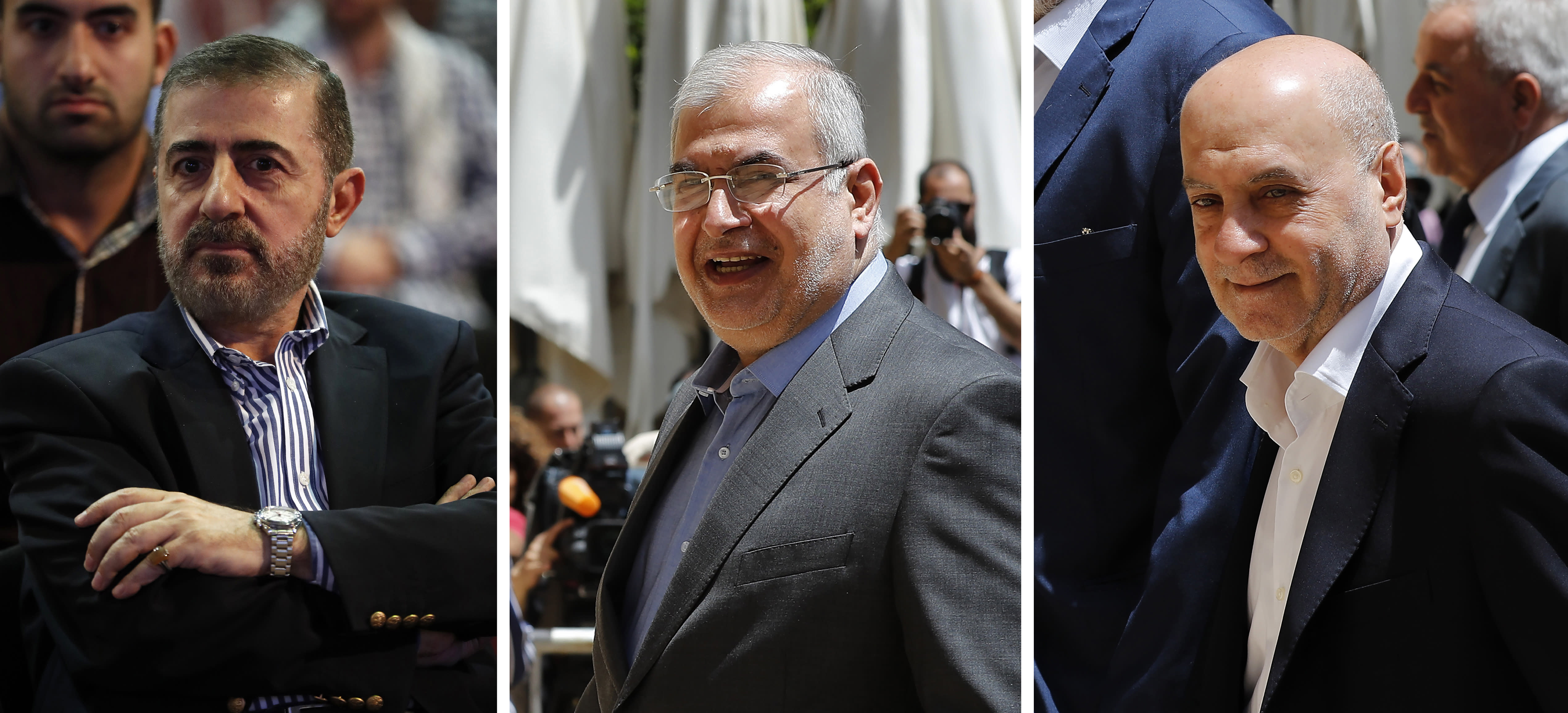
WASHINGTON (AP) — The Treasury Department on Tuesday targeted a Hezbollah security official and two members of Lebanon's parliament suspected of using their positions to further the aims of the Tehran-backed militia and "bolster Iran's malign activities." It's the first time that the U.S. has targeted lawmakers currently seated in Lebanon's parliament. Trump administration officials said Treasury's action makes clear that there is no dividing line between Hezbollah's political and militant wings. The U.S. designated lawmakers Amin Sherri and Mohammad Raad as well as Hezbollah security official Wafiq Safa under a U.S. executive order, which targets terrorists and those providing support to terrorists or acts of terrorism. "Hezbollah uses its operatives in Lebanon's parliament to manipulate institutions in support of the terrorist group's financial and security interests, and to bolster Iran's malign activities," said Sigal Mandelker, undersecretary for terrorism and financial intelligence.
Lebanon's finance minister, Ali Hassan Khalil, denounced the sanctions and said they did nothing to foster financial stability in the country. "There is no justification whatsoever for escalating these sanctions," he tweeted. Hezbollah lawmaker Ali Fayyad described the U.S. move as "an insult for all the Lebanese people." He told reporters the Lebanese government must take a stand against the sanctions because they infringe on Lebanese sovereignty. Hezbollah, whose Arabic name translates into "Party of God," was established by Iran's Revolutionary Guard during Lebanon's civil war in the 1980s.

by Khaled Yacoub Oweis -thenational.ae -- Whenever Lebanon was teetering on the financial brink in the 1990s, the country’s then prime minister, the late Rafic Hariri, boarded his private Boeing twin-aisle aircraft and flew to Riyadh. The kingdom would arrange emergency help from the Gulf that staved off the economic pressures, until the next crisis loomed. Lebanon’s already huge public debt at that time has multiplied many times and Hariri’s son Saad is now prime minister, facing a similar problem. Beirut is up against deep financial strain but his father’s release valve is shut. Rafic had both a larger-than-life stature and deep trust in Riyadh and the UAE, but today the regional situation is very different. The elder Hariri also had a strained but sometimes working relationship with Hezbollah – right up to the moment he did not. The group is accused of his 2005 assassination and refuses to hand over four of its members indicted by a UN tribunal for involvement. But Hezbollah’s influence has grown over the years.
The Iran-backed Shiite group has increasingly used its status as the most significant armed actor in Lebanon to undermine its Saudi-backed rivals, intervene unilaterally in Syria and challenge Sunni states elsewhere in the Middle East. Its anti-Saudi rhetoric has helped fan Sunni-Shiite tensions across the region. The group, which has the loyalty of a large bloc in the Lebanese parliament, risks depriving Lebanon, including its own domestic supporters, when a crisis hits that requires the kind of immediate cash that only the major Sunni Gulf states have the means or the potential will to deliver. These states are reluctant to help now, concerned that their money may end up in the hands of Hezbollah, which they largely see as having taken over the Lebanese state, according to sources involved in international efforts to support the country economically.
Population Movements to Keserwan - The Khazens and The Maans
ما جاء عن الثورة في المقاطعة الكسروانية
ثورة أهالي كسروان على المشايخ الخوازنة وأسبابها
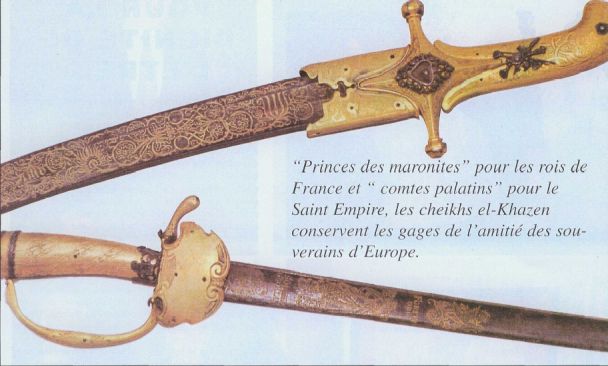
Origins of the "Prince of Maronite" Title
Growing diversity: the Khazin sheiks and the clergy in the first decades of the 18th century
Historical Members:
Barbar Beik El Khazen [English]
Patriach Toubia Kaiss El Khazen(Biography & Life Part1 Part2) (Arabic)
Patriach Youssef Dargham El Khazen (Cont'd)
Cheikh Bishara Jafal El Khazen
Patriarch Youssef Raji El Khazen
The Martyrs Cheikh Philippe & Cheikh Farid El Khazen
Cheikh Nawfal El Khazen (Consul De France)
Cheikh Hossun El Khazen (Consul De France)
Cheikh Abou-Nawfal El Khazen (Consul De France)
Cheikh Francis Abee Nader & his son Yousef
Cheikh Abou-Kanso El Khazen (Consul De France)
Cheikh Abou Nader El Khazen
Cheikh Chafic El Khazen
Cheikh Keserwan El Khazen
Cheikh Serhal El Khazen [English]
Cheikh Rafiq El Khazen [English]
Cheikh Hanna El Khazen
Cheikha Arzi El Khazen
Marie El Khazen