BEIRUT, (Xinhua) — Lebanese President Michel Aoun said on Friday that his country will ask the United Nations to extend the mandate …
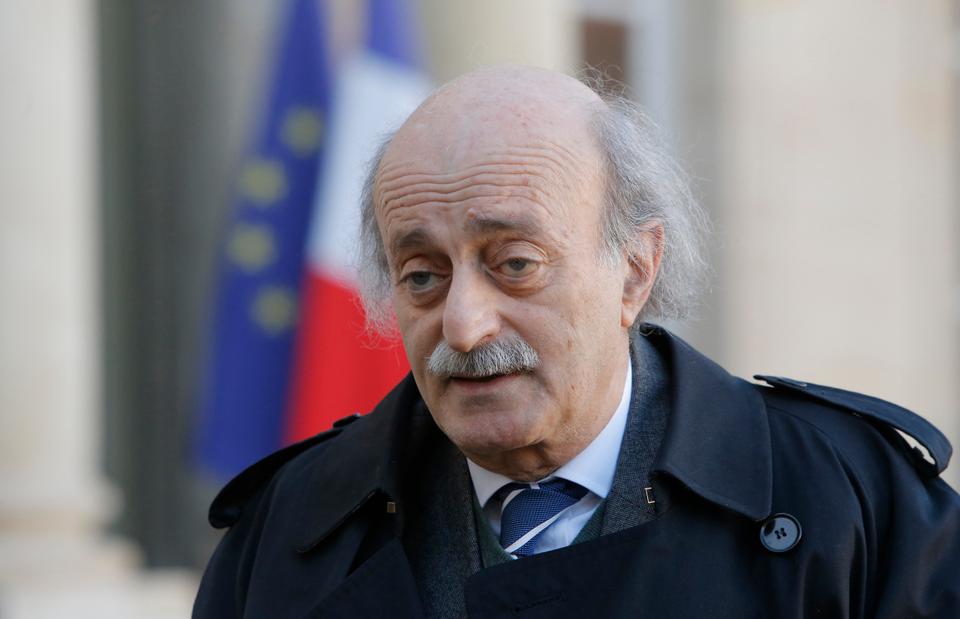
by trtworld.com --Walid Jumblatt, the president of the Progressive Socialist Party of Lebanon, berated the leaders of the Gulf countries for participating in the Bahrain conference, warning them against "betraying" Palestinians, while reminding them of the unflinching Ottoman position on Palestinian independence. Organised by Jared Kushner, the son-in-law of US President Donald Trump, the “Peace to Prosperity” economic workshop in Bahrain was promoted as a peace plan for Palestine and even described as “the deal of the century.” While the conference failed to bring all stakeholders of the Palestine-Israel conflict to the negotiation table, Palestinians rejected Kushner's deal outright. Jumblatt's scathing criticism of the conference and of pro-Israel Arab leaders came as another blow to Kushner's attempts to generate interest toward his deal from the Arab world. “Under Sultan Abdul Hamid (II), (Theodor) Herzl asked him to buy Palestine to transport the Jews (there), and the Sultan refused,” Jumblatt wrote on Twitter. “Today in Bahrain, the grandson of Herzl, Jared Kushner, will ask Arabs to sell Palestine to transport Palestinian families to Jordan to Sinai to Lebanon to Syria to the diaspora,” he continued. “Will the Arabs do what the Ottomans rejected?” the Lebanese leader asked.
Herzl is the founding father of Zionism, the official ideology of Israel, whose picture is hung in the Knesset, the Israeli parliament, in Jerusalem. In 1896, Herzl wrote "The Jewish State," which is considered one of the most influential Zionist texts, outlining the road map for Israel. He also organised the first Zionist congress in Switzerland’s Basel. Jumblatt reminded his Arab counterparts about the time when Ottoman Sultan Abdul Hamid II refused to accept a Zionist settlement in Palestine, defying various odds during his reign between 1876 and 1909. Herzl had tirelessly worked to implement the Zionist plan, meeting notable political figures across the world, which included Abdul Hamid II.
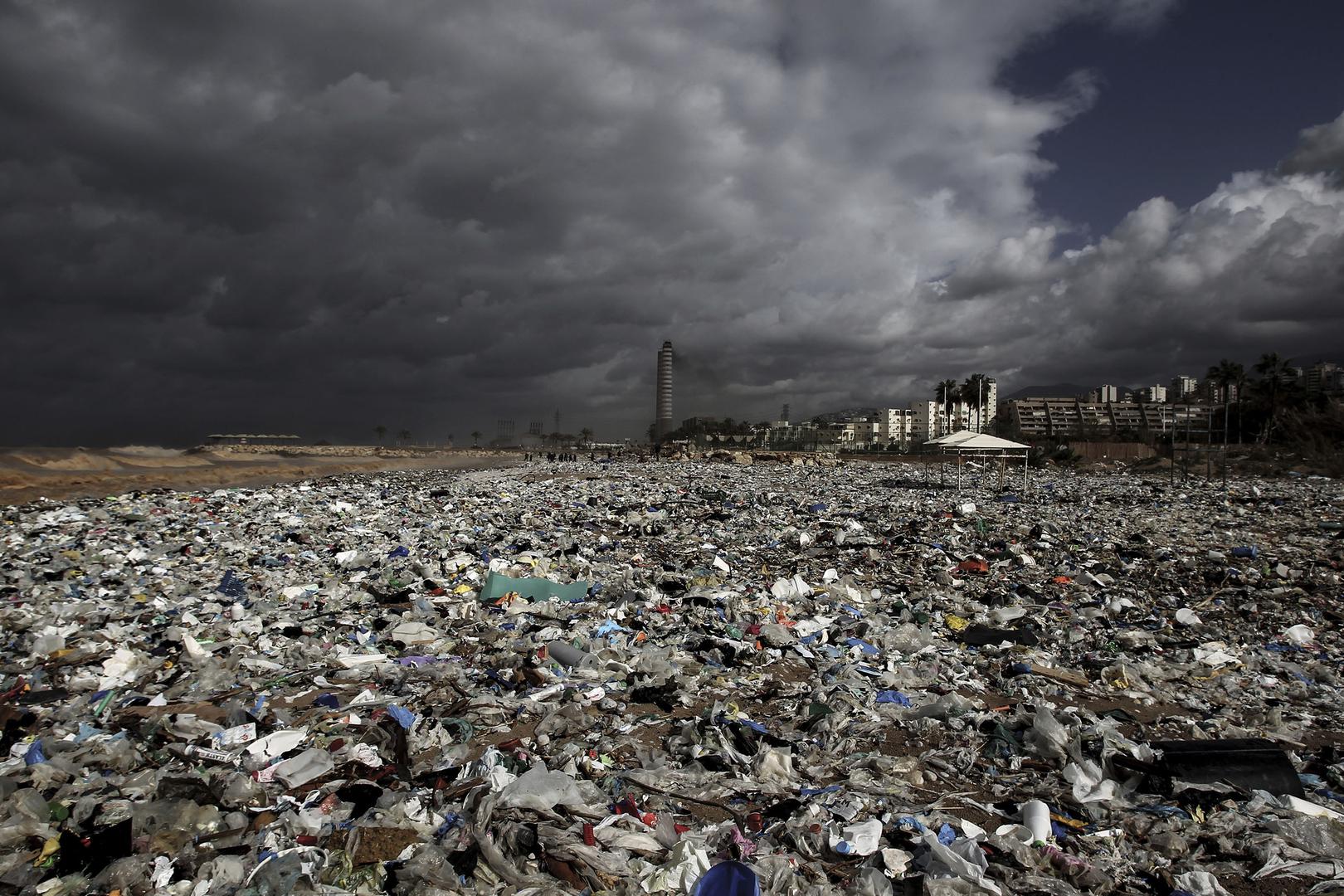
by hrw.org --(Beirut) – The Borj Hammoud landfill, one of two principal landfills serving Beirut, Lebanon, is set to reach capacity by the end of July 2019, Human Rights Watch said today. The government had initially estimated that the landfill would be in operation until 2020. The government has taken no steps to provide an alternative site for Beirut’s solid waste. Instead, a 13-page solid waste roadmap the Environment Ministry submitted to a ministerial committee on June 3 recommends expanding the Borj Hammoud landfill. Experts say that the landfill is affecting nearby residents’ health. Yet, the Environment Ministry has proposed its expansion without an Environmental Impact Assessment or consultation with affected communities, solid waste management experts have said. “The government has to answer for why Lebanon’s waste management infrastructure has not been improved upon four years after the last waste crisis led to mounds of trash in the streets of Beirut,” said Lama Fakih, acting Middle East director at Human Rights Watch. “The government may be ready to bury its head in the sand but residents don’t want to end up buried in piles of trash.”
The Borj Hammoud landfill is currently emanating particularly strong odors, which an international consultant hired by the Environment Ministry determined was caused by manure and garbage in various states of decomposition that have been dumped there. Nearby residents and public health experts fear that the odors signal the emission of toxic pollutants. According to air pollution experts, chronic exposure to these strong odors is linked to respiratory diseases, allergies, and the spread of bacteria. Further, experts state that leachate from the Borj Hammoud landfill is being dumped into the sea, polluting the water and making the sea in areas surrounding the landfill dangerous for swimming. Both Lebanese legislation and international standards stipulate that an Environmental Impact Assessment must be conducted before a project can begin and that measures must be taken to mitigate unavoidable adverse impacts.

Tom Perry, Laila Bassam --- BEIRUT (Reuters) - U.S. President Donald Trump’s vision for Mideast peace has hit a raw nerve in Lebanon, reviving fears of any plan that would permanently settle Palestinian refugees in the country and shift its Christian-Muslim sectarian balance. he first part of the White House plan for peace between Israel and the Palestinians focuses on encouraging $50 billion of investment in the Palestinian territories and three neighboring Arab states, one of them Lebanon. Lebanese of all sects are objecting to ideas that have surfaced so far, seeing $6 billion for Lebanon as an inducement to accept the settlement of Palestinians who have lived as refugees in the country since Israel’s creation in 1948. Rejecting the naturalization of Palestinians has been a rare point of agreement among Lebanese through a troubled history including the 1975-90 civil war in which Palestinian groups played a major role.
The first part of the plan is set to be unveiled by White House senior advisor Jared Kushner, Trump’s son-in-law, at a Bahrain conference on Tuesday. The Lebanese government was invited but is not attending. The prospects of the plan getting anywhere do not look good: the Palestinian Authority is itself staying away from the conference and has refused to deal with the Trump administration for 18 months, accusing it of bias toward Israel. “As a Lebanese and an Arab, I reject the entire American project, and with regards to the Lebanese part, of course I am against Palestinian naturalization, not because we are against Palestinians, but so they return to their country,” said Hussam Mneimneh, a 43-year-old taxi driver. “It doesn’t suit us for there to be naturalization of any nationality because it creates a demographic, geographic imbalance, and this is something we do not accept.”
Population Movements to Keserwan - The Khazens and The Maans
ما جاء عن الثورة في المقاطعة الكسروانية
ثورة أهالي كسروان على المشايخ الخوازنة وأسبابها
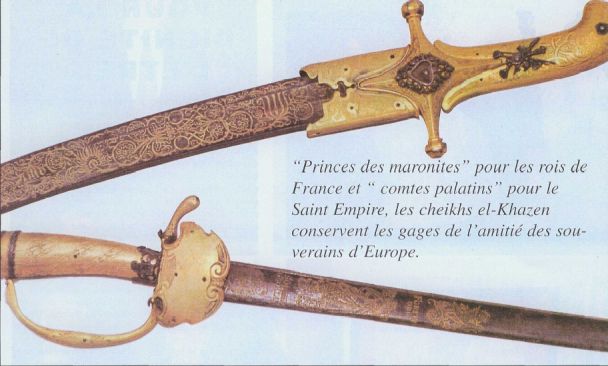
Origins of the "Prince of Maronite" Title
Growing diversity: the Khazin sheiks and the clergy in the first decades of the 18th century
Historical Members:
Barbar Beik El Khazen [English]
Patriach Toubia Kaiss El Khazen(Biography & Life Part1 Part2) (Arabic)
Patriach Youssef Dargham El Khazen (Cont'd)
Cheikh Bishara Jafal El Khazen
Patriarch Youssef Raji El Khazen
The Martyrs Cheikh Philippe & Cheikh Farid El Khazen
Cheikh Nawfal El Khazen (Consul De France)
Cheikh Hossun El Khazen (Consul De France)
Cheikh Abou-Nawfal El Khazen (Consul De France)
Cheikh Francis Abee Nader & his son Yousef
Cheikh Abou-Kanso El Khazen (Consul De France)
Cheikh Abou Nader El Khazen
Cheikh Chafic El Khazen
Cheikh Keserwan El Khazen
Cheikh Serhal El Khazen [English]
Cheikh Rafiq El Khazen [English]
Cheikh Hanna El Khazen
Cheikha Arzi El Khazen
Marie El Khazen