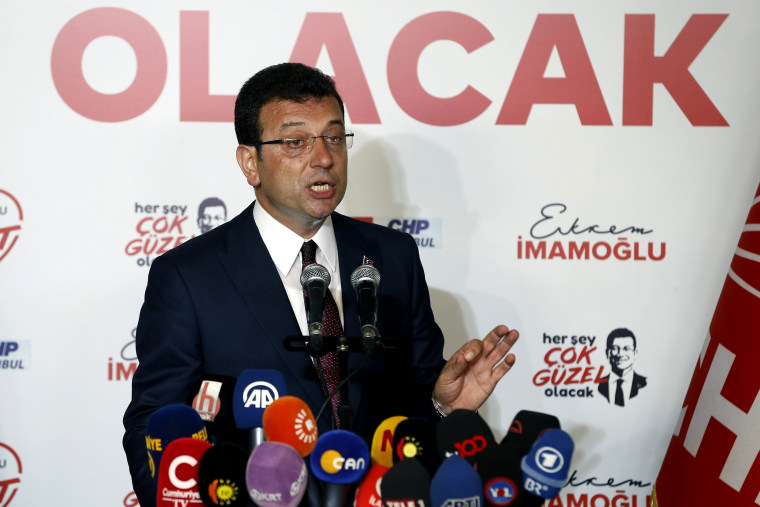
By Reuters ISTANBUL — Turkey's main opposition claimed a decisive victory on Sunday in Istanbul's re-run election, dealing one of the biggest blows to President Tayyip Erdogan during his 16 years in power and promising a new beginning in the country's largest city. Ekrem Imamoglu, mayoral candidate of the secularist Republican People's Party, was leading with 54 percent of votes against 45 percent for Erdogan's AK Party candidate, with more than 99% of ballots opened, Turkish broadcasters said. The election was Istanbul's second in three months after results of an initial March vote were scrapped, setting up the do-over as a test of Turks' ability to check what many saw as their president's increasingly authoritarian power. "Today, 16 million Istanbul residents have renewed our faith in democracy and refreshed our trust in justice," Imamoglu told supporters. His AK Party opponent, former Prime Minister Binali Yildirim, congratulated him and wished him "all the luck" in serving Istanbul, Turkey's commercial hub. Erdogan also tweeted his congratulations to the Republican People's Party candidate. Imamoglu had won the original mayoral election on March 31 by a narrow margin, which prompted the Islamist-rooted AK Party to demand a re-run, citing what it said were voting irregularities.
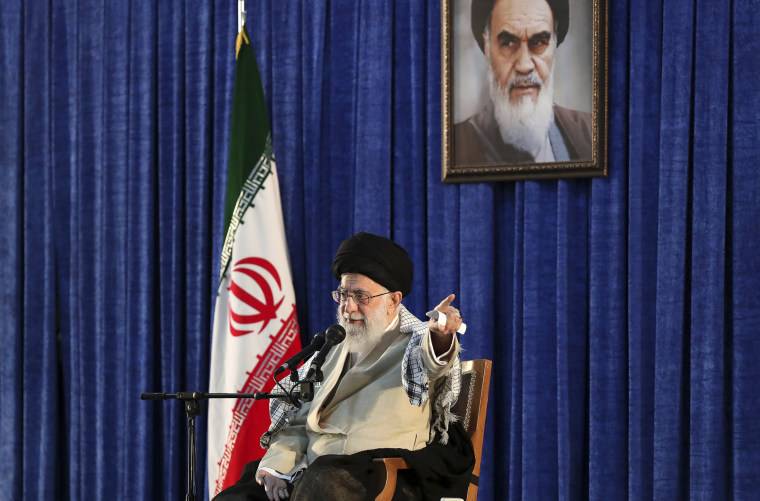
By Ken Dilanian nbcnews.com --WASHINGTON — A limited U.S. strike on Iran of the sort President Donald Trump says he canceled Thursday night could prompt a potent Iranian reaction that in turn might spark a much larger military conflict, current and former U.S. officials and experts tell NBC News. Iran could do enormous damage to the global economy by mining the Strait of Hormuz, the waterway off its coast through which flows 40 percent of the crude oil traded internationally. That action, even if quickly countered by the U.S. Navy, would cause oil prices to spike. But that may not be Iran's first move in response to a limited American bomb and missile attack, experts say. Iran would likely turn first to its proxies, who could inflict major damage on American allies, experts say. Houthi rebels in Yemen could step up attacks against Saudi Arabian infrastructure with missiles and drones. Shiite militias could destabilize Iraq. Hezbollah, the Iran-backed terrorist organization, could attack Israel or other American interests anywhere in the world.
And if Iran wanted to kill Americans, any of those groups could do that on its behalf, with some deniability, said the experts. Shiite militias could overrun the U.S. Embassy in Baghdad and seize hostages. Hezbollah, which, before 9/11, had killed more Americans than any other terror group, could strike in places as far flung as Latin America, where the group has a strong presence. "Traditionally, when faced with this sort of American action, Iran doesn't tend to respond directly and immediately, but they do so asymmetrically and over a period of time," said Ray Takeyh, a former State Department official and Iran expert at the Council on Foreign Relations. Trump said in a tweet Friday that he stopped a U.S. attack on Iran that would have targeted three sites. He told NBC's Chuck Todd in an exclusive interview Friday that, after being told the attack could cost 150 Iranian lives, he decided it was not proportional to the downing of an unmanned spy drone.
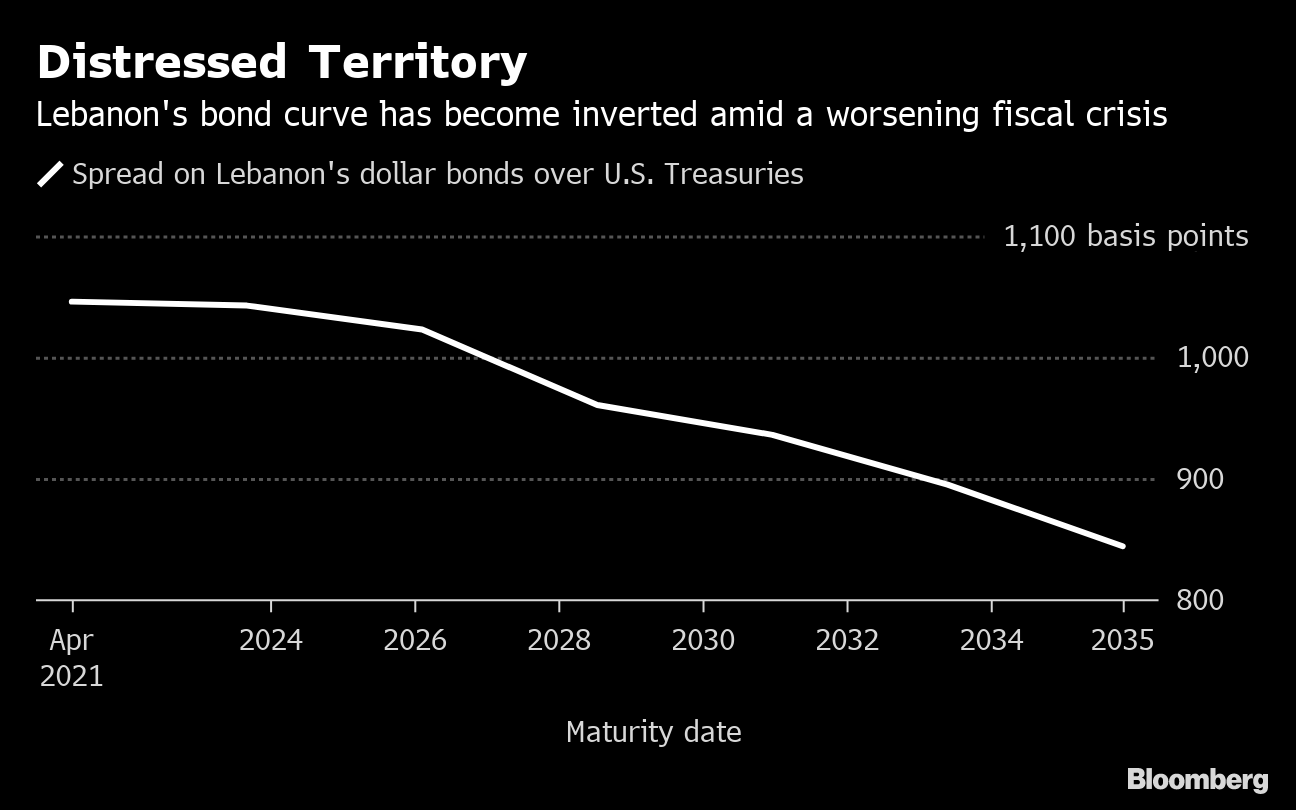
(Bloomberg) -Abeer Abu Omar and Paul Wallace- Lebanon’s Eurobonds have entered distressed territory as a budget delay and rising political tension in the region complicate efforts to tackle the nation’s fiscal crisis. The average extra yield investors demand to hold the Arab nation’s debt over U.S. Treasuries climbed to a 10-year high of 946 basis points this week. Among emerging markets not in default, only Zambia and Argentina have wider spreads, according to a Bloomberg Barclays index. Some of Lebanon’s dollar securities, including those maturing in 2022 and 2023, already have spreads above 1,000 basis points.
Investors are losing patience as political squabbles stall economic reforms. A long-delayed budget aims to lower the deficit to 7.6% of gross domestic product this year, which would help unlock billions of dollars in aid. Prime Minister Saad Hariri said last week that lawmakers objected to some items after previously agreeing to them, and he ridiculed suggestions that Lebanon would seek a bailout from the International Monetary Fund. “The country is running out of time,” said Raffaele Bertoni, the head of debt-capital markets at Gulf Investment Corp. in Kuwait City. “Unpopular decisions are needed to keep the growing fiscal deficit under control. Until then, Lebanese sovereign bonds will continue to trade in distressed territory.”
by thenational.ae —Beirut airport has introduced new procedures allowing foreign travellers to skip time-consuming arrival and departure cards. The new measure was …



Population Movements to Keserwan - The Khazens and The Maans
ما جاء عن الثورة في المقاطعة الكسروانية
ثورة أهالي كسروان على المشايخ الخوازنة وأسبابها
Origins of the "Prince of Maronite" Title
Growing diversity: the Khazin sheiks and the clergy in the first decades of the 18th century
Historical Members:
Barbar Beik El Khazen [English]
Patriach Toubia Kaiss El Khazen(Biography & Life Part1 Part2) (Arabic)
Patriach Youssef Dargham El Khazen (Cont'd)
Cheikh Bishara Jafal El Khazen
Patriarch Youssef Raji El Khazen
The Martyrs Cheikh Philippe & Cheikh Farid El Khazen
Cheikh Nawfal El Khazen (Consul De France)
Cheikh Hossun El Khazen (Consul De France)
Cheikh Abou-Nawfal El Khazen (Consul De France)
Cheikh Francis Abee Nader & his son Yousef
Cheikh Abou-Kanso El Khazen (Consul De France)
Cheikh Abou Nader El Khazen
Cheikh Chafic El Khazen
Cheikh Keserwan El Khazen
Cheikh Serhal El Khazen [English]
Cheikh Rafiq El Khazen [English]
Cheikh Hanna El Khazen
Cheikha Arzi El Khazen
Marie El Khazen