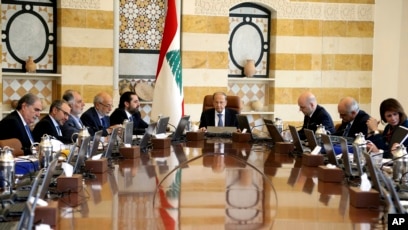
by By Tom Perry and Ellen Francis -- BEIRUT, (Reuters) - The heavily indebted Lebanese government approved a draft budget to cut its large deficit on Friday, aiming to ward off a financial crisis which top leaders have warned is bearing down on the country unless it carries out reforms. The draft 2019 budget, which will cut the deficit to 7.5% of GDP from 11.5% in 2018, is seen as a critical test of the government’s will to launch reforms that have been put off for years by a state riddled with corruption and waste. Lebanon’s bloated public sector is its biggest expense, followed by the cost of servicing a public debt equal to some 150% of GDP, one of the world’s heaviest debt burdens. The budget could help unlock some $11 billion in financing pledged at a Paris donors’ conference last year for infrastructure investment, if it wins the approval of donor countries and institutions. “Now, praise God, we are done. The budget is complete,” Information Minister Jamal Jarrah said after a cabinet session. One more meeting to seal the process will be held at the presidential palace on Monday before the draft is referred to parliament for approval.
Fears the budget would lead to cuts to state salaries, pensions or benefits triggered weeks of strikes and protests by public sector workers and military veterans. Measures to rein in the public sector wage bill include a three-year freeze in all types of state hiring and a cap on extra-salary bonuses. State pension will also be taxed. However a temporary public sector salary cut mooted by some early in the process was not included. A big chunk of the deficit cut stems from tax increases including a 2% import tax and a hike in tax on interest payments. The government also plans to cut some $660 million from the debt servicing bill by issuing treasury bonds at 1% interest rate to the Lebanese banking sector.
“THE JURY’S STILL OUT”
The final cabinet approval had been obstructed by a dispute over whether more needed to be done to bring the deficit lower. But Finance Minister Ali Hassan Khalil, speaking to local media, said “all the clauses and articles” had been agreed. Nobody had raised any objections when Prime Minister Saad al-Hariri said “we are done” at the end of the session, he added. Foreign Minister Gebran Bassil, who had been demanding further debate, signalled no objection to the cabinet decision. “We have started along the path of controlling the deficit and reducing it and we will continue through subsequent budgets,” Al-Jadeed television quoted him saying.
by John Pontifex — catholicherald.co.uk —Archbishop Warda says that, with the exception of Hungary, Western governments have failed to help An …
by aawsat.com —Lebanese parliament Speaker Nabih Berri spoke on Wednesday of clear progress in the issue of demarcating the southern maritime border …

by Arab News -- DUBAI: The success that Lebanese director Nadine Labaki’s third film, “Capernaum,” continues to find across the world is astounding — even to her. Just one year ago, “Capernaum” won the Jury Prize at the Cannes Film Festival — a jury chaired by Cate Blanchett — after a 15-minute standing ovation. The film went on to be nominated for both a Golden Globe and an Academy Award for Best Foreign Film, with Labaki becoming the first woman from the Arab world to receive that honor. Now, perhaps most surprisingly, “Capernaum” has become an unexpected blockbuster in China, reportedly grossing $44 million in just over two weeks. “It’s crazy! I can’t believe it! I really can’t. Why there? It’s all very new, so I still don’t know what it means exactly, but we’re soon going to find out,” Labaki tells Arab News in Cannes. With its success in China, along with the US, Middle East and across Europe, “Capernaum” has reportedly become the highest grossing Arabic-language film in history. “There’s been rumors going on for the past two to three days, and it’s like, ‘What?’ I still can’t believe it. It’s living proof that an Arab film with no actors can actually be a box office hit — can actually return money, make money for investors. You know how much we’re struggling in the Arab world to make films, find money, find funding, find investment. Especially for a Lebanese film,” Labaki says.


Population Movements to Keserwan - The Khazens and The Maans
ما جاء عن الثورة في المقاطعة الكسروانية
ثورة أهالي كسروان على المشايخ الخوازنة وأسبابها
Origins of the "Prince of Maronite" Title
Growing diversity: the Khazin sheiks and the clergy in the first decades of the 18th century
Historical Members:
Barbar Beik El Khazen [English]
Patriach Toubia Kaiss El Khazen(Biography & Life Part1 Part2) (Arabic)
Patriach Youssef Dargham El Khazen (Cont'd)
Cheikh Bishara Jafal El Khazen
Patriarch Youssef Raji El Khazen
The Martyrs Cheikh Philippe & Cheikh Farid El Khazen
Cheikh Nawfal El Khazen (Consul De France)
Cheikh Hossun El Khazen (Consul De France)
Cheikh Abou-Nawfal El Khazen (Consul De France)
Cheikh Francis Abee Nader & his son Yousef
Cheikh Abou-Kanso El Khazen (Consul De France)
Cheikh Abou Nader El Khazen
Cheikh Chafic El Khazen
Cheikh Keserwan El Khazen
Cheikh Serhal El Khazen [English]
Cheikh Rafiq El Khazen [English]
Cheikh Hanna El Khazen
Cheikha Arzi El Khazen
Marie El Khazen