BEIRUT, (Xinhua) — The Lebanese army received on Sunday the fourth batch of eight Bradley fighting vehicles from the United States, local …

By PHILIP ISSA BEIRUT (AP) — It was supposed to be a goodwill gesture from an energy company in Turkey. This summer, the Karadeniz Energy Group lent Lebanon a floating power station to generate electricity at below-market rates to help ease the strain on the country's woefully undermaintained power sector. Instead, the barge's arrival opened a Pandora's box of partisan mudslinging in a country hobbled by political sectarianism and dysfunction. There have been rows over where it should dock, how to allocate its 235 megawatts of power, and even what to call the barge. It has even driven a wedge between Lebanon's two dominant parties among Shiite Muslims: Amal and the militant group Hezbollah.
Amal, which has held the parliament speaker's seat since 1992, revealed sensationally last week it had refused to allow the boat to dock in a port in the predominantly Shiite south, even though it is one of the most underserved regions of Lebanon. Power outages in the south can stretch on for more than 12 hours a day. Hezbollah, which normally stands pat with Amal in political matters, issued an exceptional statement that it had nothing to do with the matter of the barge at Zahrani port. A Hezbollah lawmaker went further to say his party disagreed on the issue with Amal. Ali Hassan Khalil, Lebanon's Finance Minister and a leading Amal party member, said southerners wanted a permanent power station, not a stop-gap solution, in an implied dig at the rival Free Patriotic Movement, a Christian party that runs the Energy Ministry. But critics seized on the statement as confirmation that Amal's leaders were in bed with the operators of private generators, who have been making fortunes selling electricity during blackouts at many times the state price. "For decades there's been nothing stopping them from building a power plant," said Mohammad Obeid, a former Amal party official, in an interview with Lebanon's Al Jadeed TV station. "Now there's a barge that's coming for three months to provide a few more hours of electricity -- and that's the issue?" Hassan Khalil, reached by phone, refused to comment.
Nabih Berri, Amal's chief and Lebanon's parliament speaker, who has long been the subject of critical coverage from Al Jadeed's, sued the TV channel for libel on Wednesday for its reporting. Energy Minister Cesar Abi Khalil, a Christian, lashed out at Amal, saying the ministry even changed the barge's name from Ayse, Turkish for Aisha, a name associated in Lebanon with Sunnis, to Esra Sultan, which does not carry any Shiite or Sunni connotations, to try to get it to dock in Zahrani. Karadeniz said the barge was renamed "out of courtesy and respect to local customs and sensitivities." "Ayse is a very common Turkish name, where such preferences are not as sensitive as in Lebanon," it said in a statement to The Associated Press. Finally, on July 18, the barge docked in Jiyeh, a harbor south of Beirut but north of Zahrani, and in a religiously mixed Muslim area. But two weeks later it was unmoored again, after Abi Khalil, the energy minister, said the infrastructure at Jiyeh could only handle 30 megawatts of the Esra Sultan's 235 capacity. With Zahrani closed to the Esra Sultan, it could only go to Zouq Mikhael, a port in the Christian-dominated Kesrouan region in the north, where it was plugged to the grid Tuesday night, giving the region almost 24 hours of electricity a day.

by middleeasteye.net --Victoria Yan - JBEIL, Lebanon – In Lebanon, an ancient coastal city has made an ambitious decision to ban single-use plastic bags by the end of 2018. The goal is to decrease plastic consumption and address the country’s larger chronic waste crisis better. “Honestly, this has been on my mind for a while,” Wissam Zaarour, mayor of Byblos, tells Middle East Eye. In a memo circulated in mid-July, the mayor informed the public that plastic bags were to be phased out by 31 December 2018. The plan stipulates "the use of eco-friendly bags made of recycled paper or fabric" instead, according to the memo. No information, however, was provided about penalties for those who do not comply. Speaking to MEE, Zaarour says such plans are still in the works. “I was in Athens three years ago participating in a seminar about marine pollution. I learned that a plastic bag needs around 30 years or more to degrade in the sea. On land, it takes even longer. That’s when I made the decision that we need to phase these bags out.”
Byblos, a quaint and historical city, previously frequented by American icon Marlon Brando, enjoys incoming wealth as a major tourist destination in Lebanon and the Middle East; while it’s not abnormal to spot areas lightly littered with plastic bottles and bags, its main downtown area is well-kept, save the trash floating atop the port’s waters. Lebanon has been struggling to manage its garbage for decades. While waste management laws have been drafted in the past, none have received final approval from parliament. Accordingly, recycling is largely a pipe-dream in a country with no infrastructural or strategic support.
‘You Stink’
In 2015, the capital was overrun with uncollected garbage after a dump was closed. Residents of Beirut and surrounding areas took to the streets in the thousands protesting against the government’s failed policies, under the slogan “You Stink.” The protests were halted after the state blasted peaceful demonstrators with tear gas, water cannons, and rubber bullets. While protests of the same magnitude have yet to resurge, smaller incidents have sporadically taken place. In June, protests broke out in south Lebanon’s city of Sidon, when an over capacitated waste-management facility diffused extensive odours. On the other hand, the port city that is located 40 kilometres north of Beirut, fared better in managing its waste collection and avoided a similar catastrophe in 2015. Still, like the rest of the country, the city’s efforts in waste management have not gone without its challenges. The garbage crisis in Lebanon demonstrates very clearly how those in power have weakened state institutions for the benefit of parallel businesses they have either founded or gained from. While Zaarour may not be able to change this on a national level, “I’m only a mayor,” he jokes, the upcoming ban on plastic bags is one way to tackle the issue. “Let’s say that each person consumes about 300 plastic bags a year. There are around 40,000 people living in my city, so I have around 12 million plastic bags that are going into the sea or in the dump. We need to start somewhere, and we can’t wait," he says. According to a study, the consumption of plastic bags per person in Lebanon is 330-360 bags annually. Only 8 percent of recyclables are treated. ‘Plastic is part of our culture’ Locals, however, who are wary of the country’s political apathy and absence of proper management, feel that the ban will not be upheld. Plus, locals say, they love plastic.
by tradearabia.com — Saudi billionaire Prince Alwaleed Bin Talal has taken a 2.3 per cent stake in Snap, buying $250 million (£194m) …

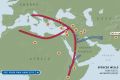


Population Movements to Keserwan - The Khazens and The Maans
ما جاء عن الثورة في المقاطعة الكسروانية
ثورة أهالي كسروان على المشايخ الخوازنة وأسبابها
Origins of the "Prince of Maronite" Title
Growing diversity: the Khazin sheiks and the clergy in the first decades of the 18th century
Historical Members:
Barbar Beik El Khazen [English]
Patriach Toubia Kaiss El Khazen(Biography & Life Part1 Part2) (Arabic)
Patriach Youssef Dargham El Khazen (Cont'd)
Cheikh Bishara Jafal El Khazen
Patriarch Youssef Raji El Khazen
The Martyrs Cheikh Philippe & Cheikh Farid El Khazen
Cheikh Nawfal El Khazen (Consul De France)
Cheikh Hossun El Khazen (Consul De France)
Cheikh Abou-Nawfal El Khazen (Consul De France)
Cheikh Francis Abee Nader & his son Yousef
Cheikh Abou-Kanso El Khazen (Consul De France)
Cheikh Abou Nader El Khazen
Cheikh Chafic El Khazen
Cheikh Keserwan El Khazen
Cheikh Serhal El Khazen [English]
Cheikh Rafiq El Khazen [English]
Cheikh Hanna El Khazen
Cheikha Arzi El Khazen
Marie El Khazen