aawsat.com — Lebanese Prime Minister-designate Saad Hariri condemned on Friday Foreign Minister Jebran Bassil for his “unilateral” decision to freeze the residency …
by catholicherald.co.uk — Chartres sonne, Chartres t’appelle! Gloire, honneur au Christ-Roi!” Under a radiant sky a stream of singing pilgrims stretches across …
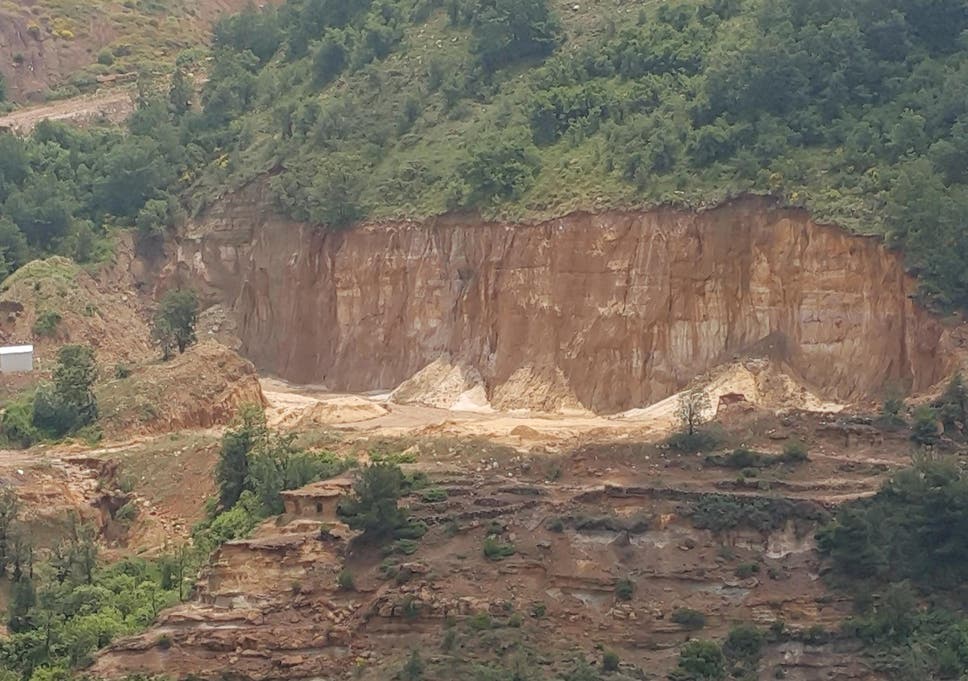
by Robert Fisk Tarshish, central Lebanon independent.co.uk --- -- Rarely are journalists lost for words. But how do you describe the destruction of entire mountains, the slashing down of tens of thousands of pine trees, the very shape of the landscape changed by more than 3,000 quarries which have ripped apart the geography of Lebanon and made a new map of its blessed and ancient land – the Massacre of the Mountains? Is that good enough for a story which should shock the world if it occurred in Europe or America? I call it the Castration of Lebanon. Its fruits are dirt and crumbled rock and contaminated lakes. The tops of entire mountainsides – millions of tons of sand and rock – have been ripped away by diggers, excavators and bulldozers to provide concrete for Beirut’s canyons of grotesque high-rise apartments: for its villas and gated city suburbs and the Lebanese Mediterranean coastal hotels. Greed, corruption, poverty and a shameful, selfish, confessional government are to blame. Even now, as Lebanon’s sectarian parties fight for seats in a new cabinet, their nation is being physically torn apart. All they need to do is pass a law – just one piece of legislation – to stop this anarchy.
“Your Lebanon is a political knot, a national dilemma, a place of conflict and deception,” the nation’s most famous poet, Khalil Gibran, wrote in despair of his country almost a hundred years ago. “My Lebanon is a place of beauty and dreams of enchanting valleys and splendid mountains….Your Lebanon is empty and fleeting, whereas my Lebanon will endure forever.” Not any more. Come with me to Mayrouba, high on a mountain above Bikfaya, where Elias Saadeh stands on a plateau of mud and broken rock and roads – government highways – which end suddenly in sheer 500-foot chasms of stone, carved and hacked at by giant cranes and stone cutters whose claws have grooved out the inside of these mountains. Ridges, valleys and watercourses have disappeared. “There is not a building in the ‘new’ Beirut,” Saadeh says cynically, “which does not have part of Mayrouba in its walls and foundations. They call our land here ‘gold sand’ – the best you can buy to build apartment blocks, and it’s the most expensive. But this is crazy. “More than 120,000 of our pine trees have been cut down. We had thirty water ‘ein’ (wells) – but today we only have two left and they are both polluted.”
The two of us stare out towards mountains we’ve known and looked at for decades – but the mountains are not there. For this is now a lunar landscape whose creeping fog and damp winds prove that image reflects reality. We are looking at a lost land. Why? “Because the people who did this are not educated,” Elias says. “Because they only see the dollar. These people make $5,000 a day. They made people rich, but they remained uneducated. They have never learned how to love land. “They don’t give a shit about the nation, about wild life or the environment – nothing! Now we are going towards desertification.” Saadeh sounds like a modern-day Gibran. The poet’s body lies scarcely a hundred miles to the north, sealed into a cave, his tomb weighted down with chains in case his worshippers try to take his bones. “Splendid mountains” indeed.
by SPUTNIK news — Lebanese Prime Minister Saad Hariri plans to attend the opening of the 2018 FIFA World Cup. “The prime minister …




Population Movements to Keserwan - The Khazens and The Maans
ما جاء عن الثورة في المقاطعة الكسروانية
ثورة أهالي كسروان على المشايخ الخوازنة وأسبابها
Origins of the "Prince of Maronite" Title
Growing diversity: the Khazin sheiks and the clergy in the first decades of the 18th century
Historical Members:
Barbar Beik El Khazen [English]
Patriach Toubia Kaiss El Khazen(Biography & Life Part1 Part2) (Arabic)
Patriach Youssef Dargham El Khazen (Cont'd)
Cheikh Bishara Jafal El Khazen
Patriarch Youssef Raji El Khazen
The Martyrs Cheikh Philippe & Cheikh Farid El Khazen
Cheikh Nawfal El Khazen (Consul De France)
Cheikh Hossun El Khazen (Consul De France)
Cheikh Abou-Nawfal El Khazen (Consul De France)
Cheikh Francis Abee Nader & his son Yousef
Cheikh Abou-Kanso El Khazen (Consul De France)
Cheikh Abou Nader El Khazen
Cheikh Chafic El Khazen
Cheikh Keserwan El Khazen
Cheikh Serhal El Khazen [English]
Cheikh Rafiq El Khazen [English]
Cheikh Hanna El Khazen
Cheikha Arzi El Khazen
Marie El Khazen