
By Sharon Goldman -- venturebeat.com -- These are the 5 biggest AI stories I’m waiting for:
1. GPT-4
ChatGPT is so 2022, don’t you think? The hype around OpenAI’s chatbot “research preview,” released on November 30, has barely peaked, but the noisy speculation around what’s coming next — GPT-4 — is like the sound of millions of Swifties waiting for Taylor’s next album to drop. If expert predictions and OpenAI’s cryptic tweets are correct, early to mid-2023 will be when GPT-4 — with more parameters and trained on more data — makes its debut and “minds will be blown.” It will still be filled with the untrustworthy “plausible BS” of ChatGPT and GPT-3, but it will possibly be multi-modal — able to work with images, text and other data. It has been less than three years since GPT-3 was released, and only two since the first DALL-E research paper was published. When it comes to the pace of innovation for large language models in 2023, many are saying “buckle up.”
2. The EU AI Act
AI technology may be rapidly advancing, but so is AI regulation. While a variety of state-based AI-related bills have been passed in the U.S., it is larger government regulation — in the form of the EU AI Act — that everyone is waiting for. On December 6, the EU AI Act progressed one step towards becoming law then the Council of the EU adopted its amendments to the draft act, opening the door for the European Parliament to “finalize their common position.” The EU AI Act, according to Avi Gesser, partner at Debevoise & Plimpton and co-chair of the firm’s Cybersecurity, Privacy and Artificial Intelligence Practice Group, is attempting to put together a risk-based regime to address the highest-risk outcomes of artificial intelligence. As with the GDPR, it will be an example of a comprehensive European law coming into effect and slowly trickling into various state and sector-specific laws in the U.S., he recently told VentureBeat. Boston Consulting Group calls the EU AI Act “one of the first broad-ranging regulatory frameworks on AI” and expects it to be enacted into law in 2023. Since it will apply whenever business is done with any EU citizen, regardless of location, this will likely affect nearly every enterprise.
3. The battle for search
Last week, the New York Times called ChatGPT a “code red” for Google’s search business. And in mid-December, You.com announced it had opened up its search platform to generative AI apps. Then, on Christmas Eve, You.com debuted YouChat, which it called “Conversational AI with citations and real-time data, right in your search bar.” To me, this all adds up to what could be a real battle for the future of search in 2023 — I’m already munching on popcorn waiting for Google’s next move. As I wrote recently, Google handles billions of searches every single day — so it isn’t going anywhere anytime soon. But perhaps ChatGPT — and even You.com — is just the beginning of new, imaginative thinking around the future of AI and search. And as Alex Kantrowitz told Axios recently, Google may have to make a move: “It’s game time for Google,” he said. “I don’t think it can sit on the sidelines for too long.”
4. Open source vs closed AI
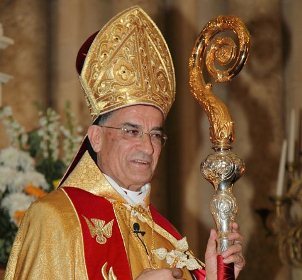
By Najia Houssari -- BEIRUT: Maronite Patriarch Bechara Al-Rahi has called on Lebanese politicians to help play their part in the election of a new president following 10 failed attempts. He appealed to politicians to stop impeding the process and to help create a situation in which the state’s institutions can resume work to help address the country’s economic crisis. MPs have held 10 failed sessions to elect a president, with Hezbollah and its allies casting blank votes and repeatedly withdrawing from the second round of voting, resulting in a loss of quorum. Al-Rahi said: “Arrogance is stopping the politicians from holding a dialogue to overcome the presidential election crisis, while the wailing of the hungry and grieving people does not reach the ears of their heart and conscience." Maronite Patriarch Bechara Al-Rahi says he wants an international conference to help resolve the problems in Lebanon, under the auspices of the UN and friendly countries. Al-Rahi, who added that some politicians seemed unconcerned about citizens’ suffering, was speaking at Sunday Mass in Bkirki.
His appeal came as Christmas was observed with midnight Masses and Sunday morning services amid strict security measures undertaken by the military and security forces. Al-Rahi asked in his sermon: “How could they forget the face of mercy revealed to us at Christmas?” The presidential deadlock was also referenced by other religious figures. Armenian Catholic Patriarch Raphael Bedros XXI Minassian said: “We have spent the money of our parents and children and we have left them in a deep hole.” While delivering his own speech, Al-Rahi was moved to the point of crying when stressing the plight of Lebanon’s people. He said the value of the country’s currency was plummeting, and yet no one batted an eyelid. He added that the investigation into the Beirut port blast awaited the judiciary, and the judiciary was awaiting the end of political and sectarian conflicts. He added: “In Lebanese prisons, there are unsentenced prisoners from all religious sects, and in courts there are cases that have been accumulating for two years. The judiciary is on strike and the politicians are not concerned.”
Will 2023 be the year we finally break free from the 9-to-5 workday? Signs point to yes. Nonlinear workdays are gaining steam …
Florida was the fastest-growing state in 2022, United States Census Bureau data reveals. The Sunshine State’s population rose 1.9%, to 22.2 million, …




Population Movements to Keserwan - The Khazens and The Maans
ما جاء عن الثورة في المقاطعة الكسروانية
ثورة أهالي كسروان على المشايخ الخوازنة وأسبابها
Origins of the "Prince of Maronite" Title
Growing diversity: the Khazin sheiks and the clergy in the first decades of the 18th century
Historical Members:
Barbar Beik El Khazen [English]
Patriach Toubia Kaiss El Khazen(Biography & Life Part1 Part2) (Arabic)
Patriach Youssef Dargham El Khazen (Cont'd)
Cheikh Bishara Jafal El Khazen
Patriarch Youssef Raji El Khazen
The Martyrs Cheikh Philippe & Cheikh Farid El Khazen
Cheikh Nawfal El Khazen (Consul De France)
Cheikh Hossun El Khazen (Consul De France)
Cheikh Abou-Nawfal El Khazen (Consul De France)
Cheikh Francis Abee Nader & his son Yousef
Cheikh Abou-Kanso El Khazen (Consul De France)
Cheikh Abou Nader El Khazen
Cheikh Chafic El Khazen
Cheikh Keserwan El Khazen
Cheikh Serhal El Khazen [English]
Cheikh Rafiq El Khazen [English]
Cheikh Hanna El Khazen
Cheikha Arzi El Khazen
Marie El Khazen