by In an industry beset by trends, Château Musar, an 87-year-old Lebanese wine producer, has garnered a cult following. It’s the only Middle Eastern wine offered by Thomas Keller’s legendary French Laundry restaurant in Yountville, California, and it displays prominently at New York City’s Rouge Tomate. Manhattan’s Terroir Tribeca has a dedicated section titled, “All Hail the Almighty Château Musar.” When winemaker Serge Hochar died unexpectedly in December 2014, he was mourned in almost every major wine publication. How did Château Musar become the sole Middle Eastern producer to earn a spot on the international stage of wine icons?
The Beirut-based Château Musar, founded in 1930 by Gaston Hochar, initially burst onto the international scene in 1979, when it dazzled attendees of the Bristol Wine Fair under the helm of Gaston’s son, Serge. A British favorite thereafter, it didn’t gain acclaim in the U.S. until around 2000, when sommeliers and wine lovers alike began clamoring for the non-interventionist, natural bottles of red, white, and rosé Château Musar. While the key to Château Musar’s success is by no means singular, a simple reality set it up for success: It was available and actively marketed outside of Lebanon.
“The family’s foresight to sell the wines internationally and Serge’s very eloquent championing of them certainly has a lot to do with [the winery’s popularity],” says Christy Frank, wine buyer of Copake Wine Works in Copake, New York. For Musar’s first 40 years, the wine was largely consumed in its home country, but the 1972 onset of civil war almost eliminated that market. Serge, who continued to produce wine throughout the 20-year war, made a strong push for Château Musar in international markets.
But something caused wine professionals to fall head over heels for what was inside the Musar bottles and, counterintuitively, it was exactly what could have caused sommeliers to turn their heads in disgust: the unique, funky, savory, volatile, complex character of the wine.
“When you stuck your schnozz in a glass of Musar, there was no other wine on the planet Earth that tasted like it,” notes Paul Grieco, proprietor of Terroir Tribeca and Terroir on the Porch in New York. These were no ordinary wines. They were unusual and animalistic, dominated by non-fruit and earth, and until recent years, the “flawed” compounds of volatile acidity and brettanomyces. While many would call them pleasurable, few would call them approachable.
by Salah Takieddine BEIRUT, (Xinhua) — Lebanese businessmen who have participated in the China-Arab States Expo in the northwestern Chinese city of …


by AP - Lebanese film director Ziad Doueiri, who was detained briefly for previous visits to Israel, lashed back against critics who accused him of normalisation with the Jewish state. He said on Monday that his work is for the good of Lebanon and the Palestinian cause. It was not clear why the Paris-based Doueiri, director of the award-winning civil war film "West Beirut," was detained Sunday night, as he has visited Lebanon several times since traveling to Israel. Lebanon and Israel are in a state of war and Beirut bans its citizens from visiting Israel or having business dealings with Israelis.
Doueiri told reporters after three hours of questioning at a military court in Beirut Monday that authorities found that he has "no criminal intentions against the Palestinian cause." Doueiri's latest film, "The Insult," opens in Lebanon this week, after winning the best actor award at the Venice Film Festival earlier this month. Doueiri said that Kamel El Basha, the Palestinian awarded best actor at the Venice Film Festival, spent two years in Israeli jails. He said some journalists are trying to undermine him ahead of the film showing in Beirut, which begins on Thursday. Doueiri's previous film, "The Attack," was banned in Lebanon and most Arab countries. The movie is about a Palestinian surgeon living in Tel Aviv who discovers that a suicide attack in the city that killed 17 people was carried out by his wife. The movie was filmed in Israel and featured several Israeli actors.
Lebanese journalist Pierre Abi Saab, who is opposed to any dealings with Israel, wrote a column in the daily Al-Akhbar last week titled "Ziad Doeiri, apologize for your Israeli slip." He said that Doueiri spent months in Israel to film "The Attack," spending money there and speaking to Israeli media defending his movie amid criticism in Lebanon. "Today, Ziad Doueiri is coming on a white horse from Venice with a new movie expecting us to carry him on our shoulders and welcome him as a conqueror," Abi Saab wrote. "We will not accept that the crime be covered," he wrote, referring to Doueiri's visits to Israel. Speaking to reporters outside the military court, Doueiri said he was well treated by Lebanese security agencies during his brief detention but blasted journalists he refused to name "that are fabricating things to block the new movie." He said they used "dirty words against some people and accused them of being Zionists." "My mother breastfed me Palestinian milk and the Palestinian cause. Members of my family were killed while fighting with the Palestinians," Doueiri said.
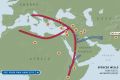
Population Movements to Keserwan - The Khazens and The Maans
ما جاء عن الثورة في المقاطعة الكسروانية
ثورة أهالي كسروان على المشايخ الخوازنة وأسبابها
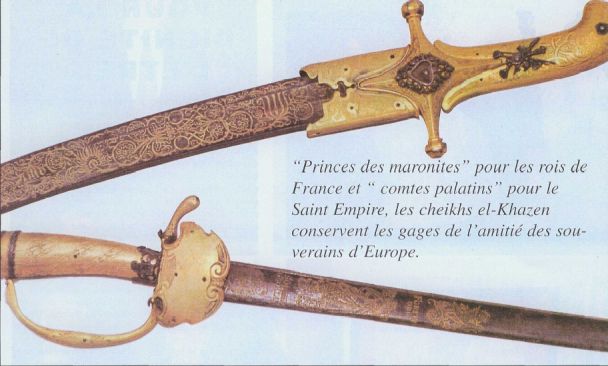
Origins of the "Prince of Maronite" Title
Growing diversity: the Khazin sheiks and the clergy in the first decades of the 18th century
Historical Members:
Barbar Beik El Khazen [English]
Patriach Toubia Kaiss El Khazen(Biography & Life Part1 Part2) (Arabic)
Patriach Youssef Dargham El Khazen (Cont'd)
Cheikh Bishara Jafal El Khazen
Patriarch Youssef Raji El Khazen
The Martyrs Cheikh Philippe & Cheikh Farid El Khazen
Cheikh Nawfal El Khazen (Consul De France)
Cheikh Hossun El Khazen (Consul De France)
Cheikh Abou-Nawfal El Khazen (Consul De France)
Cheikh Francis Abee Nader & his son Yousef
Cheikh Abou-Kanso El Khazen (Consul De France)
Cheikh Abou Nader El Khazen
Cheikh Chafic El Khazen
Cheikh Keserwan El Khazen
Cheikh Serhal El Khazen [English]
Cheikh Rafiq El Khazen [English]
Cheikh Hanna El Khazen
Cheikha Arzi El Khazen
Marie El Khazen