by Joseph A. Kechichian, Senior Writer
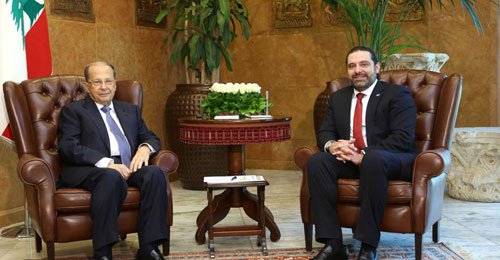
Beirut: All eyes will be on Lebanon’s during the Arab League summit in Aqaba Jordan this week. Its positions will be closely observed by member states, particularly Saudi Arabia which has been displeased with several statements made by pro-Iranian Lebanese politicians, including the president, Michel Aoun, as of late. At an emergency foreign ministers meeting last year, Lebanese Foreign Minister Jibran Bassil, refused to condemn attacks on Saudi missions in Iran in early 2016, which sparked a massive diplomatic crisis between Saudi Arabia and Lebanon. In response, Saudi Arabia stopped critical military aid to the Lebanese army and banned its citizens from travelling to Lebanon, in a severe blow to Lebanon’s tourism industry. Aoun, who became president in late 2016, travelled to Riyadh on his first official trip, hoping to patch things up with Lebanon’s traditional ally. However, a planned follow-up visit by Saudi King Salman Bin Abdul Aziz to Lebanon was cancelled after Aoun praised Hezbollah and backed the militia’s right to bear arms alongside the Lebanese Armed Forces (LAF) during an interview with Egyptian TV.
On Wednesday, Lebanese Prime Minister Sa’ad Hariri, met Egyptian President Abdul Fattah Al Sissi in Cairo to close ranks with the most populous Sunni power in the Arab world, ahead of the summit. Hariri will accompany Aoun during the summit, in an unprecedented move interpreted as trying to cushion any potential fallout. Hariri, whose father Rafik Hariri was assassinated allegedly in a Syrian-Hezbollah coordinated plot in 2005, wanted to coordinate Lebanon’s positions with Egypt to avoid any potential embarrassing incidents.

by Al Monitor - Florence Massena
Ski and Swim the Same Day, an event held March 19 co-sponsored by the Laqlouq ski resort and MARCH, a nongovernmental organization, invited the adventurous for some skiing in the morning and then a trip to the beach at Batroun, in northern Lebanon. It is only one of the many types of activities offered by ski resorts as well as the Lebanese Ski Federation (FLS) to attract locals and tourists to Lebanon's slopes. Lebanon's ski season is expected to close at the end of this month, but other activities continue year-round at ski resorts. “All the ski resorts had to develop extra activities to attract people during the rest of the year, because when spring comes, people only think about going to the beach,” Freddy Kairouz, FLS general secretary told Al-Monitor. “At FLS, we focus on bringing athletes from all over the world to participate in international competition for skiing, snowboarding and cross-country, but also to enjoy the nightlife, visit Lebanon and of course taste the food.”
Kairouz has developed activities to attract people who are not particularly into skiing, such as Alaska Night, a party in the snow last held March 18 in the Bsharri ski resort that included igloos for the children. Kairouz is also the mayor of Bsharri, a northern village where Lebanon's first school for skiing was established in the 1930s by the French army at the Cedars, which today, along with the resort there, is managed by the municipality. Skiing in Lebanon rose in popularity in the 1950s, when the first ski lift was installed at the Cedars, and in the 1960s, with the opening of the Mzaar ski resort. Snow-related recreation came to a halt during the civil war (1975-1990) because the resorts closed, but the facilities have since developed and upgraded their equipment to offer optimal service to skiers.
“We now have 15 chairlifts and five ski lifts on around 100 square kilometers [39 square miles] of groomed and marked trails and slopes, and all our equipment is from Europe,” Christian Rizk, the director of the Mzaar ski resort, told Al-Monitor. “We follow French security norms and have an expert from the research firm ERIC [involved in cable transportation engineering] coming from France every year to give us an operating certificate.”

A big vote is set to take place in the Lebanese parliament this week that could repeal a provision of the nation's penal code — article 522 — which states that men who rape women can walk free if they marry their victims. This story is based on a radio interview. Listen to the full interview. Ali Awada, advocacy and campaign manager for the gender-equality group ABAAD, has been working to convince politicians and the Lebanese people that it's time to abolish the law. “Usually when a woman gets raped, the men come and propose. The family says, ‘OK, it’s better for her to get married to him so she can live a normal life, and she will preserve her honor and the family honor,’” Awada says.
Awada and her group have started public information campaigns to spread the message that rape is a crime and that men should be sent to jail for sexually assaulting women. “The second [message we sent] was that the woman has the right to say, ‘No, I don’t want to get married to the man who raped me once because if I get married to him then he will continue raping me my whole life,’” she says.
The group’s efforts have been successful so far. “It worked at the policy level with different decision-makers,” says Awada. “The Justice Committee was studying abolishing the article 522 law. After this series of lobbying meetings, we managed to get this draft law discussed inside the parliament with different political affiliates, and the final voting will be this week, with hopefully a ‘yes’ to abolish article 522.” Not overturning this law can have devastating effects, Awada says. Back in 2012, a 16-year-old Moroccan girl named Amina Filali killed herself after she was forced to marry her rapist. The backlash to her death lead to the repeal of Morocco’s rape-marriage law, article 475. Jordan and Egypt have similar laws, Awada says, but she argues the issue goes beyond legal statutes.

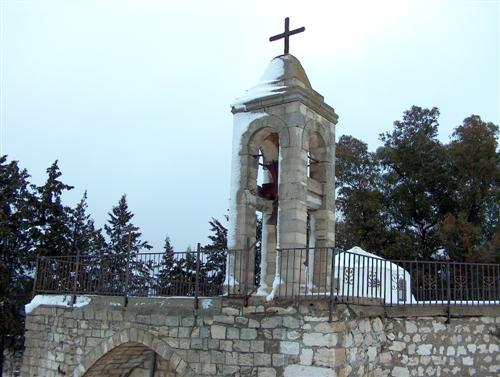
Population Movements to Keserwan - The Khazens and The Maans
ما جاء عن الثورة في المقاطعة الكسروانية
ثورة أهالي كسروان على المشايخ الخوازنة وأسبابها
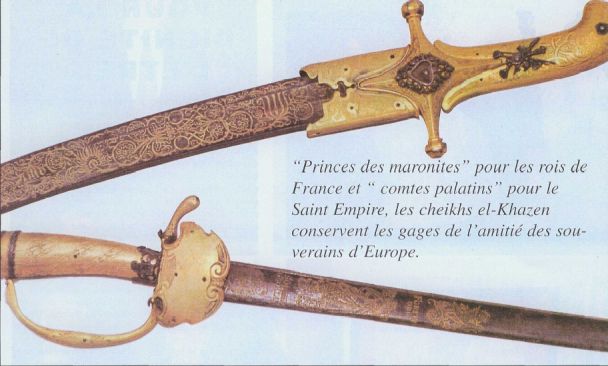
Origins of the "Prince of Maronite" Title
Growing diversity: the Khazin sheiks and the clergy in the first decades of the 18th century
Historical Members:
Barbar Beik El Khazen [English]
Patriach Toubia Kaiss El Khazen(Biography & Life Part1 Part2) (Arabic)
Patriach Youssef Dargham El Khazen (Cont'd)
Cheikh Bishara Jafal El Khazen
Patriarch Youssef Raji El Khazen
The Martyrs Cheikh Philippe & Cheikh Farid El Khazen
Cheikh Nawfal El Khazen (Consul De France)
Cheikh Hossun El Khazen (Consul De France)
Cheikh Abou-Nawfal El Khazen (Consul De France)
Cheikh Francis Abee Nader & his son Yousef
Cheikh Abou-Kanso El Khazen (Consul De France)
Cheikh Abou Nader El Khazen
Cheikh Chafic El Khazen
Cheikh Keserwan El Khazen
Cheikh Serhal El Khazen [English]
Cheikh Rafiq El Khazen [English]
Cheikh Hanna El Khazen
Cheikha Arzi El Khazen
Marie El Khazen