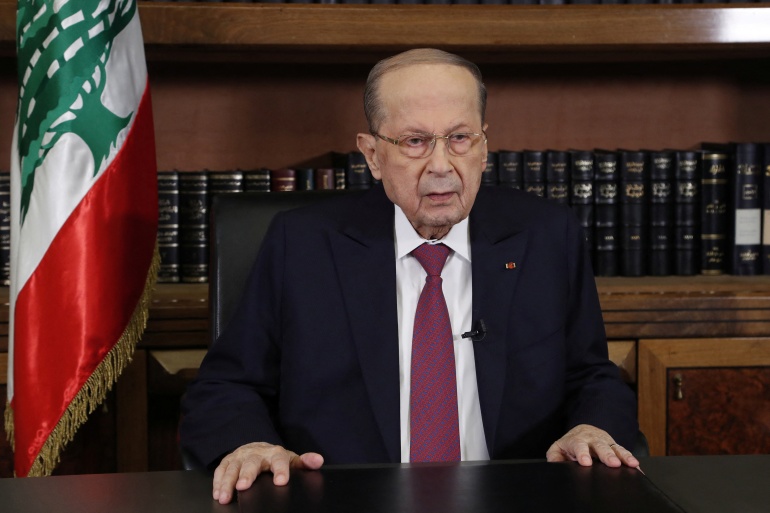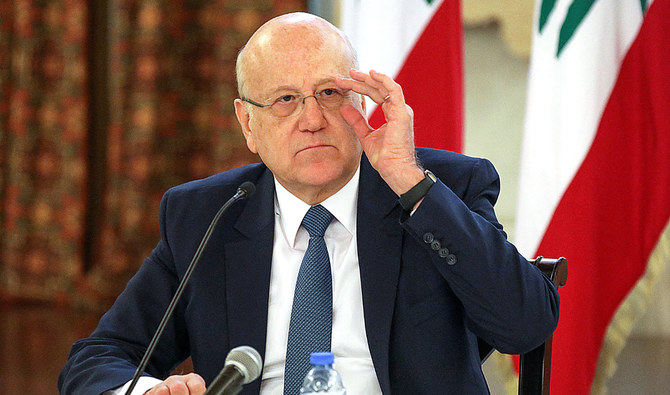
By Najia Houssari — arabnews.com — BEIRUT: Officials in Lebanon continue to acquit themselves of all the crises that the Lebanese people are facing, as a result of the economic collapse, political disputes and Hezbollah’s influence on Lebanon’s external decisions. Following President Michel Aoun’s televised speech to the Lebanese people, where he indirectly criticized Hezbollah and its Shiite ally Parliament Speaker Nabih Berri, Prime Minister Najib Mikati held a press conference on Tuesday. He said that “interfering in the work of the Cabinet hindered the mission of his salvation government” and that “halting the Cabinet’s session since Oct. 12 constitutes a structural malfunction in the work of the government that cannot be ignored or overlooked.” Mikati stressed that he does not accept any settlement at the expense of institutions. “I do not barter the Cabinet’s meetings for any settlement that is not accepted by the Lebanese people and families of the victims of the Beirut port explosion, and the international community.” He added that he cannot hold anyone responsible for not holding the Cabinet’s sessions “as I am convinced of a disruption in the course of the Beirut port investigation; however, this cannot disrupt the government and stop the reforms.”
Mikati stressed the need to “distance the judiciary from political disputes and maintain its independence to preserve one of the state’s most important pillars,” in response to Hezbollah and the Amal Movement’s insistence on the dismissal of Judge Tarek Bitar from the investigation of the Beirut port explosion. He said: “When the state stopped acting by the law and became influenced by the sectarian political authority, it started breaking down and lacking the capability to carry out its missions as a body that is trusted to implement policies and strategies.” Mikati called for a national dialogue to improve Lebanon’s ties with the Arab states, especially in the Gulf. He also urged Lebanese leaders not to interfere in their internal affairs, and called for a return to the “dissociation policy that preserves our home and protects its relations with the international community and the Arab world.” He said that remediation should be done “within constitutional and legal frameworks,” and stressed the necessity to implement the constitution. He added that if his resignation is the solution, he will not hesitate to resign if he sees that it will contribute to further damage.