لقاء تعارف ودي مع السيدة يمنى بشير الجميل حضرت خلاله الاوضاع العامة في البلاد وشخصية الرئيس الشهيد الاستثنائية ومواقفه الشجاعة. وقد جرى التشديد على تثبيت اسس اعلان بعبدا لاستعادة ثقة المجتمع الدولي بالدولة تمهيداً لاطلاق عجلة النمو وانتشال الشعب من الحالة المذرية التي اصبح فيها. هذا وقد تم التوافق على ضرورة رفع الصوت من اطراف […]
(Reuters) – Lebanon could reach a preliminary agreement for financial support with the International Monetary Fund (IMF) between January and February, the local Al Jadeed TV said in a tweet on Sunday, citing the deputy prime minister. Saadeh al-Shami was quoted by the broadcaster as saying a ministerial committee had agreed with the central bank […]

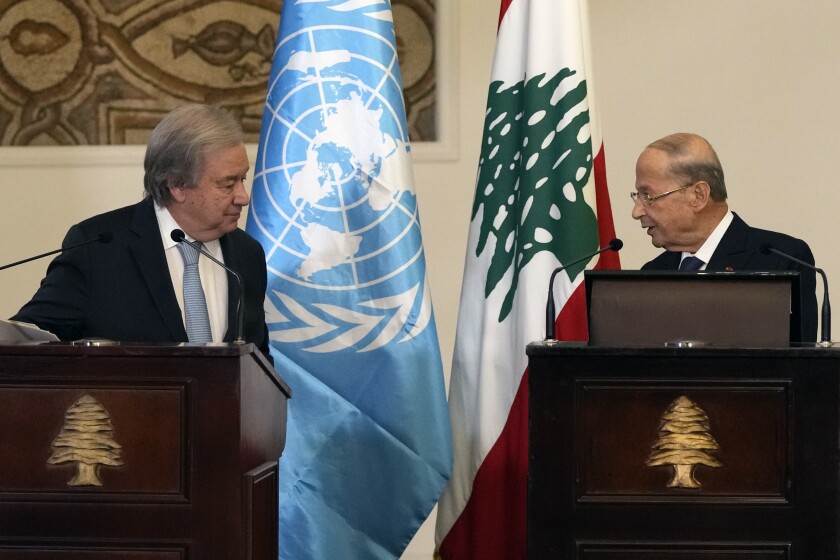
by AFP — “I have come with a simple message: the UN stands in solidarity with the people of Lebanon,” Guterres told a press conference with Lebanese President Michel Aoun. “Seeing the suffering of the people of Lebanon, Lebanese political leaders do not have the right to be divided and paralyse the country,” he added. He said the objective of his meetings would be “to discuss how we can best support the Lebanese people to overcome the current economic and financial crisis and to promote peace, stability and sustainable development”. Lebanon is in the throes of an economic meltdown dubbed by the World Bank as among the planet’s worst since the 1850s.
It is widely blamed on nepotism and corruption among the country’s ruling class. Around 80 percent of Lebanon’s population is now estimated to be living under the poverty line. “Lebanese people also expect their political leaders to restore the economy, provide the functioning government and state institutions,” Guterres said. Cabinet has failed to meet since mid-October because of infighting, in particular over the judge charged with investigating the catastrophic August 2020 explosion at Beirut’s port that killed at least 215 people, injured thousands and devastated swathes of the capital. The UN chief urged politicians to work together to resolve the crisis and called on the international community “to strengthen its support to Lebanon”.
احد مبارك “الواقع أنّ إيجاد الحلول الدائمة لا يمكن أن يأتي إلا من قلب لبنان” انطونيو غوتيريس امين عام الامم المتحدة في ١٧/١٢/٢٠٢١ لذلك نرى ان العودة الى مقررات هيئة الحوار الوطني، التي تبناها مجلس الامن وانشئت على اساسها المجموعة الدولية لدعم لبنان ISG، تبدو مفيدة لنا.
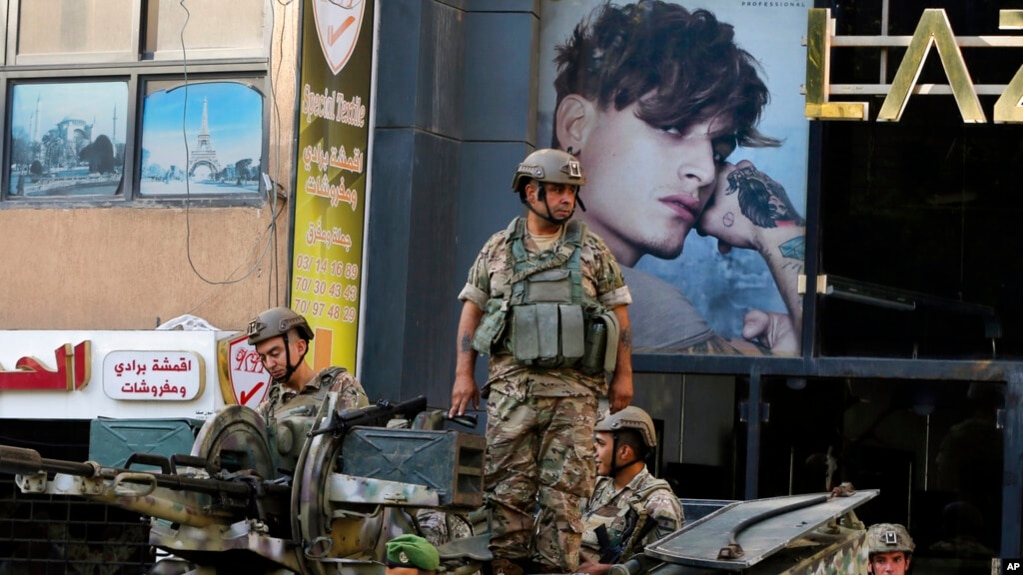
by voanews.com — AMMAN, JORDAN — Lebanon’s parliamentary election will be the first held since the popular uprising in late 2019, when hundreds of thousands took to the streets demanding an end to the entrenched political and economic patronage system, blamed for multiple dire crises engulfing the tiny Mediterranean country. A spiraling economy has plunged three-quarters of Lebanese into poverty as their local currency has lost some 93 percent of its value. Medicine and electricity are in short supply, while food prices have skyrocketed due to inflation. The economic meltdown, coinciding with the coronavirus outbreak, has posed the worst threat to Lebanon’s stability since the 1975-1990 civil war, observers say.
Over the course of 2021, the heavily-armed Iran-backed Hezbollah Shiite militia and political party, along with its allies, have repeatedly tried to remove the judge responsible for investigating the deadly 2020 Beirut port explosion, accusing him of political bias—a charge independents deny. Many Lebanese are angry that no senior official has yet been held accountable for the country’s worst peacetime disaster. Meanwhile, Gulf Arab states accuse Hezbollah of trying to proliferate drugs into their region via fruit and vegetable imports, straining historic ties with Lebanon. Several activist platforms fielding candidates have formed, analysts say, such as Minteshreen, meaning “from October” and “coming from different backgrounds,” to break down divisions the political elite have fostered, such as voting along sectarian lines.
By Najia Houssari – arabnews.com — BEIRUT: Lebanese security services have imposed a three-week curfew for unvaccinated residents, with fines for those who break it, from 5 p.m. to 6 a.m. until Jan. 9, 2022, amid rising cases across the country. The committee that follows up on coronavirus disease preventative measures said it would exclude those “with at least one vaccine dose or a negative PCR test in the last 48 hours and children under 12.” On Friday, the Ministry of Public Health reported 1,912 new COVID-19 cases, mostly in people between 30 and 39 years old, some of whom had received three vaccine doses. In addition, 14 deaths were recorded. The ministry said: “We have had 22,168 active cases these last 14 days,” adding only 34 percent of people had received two vaccine doses, with the lowest vaccination rate recorded in the Bekaa region.
Lebanese Red Cross Secretary-General George Kettaneh said that “ambulance teams transport 80 to 100 cases to hospitals every day, while over 1,200 oxygen concentrators have been distributed.” So far, Lebanon has had 60 cases of the new omicron variant, but Lebanese Health Minister Firass Abiad noted it is “rapidly spreading … two and a half times faster than the delta variant.” Those who have received three vaccine doses have greater protection against omicron, he added. Lebanon fears yet another outbreak over the holidays, particularly since the medical sector is exhausted amid shortages in staff, fuel, oxygen, medical supplies and medicines.
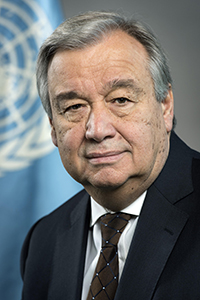
by arabnews.com — EPHREM KOSSAIFY — NEW YORK: Ahead of his visit to Lebanon next week, UN Secretary-General Antonio Guterres called on the country’s leaders to step up their efforts to root out corruption and promote accountability and transparency. “Lasting solutions can only come from inside Lebanon,” he said on Friday in a video message. “It is essential for leaders to put the people first and implement the reforms needed to set Lebanon back on track, including efforts to promote accountability and transparency, and root out corruption.” Guterres expressed his concern for the Lebanese people and the hardships they are facing. He praised them for their “generosity, resourcefulness and hospitality,” qualities he said he has seen first-hand during his visits to the country as head of the UN Refugee Agency.
Lebanon faces multiple crises. In addition to an ongoing financial and economic collapse, it is struggling with the effects of the COVID-19 pandemic and still reeling from the devastating explosion at Beirut’s port on Aug. 4 last year, which claimed more than 200 lives, injured more than 6,000, left many more homeless and cost the country up to $4.5 billion in damages. “The United Nations mourns with you,” Guterres told the Lebanese people. “Among the youngest victims were two children of UN staff members.” The explosion happened when a large amount of ammonium nitrate, stored at the port for six years without proper safety precautions, ignited. Tensions remain high in Lebanon over the investigation into the blast, and last month this spilled over into street violence that left at least six people dead. Activists and relatives of the victims say that the official inquiry is being hampered by the Lebanese political leadership in an effort to shield politicians and officials from scrutiny. “I know the Lebanese people want answers and I hear your demands for truth and justice,” Guterres said.
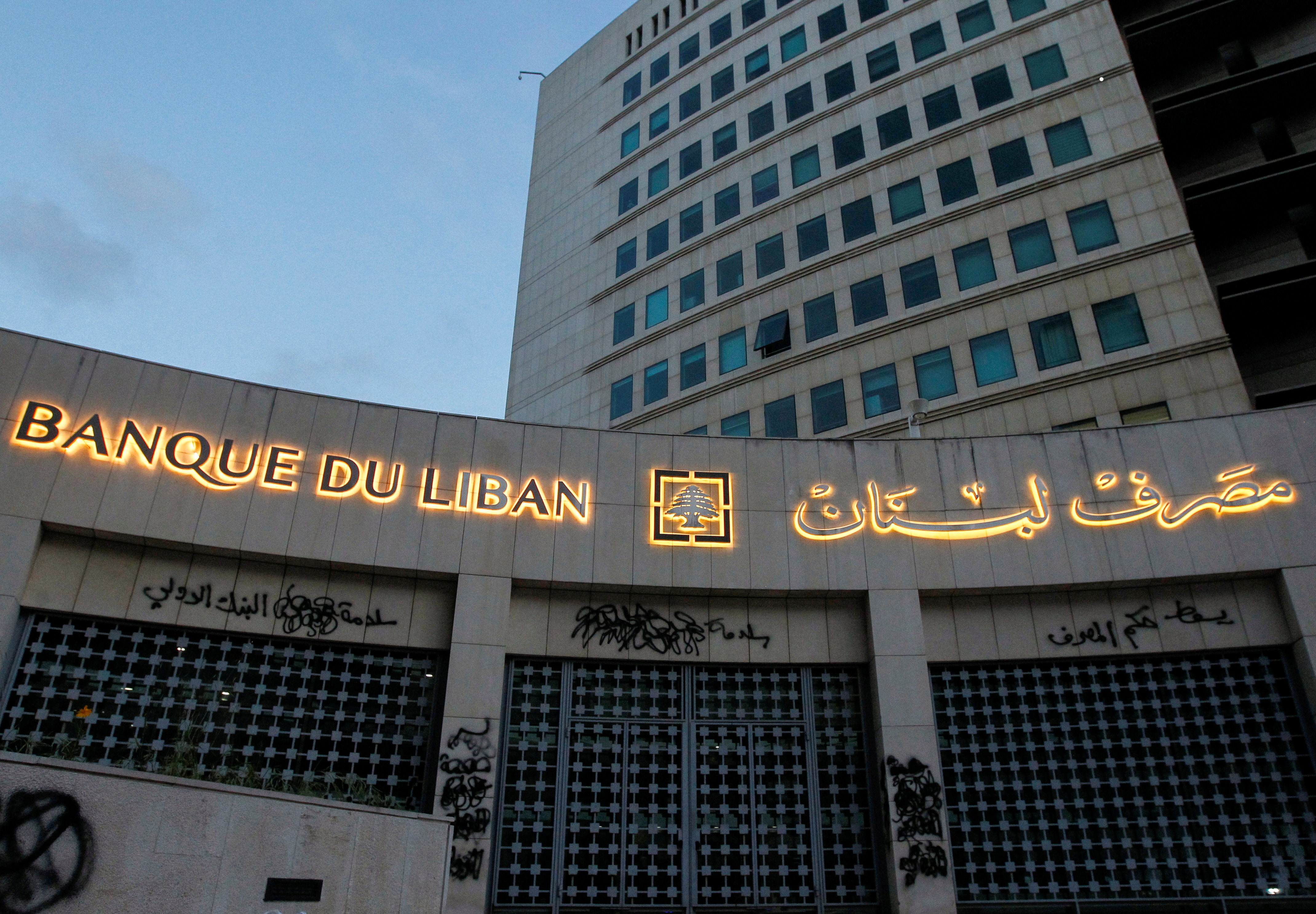
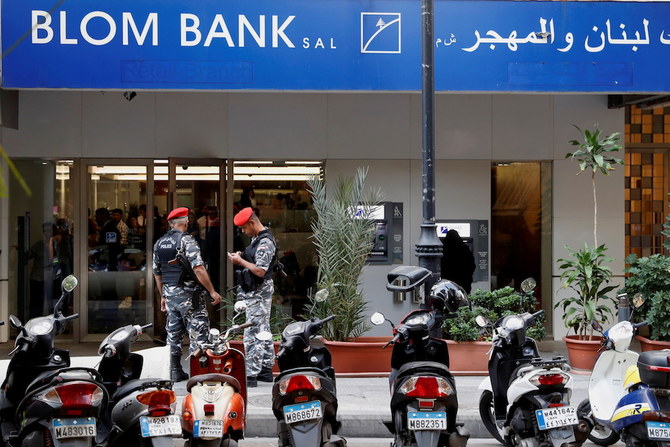
BEIRUT, (Reuters) – A British court ruled on Friday in favour of a Lebanese bank in a case brought by a depositor barred from transferring funds abroad because of capital controls in place since Lebanon’s financial system collapsed in 2019. The court ruled that BLOM Bank could be considered to have discharged its debt to the plaintiff, Bilal Khalifeh, by issuing a cheque in Lebanon. Banks have imposed tight controls on accounts, including a de facto ban on transfers abroad and local withdrawals of dollar-denominated deposits in dollars, but the controls have been challenged in Lebanese and international courts.
Banks have sought to discharge dollar-denominated funds via banker’s cheques which cannot be cashed out in dollars and are instead sold on the market at a discount of about three-quarters of their value. The ruling by London’s High Court of Justice, Queens Bench Division, said BLOM Bank was under no obligation to transfer some $1.4 million in Khalifeh’s savings abroad and could be considered to have discharged his account via a cheque deposited with a notary. “The debt due from the Bank was payable in Lebanon and… Mr Khalifeh had no contractual right to require the Bank to transfer funds abroad,” it said.
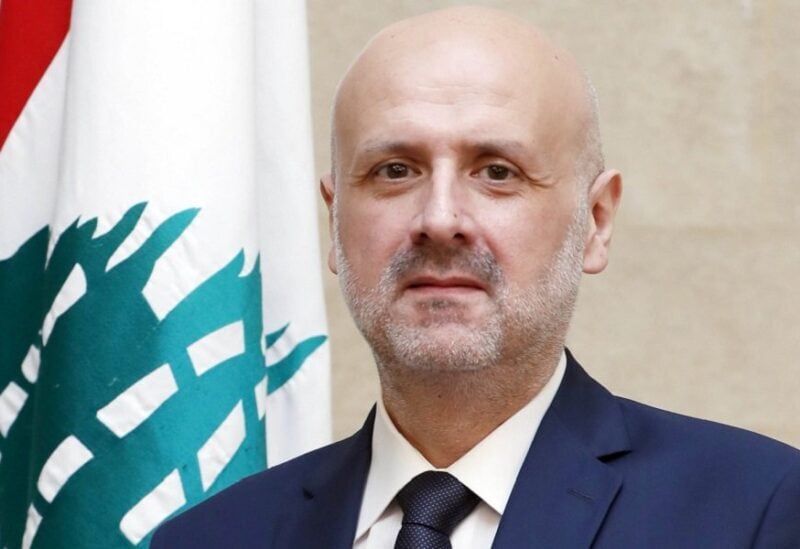
BEIRUT, (Reuters) – Lebanon’s interior minister on Wednesday ordered the deportation of non-Lebanese members of Bahrain’s dissolved opposition al-Wefaq group after some of them criticised the Gulf Arab kingdom at a news conference in Beirut Lebanon became enmeshed in a major diplomatic dispute with the Gulf last month after former information minister George Kordahi criticised Saudi Arabia over the Yemen war. Bahrain’ interior minister, Sheikh Rashid bin Abdullah Al Khalifa, had earlier on Wednesday called his Lebanese counterpart, Bassam Mawlawi, to tell him that events such as the Wefaq news conference, or Kordahi’s comments, “harm Lebanon and its people”, a statement from Bahrain’s interior ministry said.
The Gulf Cooperation Council, whose leaders met on Tuesday in Riyadh, condemned the news conference held by “a terrorist organization with support from the terrorist Hezbollah” and voiced support for Bahrain in “any measures it takes to protect its security and stability”. At its news conference, Wefaq released a report detailing what it said were rights abuses in Bahrain from 2019 to mid 2021. Gulf monarchies have been alarmed by the rising influence of Lebanon’s armed Iranian-backed Hezbollah group. Sunni Muslim Saudi Arabia and Shi’ite Iran have long battled for influence in the region, including in Lebanon, which is struggling with a deep economic crisis. Bahrain’s Wefaq did not immediately respond to a request for comment.
New publication available in Amazon — “ Amazon Link: Sons of Resistance: Bashir Gemayel, Ali Hassan Salameh in “freewheeling and open” Beirut: What Shaped Modern Lebanon From Mitchell Gray: “It was my honor and privilege to write a book about Lebanon and especially about the Christian resistance that produced, under the worst of circumstances, a […]


Population Movements to Keserwan - The Khazens and The Maans
ما جاء عن الثورة في المقاطعة الكسروانية
ثورة أهالي كسروان على المشايخ الخوازنة وأسبابها
Origins of the "Prince of Maronite" Title
Growing diversity: the Khazin sheiks and the clergy in the first decades of the 18th century
Historical Members:
Barbar Beik El Khazen [English]
Patriach Toubia Kaiss El Khazen(Biography & Life Part1 Part2) (Arabic)
Patriach Youssef Dargham El Khazen (Cont'd)
Cheikh Bishara Jafal El Khazen
Patriarch Youssef Raji El Khazen
The Martyrs Cheikh Philippe & Cheikh Farid El Khazen
Cheikh Nawfal El Khazen (Consul De France)
Cheikh Hossun El Khazen (Consul De France)
Cheikh Abou-Nawfal El Khazen (Consul De France)
Cheikh Francis Abee Nader & his son Yousef
Cheikh Abou-Kanso El Khazen (Consul De France)
Cheikh Abou Nader El Khazen
Cheikh Chafic El Khazen
Cheikh Keserwan El Khazen
Cheikh Serhal El Khazen [English]
Cheikh Rafiq El Khazen [English]
Cheikh Hanna El Khazen
Cheikha Arzi El Khazen
Marie El Khazen