الردود والردود المضادة … والردود على هذه الاخيرة المردودة … في تحقيق انفجار المرفأ اصبحت مثل “المخمس المردود” في الزجل مع الفرق ان الزجل شعر وموهبة في سبيل الخير في حين ان تعطيل التحقيق هو ظلم

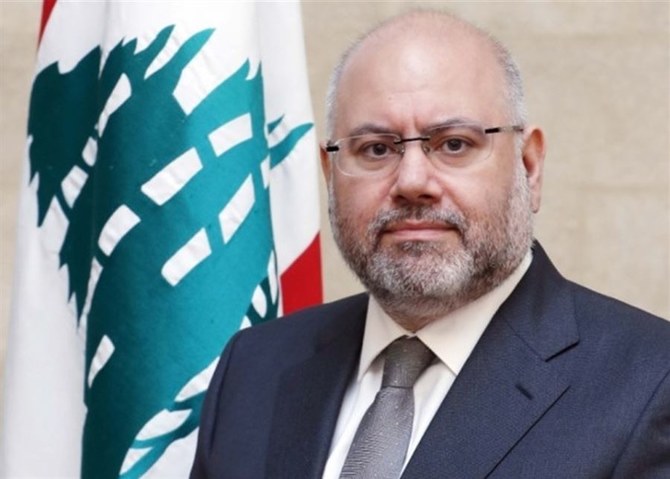
Lebanon’s Minister of Health Dr. Firass Abyad.
By NAJIA HOUSSARI — arabnews.com — BEIRUT: Lebanese health officials have launched an investigation after video images reportedly filmed by a doctor showed emaciated patients tied to filthy beds in a city healthcare center. The footage documented by the Wataawanou Association charity, sparked public outrage when broadcast on news channels on Friday. It highlighted poor conditions in rooms and corridors at the Santa Maria Healthcare Center in Byblos that caters for 55 male and 15 female patients with neurological and mental illnesses. Shots showed skeletal-looking patients sitting or lying on dirty beds, unable to speak, and some with their hands strapped to the bed. Pots with spoiled food and loaves of moldy bread were seen in a kitchen, and other images appeared to depict unhygienic bathrooms.
After the video went viral, Lebanese Health Minister Dr. Firas Abiad and Minister of Social Affairs Hector Hajjar visited the center on Saturday to inspect the premises along with a team of experts from the World Health Organization’s office in Lebanon. “An investigation has been opened to hold those responsible accountable and define the reasons why the center reached such a deteriorating state without informing the ministry, which has a duty to ensure that its patients are treated in good conditions,” Abiad said. The ministry has arranged for the Santa Maria patients to be moved to other facilities pending the completion of a clean-up operation there. A similar health scandal was exposed in February 2019 at Al-Fanar Hospital in Al-Msayleh, in southern Lebanon. Again, patients were transferred to other health centers, including the one at Byblos which received 38 people out of around 90.
كيف السبيل إلى معالجة قلق اللبنانيين الذي اعترف به نصر الله؟ يقول الرئيس ميشال سليمان في مداخلة ألقاها أمام ندوة “مؤتمر المسيحيين العرب” نظّمها مركز LCRS-Politica في 30 آب الماضي: “لبنان ليس بلداً محايداً. وتبعيته لمحور الممانعة جعلت الكارثة التي حلّت به تتعاظم. هناك العزلة الاقتصادية، والاستثمار عندنا أصبح مرهوناً بتعبيتنا لمحور الممانعة الذي له […]

by .fides.org — Beirut (Agenzia Fides) – Faced with the designs pursued by those who want to cancel the singular and unparalleled physiognomy of Lebanon from the Middle Eastern scenario, the only effective response remains that of returning to the founding “roots” of the Lebanese nation, drawing inspiration and criteria from them to face the systemic crisis that is gripping the Land of the Cedars. This is the “line” proposed by Cardinal Béchara Boutros Raï, Patriarch of Antioch of the Maronites, in the introductory speech he gave on Monday, November 8, at the opening of the Assembly of the Catholic Patriarchs and Bishops of Lebanon. In addition to Cardinal Raï, three other Eastern Catholic Patriarchs take part in the meeting, hosted at the Maronite Patriarchal See of Bkerkè (Melkite Youssef Absi, Syrian-Catholic Ignace Youssif III Younan and the newly elected Armenian-Catholic Patriarch Raphaël Bedros XXI Minassian) as well as numerous bishops and superiors general of the various Catholic ecclesial groups present in Lebanon.
In his opening speech, the Maronite Cardinal briefly recalled the constitutive factors of the institutional structure that characterize and protect the Lebanese peculiarity in contemporary historical events. First of all, Patriarch Raï valued the original distinction between political-state institutions and confessional dynamics which, albeit through paradoxical ways, has guaranteed pluralism and diversity as traits of Lebanese coexistence. The prevalence of belonging to the common nation over sectarian divisions – underlined the Patriarch – is the guiding principle to be reaffirmed if we do not want to see Lebanon sink into the quicksand of sectarianism. The National Pact of 1943, cited by the Patriarch in his speech, sealed the historical story of modern Lebanon by recognizing that the “status of neutrality” represents a sort of identity code of the Lebanese nation since its inception.

by al-monitor.com — Families of those arrested in relation to the Beirut port explosion held a protest in Lebanon today. The families demonstrated in front of Lebanon’s Palace of Justice, and demanded the release of their loved ones who are imprisoned. They also alleged that the prisoners’ health is deteriorating, the official National News Agency reported. A massive explosion occurred in Beirut’s port in August 2020, leaving more than 200 dead, thousands displaced, and extensive damage throughout the city. The blast was the result of 1,750 tons of the flammable fertilizer ammonium nitrate catching fire in a warehouse. Lebanese authorities arrested the port manager following the explosion, along with several others. More than 20 port and customs officials have been arrested to date.

Olivier de Schutter, the UN special rapporteur
By Najia Houssari – arabnews.com — BEIRUT: Lebanon continued its freefall into economic turmoil on Friday, with the medical, fuel, and food crises worsening and no political initiative being taken to overcome the deteriorating situation. The value of the Lebanese pound dropped to record lows, trading at 23,000 Lebanese pounds to the dollar on the black market. This crash was at least partly due to a speech given by Hezbollah Secretary-General Hassan Nasrallah on Thursday evening, in which he reaffirmed his hostile positions toward Saudi Arabia and called on the Lebanese to have “patience,” offering no solutions to their mounting problems. Fuel prices suddenly shot up on Friday. The price of a 20-liter gasoline canister ranged between 310,800 and 319,600 Lebanese pounds, the price of a diesel canister reached 311,000 pounds, and gas cylinders were selling for 266,000 pounds. The average price of fuel is now equivalent to half of the minimum wage.
Gas station owners reported an approximately 50 percent “decline in the sale of fuel.” Meanwhile, Economy Minister Amin Salam on Thursday decided to reduce the weight of a bundle of bread while maintaining its current price, which is the highest it has ever reached. A 1,050-gram bundle is now sold for 9,500 Lebanese pounds. The Ministry of Economy attributed this to “the high prices of flour, diesel and other materials.”
الرئيس سليمان: نيترات الأمونيوم كانت لا تزال بالباخرة حينما كنت رئيساً ووُضعت في العنبر بعد مغادرتي بخمسة أشهر ولم يكن لدي معلومات عنها وأترك ما يلزم توضيحه لقاضي التحقيق إن أراد الإستماع إلي لرئيس سليمان: المجلس الأعلى للدفاع إنعقد في 18 أيار 2014 قبل مغادرتي بخمسة أيام ولم يتحدث أحد عن خطورة النيترات وكان […]

by arabnews.com — Najia Houssari — BEIRUT: The Iranian national football team has visited Lebanon on several occasions to compete in the Asian qualifiers. But this week, the Iranian team arrived in a very different set of circumstances, playing Lebanon on Thursday amid a wave of political quarreling and accusations that Tehran is taking over the country and isolating it from its Arab surroundings. The match, which Iran won 2-1, had sparked a renewed sense of patriotism among the Lebanese for the World Cup 2022 qualifiers. The Lebanese goal, scored in the first half, put a smile on the faces of the Lebanese, who are drowning in misfortunes. But while the match sparked national pride among Lebanese supporters, many created fake social media accounts to support the Iranian team and the Wilayat Al-Faqih, the term used to describe the system of governance that Tehran has used since the 1979 Islamic revolution. Although most fans admit that the Lebanese team “lacks equipment, training, physical fitness, and overall readiness due to the financial, economic and institutional crises in Lebanon,” their hearts, as they said, are with the “Cedar men.” Even politicians encouraged the Lebanese national team.
Independent MP Fouad Makhzoumi wrote: “The hearts of all the Lebanese are with our national football team.” Activist Mounir Khater tweeted: “The vast majority of the Lebanese are united behind their national football team. The Lebanese love their country, except for a few whose minds have been plagued by ignorance, and the national concept has mixed with the sectarian concept.” The game took place at the Rafic Hariri Municipal Stadium in Sidon, southern Lebanon, but FIFA and the Asian Football Confederation ruled that fans were not allowed “for security reasons.” Sports experts regretted that this measure deprived the Lebanese team of its “motivation factor.” No television channel covered the game, with fans only able to watch it live on YouTube. FIFA consulted a private security company that had recently conducted an assessment of the security situation in Lebanon. “The report was based on the Tayouneh incident that took place in October,” said Hashem Haidar, head of the Lebanese Football Association.

by Al Jazeera – Beirut, Lebanon – Hezbollah leader Hassan Nasrallah has blasted Saudi Arabia for trying to stir instability in Lebanon amid a weeks-long diplomatic dispute between the latter and several Gulf countries. In a televised speech on Thursday, Nasrallah accused Saudi Arabia of violating Lebanese sovereignty and dismissed calls for the departure of embattled Information Minister George Kordahi. “Hezbollah supports the information minister’s position of not resigning,” Nasrallah said, adding that he also opposed the idea of Kordahi being sacked from his position. “Rejecting external dictates is one of the simplest manifestations of sovereignty.” The diplomatic crisis was sparked last month after video footage circulated online from an August interview in which Kordahi made critical remarks about the Saudi-led coalition’s war against Houthi rebels in Yemen.
The former game show host said the Iran-aligned Houthis are “defending themselves … against an external aggression”, earning praise from Iran-backed Hezbollah. In response, Saudi Arabia, the United Arab Emirates, Kuwait, and Bahrain recalled their envoys from Beirut and expelled their Lebanese ambassadors. Saudi Arabia, which considers Hezbollah a “terrorist” organisation, also banned all imports from Lebanon, accusing it of failing to take measures to “stop the export of the scourge of drugs”. Bahrain and the UAE have called on their citizens to leave the country, while Yemen’s internationally recognised government has also since recalled its envoy from Beirut. “[Hezbollah] made Lebanon an arena and a launching pad for implementing projects of countries that do not wish well for Lebanon and its brotherly people,” a Saudi statement issued on October 29 read.
اعتَرى القضاءَ اللبنانيَّ ما اعتَرى لبنان: اعتداءٌ مزدَوجُ المصْدَر مِن خارجِ السلكِ القضائيِّ ومن داخِله. ونَشأَ تواطؤٌ بين المصْدَرين حيث قُضاةٌ مُسيَّسون وطائفيّون وفاسِدون يَعمَلون لمصلحةِ المصدَرِ الخارجيّ، ويُنفّذون من الداخلِ أوامرَه، بل مؤامرَته على القضاءِ اللبنانيّ. والخطورةُ هنا مثلَّثةٌ: الأولى أنَّ الّذين يقومون بهذه الـمَهمّةِ ليسوا قضاةً صِغارًا في محكمةٍ ريفيّةٍ، إنّما قضاةٌ كبارٌ يَشغَلون مناصبَ رفيعةً في تراتبيّةِ السلطةِ القضائيّة. والثانيةُ أنّهم يَدرُون ماذا يَفعلون، ويَرتكِبون فِعْلتَهم عن سابقِ تصوّرٍ وتصميم، ما يَجعلُ فِعْلتَهم مزدوجةً: فسادٌ وخِيانة. والثالثةُ أنَّ الانقسامَ في القضاء، وبخاصّةٍ على مستوى مجلسِ القضاءِ الأعلى والنياباتِ العامّة، يأخذُ طابَعًا طائفيًّا ومذهبيًّا يُعطِّلُ عملَ القضاءِ على غرارِ تَعطيلِ عملِ مجلسِ الوزراء. هل يريدون أن يصبحَ القضاءُ أيضًا فِدراليًّا؟
صارت أمراضُ القضاءِ اللبنانيِّ مُـجَسَّمًا عن أمراضِ دولةِ لبنان: كانتوناتٌ مذهبيّةٌ. مَسٌّ باستقلاليّتِه من دون حَسْم. ازدواجيّةُ القرار. مخالفاتٌ من دونِ تأديب. تَمرّدٌ من دونِ إقصاء. ولاءٌ لقِوى خارجَ السلكِ القضائي. تَعدّي قضاةٍ على صلاحيّاتِ زملائِهم. تلاسُنٌ يَفيضُ وقاحةً وحِقدًا. إبْدالُ الـمِطرقةِ بالقَدَم. قضاةٌ ضِدَّ قضاة. محكمةٌ ضِدَّ محكمة. مرؤوسٌ ضِدَّ رؤسائِه. خطوطُ تماسٍ بين المرجِعيّاتِ القضائيّةِ ووزارةِ العدل. وجفاءٌ بين القضاءِ والسلطةِ الحاكِمة، إلخ…