Khazen

Born during Lebanon’s civil war, Barbar street food expands to Saudi Arabia, UAE

Born during Lebanon's civil war, Barbar street food expands to Saudi Arabia, UAE

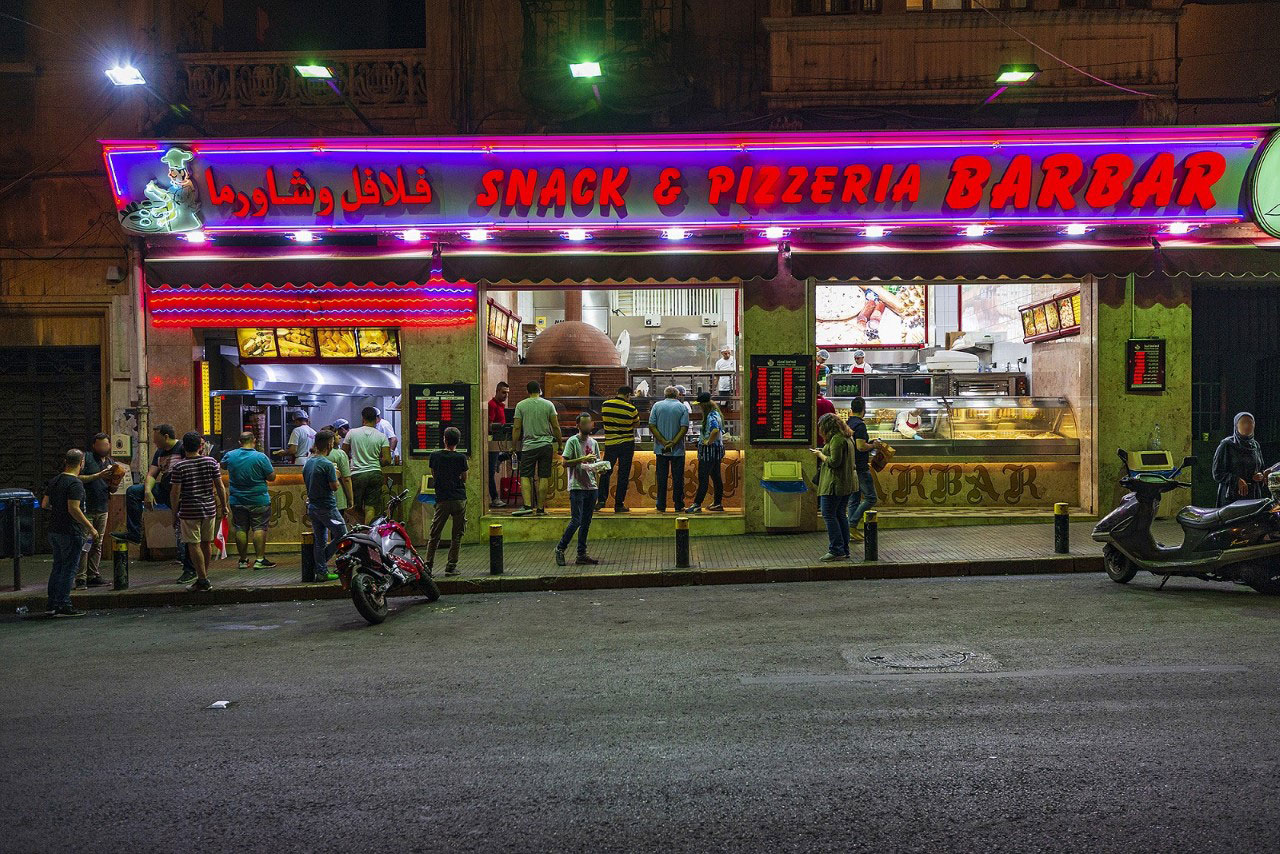
by arabianbusiness.com — Born during Lebanon’s civil war, the Barbar restaurant is now expanding from its humble beginnings across the Gulf, bringing the popular Beiruti street food to Saudi Arabia and the UAE. The 43-year-old Barbar will open its doors on Dubai’s Hessa Street around mid-May. In partnership with Kitch, the iconic Beirut restaurant will further expand in the GCC with eight restaurants and cloud kitchens planned for the UAE and 20 in Saudi Arabia, four of which will start operating in Riyadh in the second quarter of this year. Kitch said it will also open two Barbar restaurants in Qatar by the beginning of 2022. Mohammad Ghaziri launched Barbar in 1979 during the Lebanese civil war as a small manouche bakery in front of the famous Piccadilly theatre in the heart of Beirut. Within the first few years of opening, the restaurant gained fame and was visited by singers, artists, and celebrities who performed at the theatre.

Barbar remained open for the remainder of the war and continues to remain open 24/7, though it briefly shut its doors during government-mandated coronavirus lockdowns. Today, Barbar is regarded as a tourist attraction. Out of the 700 items on Barbar’s Beirut menu, 160 menu items will make the trip to the GCC in a condensed version of the menu which still includes shawarma, falafel, barbecue, some cocktails and staple sandwiches. Hybrid cloud kitchen concept Kitch targets GCC growth after Saudi, UAE launch “Choosing from 700 items is not an easy task, but the most important thing is providing the same experience for consumers here that is found in Lebanon in terms of the quality of food, the variety, the most popular items and the overall service,” said Walid Hajj, co-founder and CEO of Kitch. Keeping the Beirut feel Similar to the Beirut version, regional Barbar will be within the affordable price range but Hajj invoked the Big Mac index to illustrate that prices will be based on what is considered reasonable in the country of operation.
Read more
Lebanon jails facing ‘hungry revolution’

Lebanon jails facing ‘hungry revolution’

By NAJIA HOUSSARI — arabnews.com — . BEIRUT: Lebanon’s impoverished prisons could be hit by rioting and widespread unrest if overcrowding and hunger among inmates worsens, observers warn. The claim by prisoner representatives and human rights delegates comes as Lebanon’s economic crisis leads to a collapse in many state institutions. Hunger, as well as diseases linked to malnutrition and hygiene, are a growing issue in Lebanese prisons, especially those in poorer areas, where many prisoners rely on their families for food and medical care. Prisoners fear they are being “left behind” as the country’s economic and fiscal woes cut the value of the minimum wage by almost 90 percent, plunging many communities into poverty. Mohammed Sablouh, a lawyer and prison committee rapporteur at Tripoli’s Bar Association, told the parliamentary human rights committee that “hunger has found its way into Roumieh prison.” Roumieh, the country’s central prison facility, is considered better than other prisons in the governorates.

Sablouh told Arab News that the prison kitchen normally feeds about 800 inmates with no outside support, while the remaining prisoners receive money from their families to buy food from the prison’s store. However, the country’s economic crisis meant that most of the prisoners — about 3,200 — now depend on prison meals after the prices of goods in the prison’s store increased and most families were unable to provide the inmates with enough money. Sablouh added: “The quantity of food provided by the prison kitchen has decreased dramatically, and meat has disappeared.” Fruit is also scarce, he said. “Two inmates now share an apple. Dairy products have been replaced with jam — what can a diabetic inmate do?”

Read more
Report: U.S., EU to Hold ‘Zoom’ Meeting on Lebanon on Monday

By Naharnet –– The United States and the European Union are reportedly expected to discuss the controversial situation in Lebanon during a virtual meeting on Monday, Nidaa al-Watan newspaper reported on Saturday. The daily quoted prominent sources who said the meeting will be held through a ‘Zoom’ meeting on Monday, and will address the “Lebanese […]

Read more
Lebanon private sector steps in to speed up vaccine campaign

Collecting COVID-19 data across North America

by AP — BEIRUT — Lebanon’s private sector is stepping in to speed up the vaccination campaign against coronavirus by importing at least 1 million doses of Russian vaccines, with the aim of reopening businesses around the country hit by an unprecedented economic crisis. The first batch of 50,000 doses of Sputnik V vaccines arrived early Friday, making Lebanon one of few nations where the COVID-19 vaccine rollout is being boosted by private sector initiatives. Lebanon, a small nation of six million people including around one million Syrian refugees, began its inoculation campaign in mid-February after finalizing a deal for some two million doses with Pfizer. According to Lebanese Health Ministry, the country has so far received 224,640 Pfizer-BioNTech doses over the past six weeks with nearly 100,000 doses already administered. Lebanon’s government also began receiving AstraZeneca vaccines this week, with 33,600 doses that arrived on Wednesday. The Pfizer vaccines are funded by the World Bank while AstraZeneca vaccines will be provided under the U.N.-backed COVAX program.

Lebanon is currently in the grips of the worst economic and financial crisis in its modern history, which has been exacerbated by the lockdown measures related to the pandemic. Tens of thousands have lost their jobs and the local currency has lost 90 per cent of its value against the dollar, leading to inflation and shortages in food products and medicines. According to the World Bank, more than half the population is now living under the poverty line. Jacques Sarraf, a Lebanese businessman and head of the Lebanese Russian Business Council, said he hoped the import of the Russian vaccines would help safely reopen businesses around the country. “Our first target will be private companies, factories, banks — and this is important to reactivate institutions,” he told The Associated Press in an interview. Sarraf, who played a major role in bringing the Sputnik V vaccines to Lebanon, said priority will be given for employees at companies and business institutions, including those of Lebanon’s national carrier Middle East Airlines and the Banking Association. He added that with the private sector moving in, the numbers of people inoculated daily will multiply by more than three times compared with the current pace. Sarraf said the Sputnik V will be sold at a price of $38 for the required two doses, in addition to hospital fees. The minimum monthly salary in Lebanon is currently 675,000 Lebanese pounds, the equivalent of about $60.

Read more
Former US Military Translator Pleads Guilty of Espionage

By By Masood Farivar – voa.com — A former U.S. military translator pleaded guilty Friday of divulging classified information to a Lebanese national with suspected ties to the Lebanese Hezbollah. Mariam Taha Thompson, 63, who worked as a contract linguist for the U.S. military from 2006 to 2020, pleaded guilty to one count of delivering […]

Read more
-U.S. ambassador tells Lebanese leaders it is time to form government

by reuters — The U.S. ambassador to Beirut called on Lebanese politicians on Thursday to set aside their differences to rescue the country from its many crises, after months of wrangling that has blocked agreement on a new government. She joined a chorus of foreign officials urging fractious leaders to agree on a cabinet to […]

Read more
Diab rules out reforming resigned Lebanese government

Diab rules out reforming resigned Lebanese government

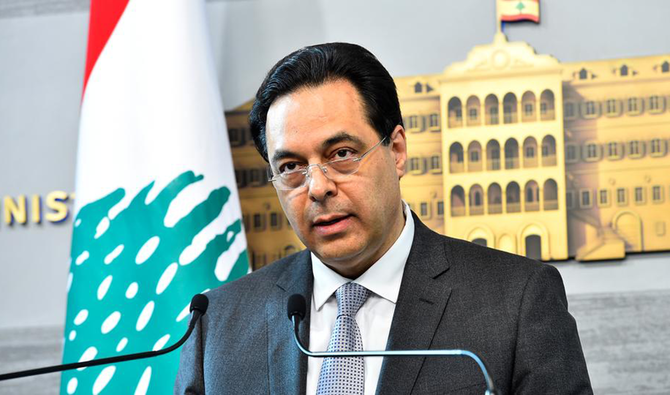
BEIRUT: Lebanon’s caretaker Prime Minister Hassan Diab has ruled out the possibility of reinstating the government he led until its resignation on August 10, 2020. In a statement issued on Wednesday, Diab said: “Defining the powers of a caretaker government and the role of the resigned Cabinet requires a constitutional interpretation, which is the exclusive right of parliament.” Diab was, indirectly, responding to an invitation issued by Hezbollah Secretary-General Hassan Nasrallah a few days ago to reactivate the resigned government, as President Michel Aoun and Prime Minister-designate Saad Hariri remain in deadlock over the formation of a new government for the crises-stricken country. Diab continued his statement by saying that eight months after his cabinet resigned in the aftermath of August’s devastating Beirut Port explosion, “efforts have not succeeded in forming a government that would save Lebanon from its current crisis. Things have even gone beyond logic and the government’s formation has become a national crisis, which has exacerbated the suffering of the Lebanese. Forming a new government remains a priority.”

The formation of a new government remains fraught with difficulty, however, given the vast political gulf between the two sides. Aoun is reportedly insisting that he and his allies be granted a third of cabinet portfolios, effectively handing them the power of veto over any major government decision. His demand has the indirect support of Hezbollah, which is calling for a “techno-political government,” while other parties are backing a government consisting of independent ministers with no party or bloc enjoying a ‘blocking third.’ Aoun met with the ambassadors of France and Saudi Arabia on Tuesday to try and clarify his position. The Lebanese media described those meetings as “an attempt to be granted clearance and to hold Saad Hariri responsible for the delay.” However, the Saudi ambassador’s statement from the presidential palace about respecting Lebanon’s sovereignty, not interfering in others’ affairs and committing to the Taif Agreement suggested that attempt failed.

Read more
Arab League expresses ‘readiness’ to intervene in forming Lebanese government

By MOHAMMED ABU ZAID — arabnews.com — CAIRO: The Arab League has said it is ready to intervene to solve the crisis of forming the Lebanese government between President Michel Aoun and Prime Minister-designate Saad Hariri. The bloc urged Lebanese politicians to work quickly to end a political deadlock and offered to help Lebanon overcome […]

Read more
Why Lebanon Can’t Kick Its Addiction to Indentured Labor

Migrant domestic workers carry placards during a protest to abolish the kafala system in Beirut on May 5, 2019.

By BY DAVID WOOD, JACOB BOSWALL — foreignpolicy.com — Of the 40-strong staff at the cleaning company he works for, Velvet Services, Hamadeh is the only Lebanese among mostly Bangladeshis. “Honestly, I know [Lebanese] people who really need work, but none of them work as cleaners,” Hamadeh said. “I know that they wouldn’t do this kind of work.” Nivine Zarzour, Hamadeh’s boss, has tried to hire more Lebanese, whom she can pay with lira instead of increasingly scarce—and expensive—U.S. dollars. But she has failed to attract Lebanese recruits, which she traces to a deep-seated cultural stigma. “The main reason is not the salary,” Zarzour said. “We [Lebanese] always had foreign cleaners and helpers.” For decades, Lebanon has relied on migrant workers—recruited from such countries as Bangladesh, Ethiopia, and the Philippines—to clean houses, operate gas pumps, and stock supermarket shelves. The largest sector for migrant labor is live-in domestic work, which accounted for 80 percent of migrant labor permits issued last year, according to statistics obtained from the Ministry of Labor.

Demand for foreign workers has propped up Lebanon’s notorious kafala system, which activists decry as exposing workers to modern-day indentured servitude. Originating in the Gulf, kafala ties a migrant worker’s residency in Lebanon to their employer, or kafeel (sponsor). Kafala workers rarely enjoy basic guarantees of rest days, set working hours, or freedom to switch jobs. Without a doubt, Lebanon’s economic crisis has shaken the kafala system. Records from the Ministry of Labor indicate that new migrant worker arrivals dropped by 75 percent from 2019 to 2020. Employers are increasingly unable to pay staff, and foreign workers are now less inclined to gamble on Lebanon. As demand plummets, the number of local recruitment agencies has shrunk from around 600 to 250 companies, according to industry sources. Yet all signs indicate that kafala will reemerge, battered but unbroken, from Lebanon’s financial implosion. Like Hamadeh, some Lebanese might take on shift work in taboo fields like cleaning to make ends meet. But for the most part, it is still only foreigners who appear willing to work in many such positions.

Read more
Lebanese president Aoun discusses government formation with Saudi ambassador

BEIRUT (Reuters) – Saudi Arabia’s ambassador called on Lebanese political parties to quickly form a new government that will have to pull the country from financial crisis, after months of political wrangling. “I stressed the need to put the higher national interest first to launch drastic reforms that can restore the international community’s confidence in […]

Read more