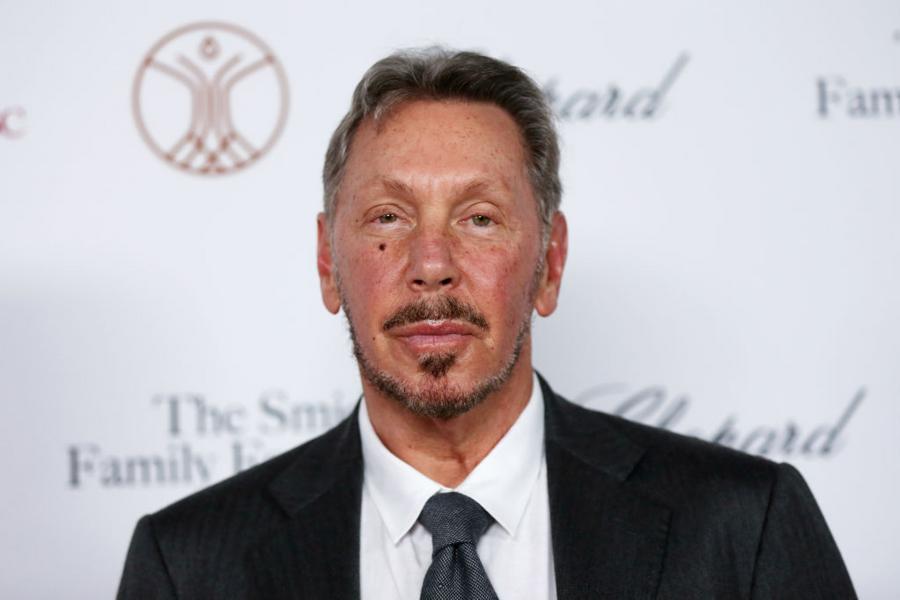
by celebritynetworth.com — Larry Ellison is primarily known as the founder and former CEO of database giant Oracle. For those of you who are not aware, for much of the pre-internet 80s and 90s, Oracle was the dominate supplier of software for business systems. You know how Microsoft dominated personal computing with software like Excel and Word? Oracle had the same dominance with software that powered payroll systems, hospital records, hotel/airline booking services… etc. Today, Oracle is one of a few dominant “cloud” database companies. If you receive a paycheck from or fill out expense reports for a medium to large company, there’s a good chance Oracle is powering that software behind the scenes. Ellison took Oracle public on March 12, 1986, literally ONE DAY before his rival Bill Gates took Microsoft public.
Over the last 20 years Larry has cashed out at least $10 billion from Oracle through stock sales and dividends. He has used some of the proceeds generated by these sales to acquire arguably the coolest portfolio of toys, real estate, hobbies and endeavors in the world. He owns the entire Hawaiian Island of Lanai. He literally owns 99% of the island’s land and ALL of its buildings, including its two ultra-exclusive Four Seasons resort locations. He also basically owns an America’s Cup racing team, TWELVE homes in Malibu, the 249-acre Porcupine Creek Estate golf course in Ranch Mirage, California, the Indian Wells Tennis Garden in Coachella, California, several private jets, a Mig-29 fighter jet, an airline… I could go on and on, but I’ll stop there.



![Lebanese protesters gather outside the Serail, headquarters of the Governorate of North Lebanon, during ongoing demonstrations that marked the third consecutive night of protests [Fathi AL-MASRI/AFP]](https://www.aljazeera.com/wp-content/uploads/2021/01/000_8ZN36R.jpg?resize=770%2C513)