by english.aawsat.com — The rise of the US dollar exchange rate against the Lebanese Lira has brought protesters in the north and south of Lebanon back to the streets. On Thursday, the exchange rate of 1USD was equal to LBP8,800 after it was stable for the past weeks at around LBP8,000 and LBP8,500. In Sidon […]
Trump Admits all Avenues Exhausted, Calls for National Unity
by newsmax.com — In a video released Thursday night, President Donald Trump finally admitted all avenues of his election challenge have been exhausted and he will commit to a “smooth, orderly, and seamless transition of power.” He also condemned the “heinous attack” on the U.S. Capitol by some of his own supporters following a rally the previous day at which which he said he’d continue the fight. “My campaign vigorously pursued every legal avenue to contest the election results,” Trump said in a taped message from inside the White House. “My only goal was to ensure the integrity of the vote. In so doing, I was fighting to defend American democracy.”
He said he still strongly believes election laws must be reformed to verify the identity and the eligibility of all voters and to ensure faith and confidence in all future elections. “Now, Congress has certified the results. A new administration will be inaugurated on January 20th,” Trump said. “My focus now turns to ensuring a smooth, orderly, and seamless transition of power.” The words were in stark contrast to reports that the president was pressuring his own vice president, Mike Pence, not to certify the results — something Pence told the president he was constitutionally bound to do.
Patriarch Al-Rai resumes mediation between Aoun and Hariri to form government
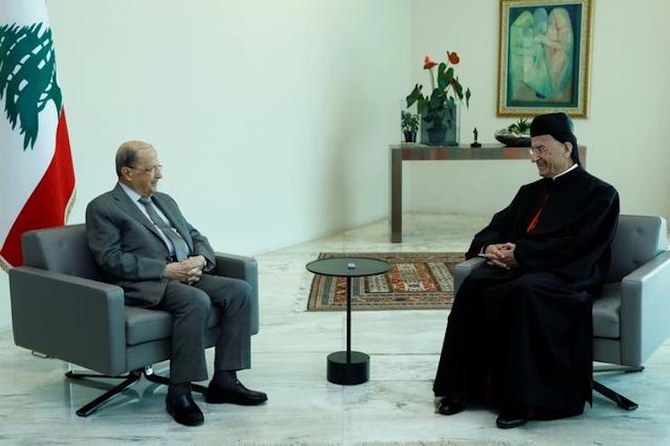
By NAJIA HOUSSARI — arabnews.com — BEIRUT: Lebanese President Michel Aoun on Thursday met Christian Patriarch Bechara Boutros Al-Rai, who is unhappy with the delay in forming a government due to the conditions put forward by the president. The meeting took place as Israeli warplanes violated Lebanese airspace following a similar breach of Lebanese waters on Wednesday night, when Israeli soldiers on a gunboat fired at Lebanese fishing boats, according to the Lebanese army command. The Aoun-Al-Rai talks continued for 45 minutes. Afterwards, Aoun said that the purpose of the meeting was to wish each other happy holidays because circumstances prevented them from being at the Patriarchate at Christmas. He said, however, that they had touched on “the general conditions that are still unannounced because all that happened with us is not reported in the media, and unfortunately, everyone in the media writes as they please.”
Aoun spoke of the “possibility” of a meeting between him and the prime minister-designate, Saad Hariri, but did not specify a date for the meeting. There is information that Al-Rai was arranging a meeting between Aoun and Hariri as part of his efforts to accelerate the formation of the government. This has reached stalemate as Aoun has not yet responded to the lineup suggested by Hariri a month ago in accordance with the French initiative — that it does not include ministers affiliated with politicians in power, but rather technocrats. Hariri returned to Beirut on Thursday after spending the holidays abroad. The media bureau of the president said: “There is no truth in the information that a meeting was to be held in Bkerke between Aoun and Hariri, under the auspices of Al-Rai. The truth is that Al-Rai made a similar proposal to the president during their Thursday meeting, and Aoun did not know about it in advance.” The dispute between Hariri and the Free Patriotic Movement (FPM), which is headed by the president’s son-in-law, Gebran Bassil, escalated a few days ago when Hariri’s media office announced its rejection of the FPM bloc’s holding “others responsible for the obstacles that the movement deliberately creates” in forming a government.
Capitol on Lockdown, Reports of Shots Fired, 1 Shot, and Protesters Roaming Building
by newsmax.com — Jeffrey Rubin — The U.S. Capitol is secure once more, hours after supporters of President Donald Trump breached the historic building. The siege, which occurred as lawmakers were beginning to certify Electoral College results showing Joe Biden won the Nov. 3 election, had plunged the capital into chaos, with TV anchors likening videos of surging crowds and broken windows to those more commonly seen in authoritarian and third-world countries. It occurred not long after Trump, convinced voter fraud caused his loss to Biden, urged supporters at a rally in D.C. to oppose the ceremonial counting of the electoral votes. Though the ceremonial count, and associated protests by dozens of Republican lawmakers, were interrupted for hours, in a letter to colleagues House Speaker Nancy Pelosi said congressional leaders had decided to resume the joint session Wednesday night. They aim to do so once the Capitol is cleared for use, she said, after consultation with top lawmakers, the Pentagon, the Justice Department and Vice President Mike Pence.
By some reports, including one from the Washington Post, the surge into the Capitol led to use of tear gas, gunfire, and the death of one woman from gunshot wounds to the chest. National Guard and state troopers from Virginia have been called up, among others, to aid in restoring order. The woman was a “civilian” and officers are investigating, said Chief Robert J. Contee of the Metropolitan Police Department. She’d been pronounced dead at a local hospital, but officials had no further details on who shot her or why. There was much more detail, much of it startling, about the start of the siege. Shortly after 1 p.m. ET Wednesday hundreds of pro-Trump protesters pushed through barriers set up along the perimeter of the Capitol, bumping up against officers in full riot gear, some calling the officers “traitors” for doing their jobs, CNN said. About 90 minutes later, police said demonstrators got into the building and the doors to the House and Senate were being locked.
Covid-19 hit Lebanese in a desperate hunt for hospital beds
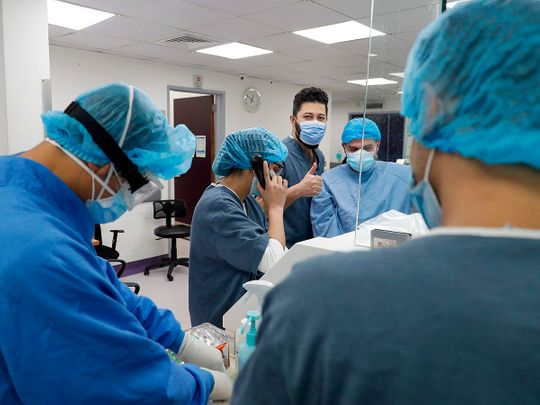
by AFP — Beirut: When Rachelle Halabi rushed her 85-year-old father to a Beirut hospital a few days ago with Covid-19, the doctor sent them home as intensive care was full. “The ER doctor told us to go back, get him an oxygen machine and give him his treatment from home,” she told AFP from the Lebanese capital. “We went with it for several days, but his condition did not improve.” Halabi herself tested positive for Covid-19, one of the thousands of new cases reported in Lebanon following a holiday season where loosened restrictions let infections soar. With 192,000 reported cases and almost 1,500 deaths, Lebanon is not among the world’s worst hit countries. But its infrastructure is crumbling, and a small surge in infections is enough to take its health sector to breaking point.
The health ministry has in recent weeks urged private hospitals to make more room for Covid-19 patients, but the pandemic is spreading too fast. “The rise in Covid numbers has outpaced the increase in critical beds,” said Firass Abiad, the head of a major public hospital battling the virus. Lebanese Red Cross president Georges Kettaneh told AFP the service was “transporting around 100 patients in need of hospital treatment a day.” Halabi said she was turned away by several hospitals, and her hunt for a bed eventually took her outside the capital, to a private hospital in the city of Zahle, in the Bekaa valley. Her father was given a bed in exchange for 15 million Lebanese pounds, equivalent to some $10,000 at the official exchange rate. “What do you do if you can’t afford this amount?” she asked. Her father had already had a narrow escape earlier this year, when a mammoth blast at Beirut port in August devastated swathes of the capital.
Lebanese social media erupts in frustration over Soleimani monument
by arabnews.com — LONDON: Lebanese took to social media platforms to express their discontent and frustration with the unveiling of a Qassem Soleimani monument in the Hezbollah district of Ghobeiry on Tuesday. “New Qassem Sulaimani statue in #Lebanon — with Lebanese flags in the background, useful to remind us where we are. Whats next? Sulaimani […]
Lebanese cardinal Patriarch Mar Bechara Boutros Rai urges leaders to help country avoid ‘total collapse
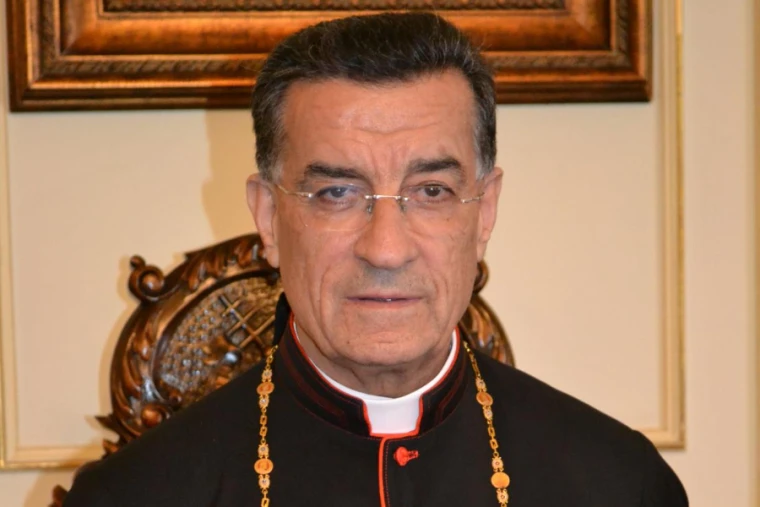
By Courtney Mares — Rome Newsroom, (CNA).- Lebanon’s Maronite patriarch has said that the country could be facing “the risk of total collapse” amid a deepening economic and political crisis. In his homily on Jan. 3, Cardinal Bechara Boutros Rai, the leader of Lebanon’s Maronite Catholics, said that Lebanon’s political leaders needed to “overcome the logic of partisan interests” and form a government to help rescue the country. Rai urged the formation of a “government with real independence, democratic and pluralistic balance, and with highly qualified ministers.” He added that Lebanon’s leaders needed to make a “responsible and courageous decision” to disrupt various internal and external interventions and “set their sights on the interest of Lebanon only.” The patriarch warned officials not to “underestimate the risk of complete collapse.” It was the second time in less than a week that the Lebanese cardinal had spoken of the risk of collapse.
In his homily on New Year’s Day, Rai said: “No one or any group of the political spectrum, whether directly or indirectly involved, has the right to hinder the formation of the government for the sake of current or future accounts and interests.” “Two months and 10 days have passed since the task to form the government was issued, while Lebanon is moving rapidly towards complete collapse and bankruptcy.” He continued: “It is truly shameful that the new year begins without the government formed and committed to work. It is also disgraceful for the unemployed to deal with the Lebanese issue as if it were one of the chess pieces of the Middle East or major countries. Let the political community remember that forming a government is its first and basic duty and the justification for its existence.”
Iran Seeking Trump’s Arrest for Death of Soleimani
by Newsmax — Jeffrey Rodack — Iran has requested Interpol arrest President Donald Trump and 47 other Americans it said played a role in the death of top general Qassem Soleimani. The U.S. killed Soleimani, leader of the Revolutionary Guards’ Quds Force, in Iraq on Jan. 3, 2020. Washington had accused him of masterminding attacks […]
Lebanon’s famed musician Elias Rahbani dies aged 83
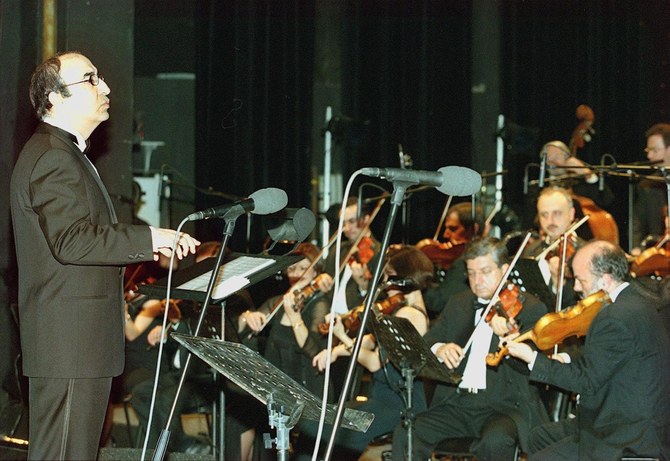
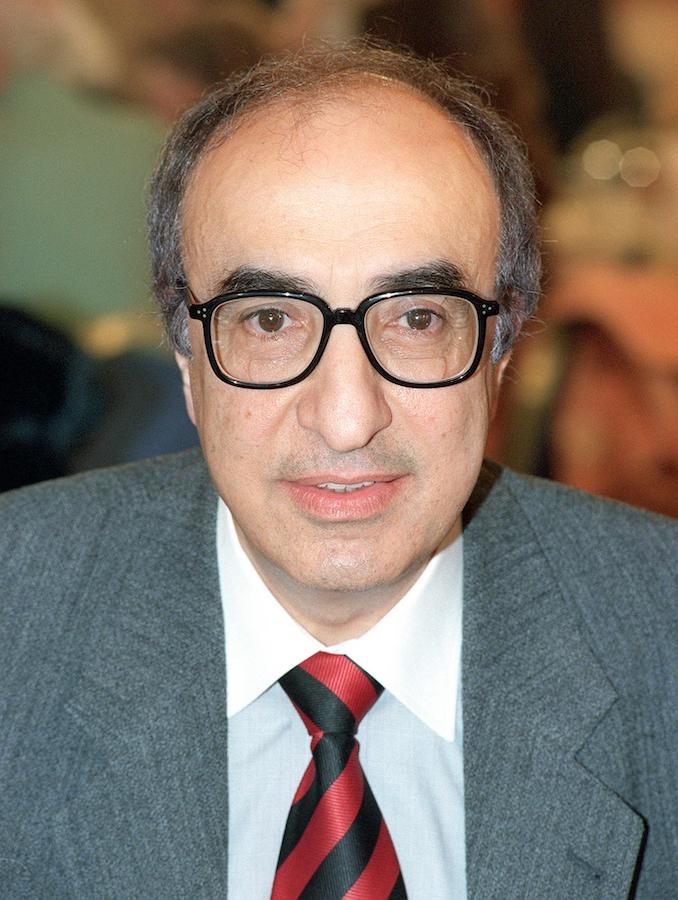
by arabnews — DUBAI: Veteran Lebanese musician Elias Rahbani died on Monday at the age of 83 due to COVID-19, Lebanese media reported. According to Al-Arabiya, Rahbani – who was a composer, songwriter and an orchestra conductor – died due to COVID-19. He was the yonger brother of Assi and Mansour Rahbani, who rose to fame as the Rahbani brothers. Celebrities quickly took to social media to pay tribute to Rahbani.
Singer Carol Samaha wrote on Instagram: “We lost an important figure from my country, and he took with him the most beautiful musical era in the history of the Lebanese music. Goodbye, Elias Rahbani. Thank you for your generosity and loyalty to our country Lebanon. Your work is immortal in memory and conscience.” While Lebanese singer and actor Ramy Ayach wrote on Twitter: “A great loss… the one with a pure heart and the lover of art and homeland.” Rahbani composed over 2,500 songs, 1000 of them were for 25 movies and multiple series across the region. He wrote and composed some of Lebanese singer Fairouz’s most-famous songs, including “Qatalooni Aouna El-Soud,” “Kan Endna Tahoun,” and “Maak.” His songs for late legendary Lebanese singer Sabah included “Keif Halak Ya Asmar” and “Shoftoh Bel Anater.”
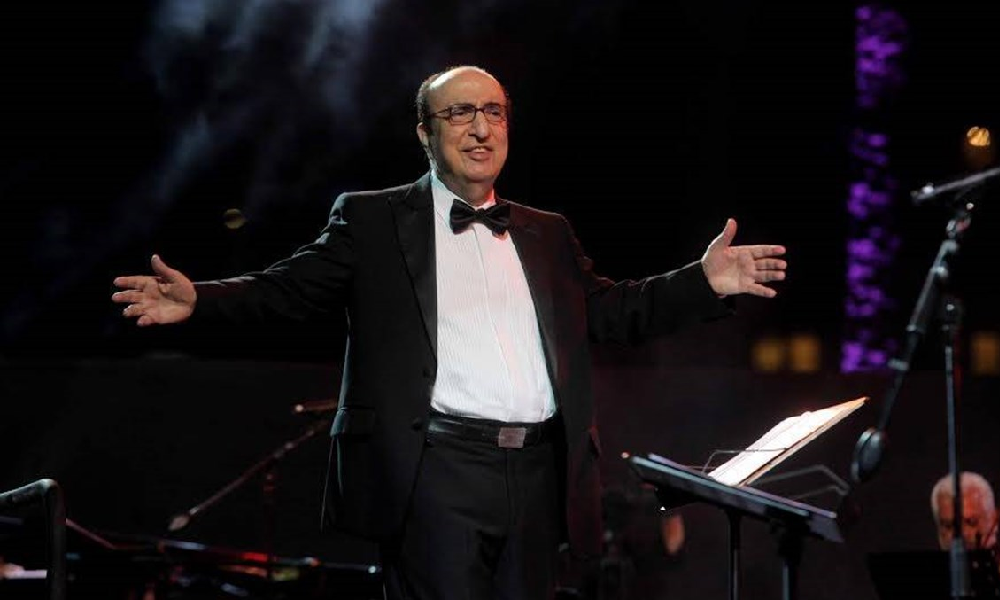
by AP — The three brothers were pioneers of a Lebanese golden age of music and culture, before the country was plunged into a lengthy civil war in the mid- 1970s. Many Lebanese still start their day listening to their songs and see them as uniting figures, beloved across the country’s divided political spectrum. Born into a musical family in the town of Antelias, north of Beirut, Elias quickly forged a path for himself in the music industry. He often worked with his brothers but went on to compose his own songs for veteran Lebanese artists including Fairouz, Sabah, Melhem Barakat, Majida al-Roumi and others.
Elias Rahbani distinguished himself from his brothers, who were the industry’s best known duo, with his more modern styles and mix of Middle Eastern and Western music that won him international awards. He wrote some of Fairouz’ best hits, as well as the music and lyrics for many patriotic songs. Rahbani composed hundreds of songs and music for the theater and the soundtracks to dozens of films and TV series, including “Habibati,” or my Love, “The Night Player.” Elias leaves behind a wife, Nina, two sons, Ghassan and Jad and a sister, Elham.
Joe Biden’s Creed
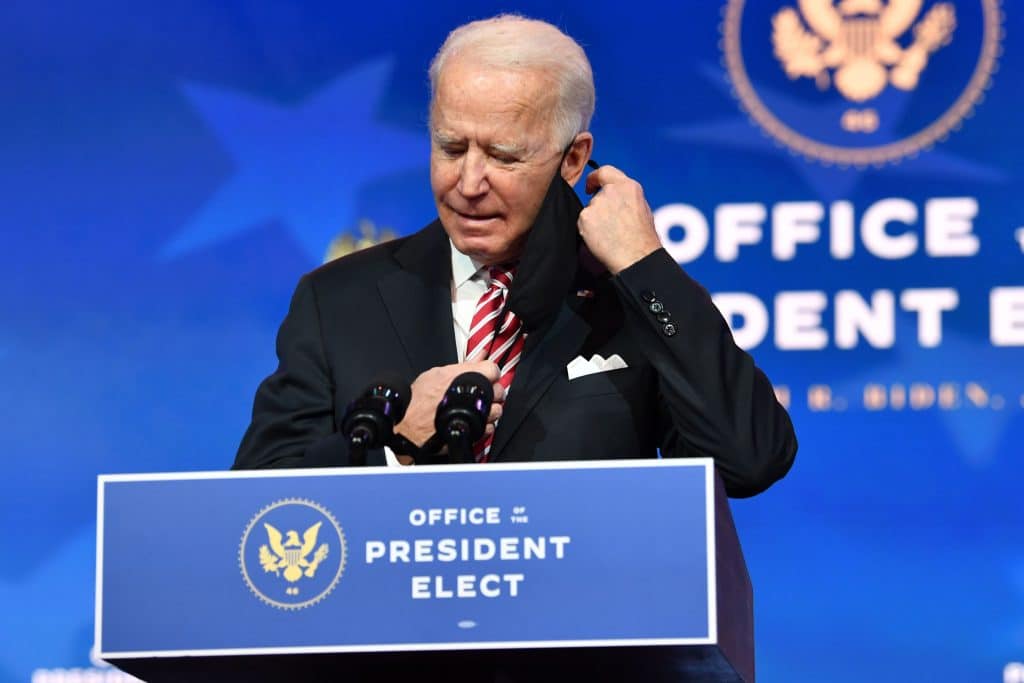
by catholicherald.co.uk — Matthew Schmitz — On paper, Joe Biden will be the second Catholic to hold the office of US President. In reality, he will govern in accord with a very different faith. His policies and rhetoric will be based not on Roman dogma but on a creed which might be called “therapeutic technocracy”. This is the unacknowledged religion of much of America. It promises that by listening to science and the voices of the suffering we can ensure our nation’s physical and psychological health. Biden’s adherence to this faith was made clear in his victory speech. He declared that he would defeat coronavirus with a plan “built on a bedrock of science” and “constructed out of compassion, empathy and concern”. These are the quasi-religious pillars of his legitimacy. By invoking them he claims an authority that goes beyond the merely human, just as a king once might have claimed divine favour. Why does therapeutic belief (“compassion, empathy and concern”) go along with faith in technocratic expertise? Because it justifies the technocrats’ right to rule. This new class lacks the more traditional forms of legitimacy – sacred anointing, popular acclaim, or loyalty to a national history. Instead, they claim to be experts in soothing our pain. As Biden’s vice-president-elect Kamala Harris promised: “Know that Joe Biden and I will wake up every single day thinking about you and your families.”
The figure of the therapist exemplifies a particularly attractive form of expertise. He is not tasked with overcoming external technical problems, in which success or failure would be obvious. He is charged with the more ambiguous – and in some ways more ambitious – task of resolving all the problems of the psyche. If an engineer doesn’t know how to build a bridge, his incapacity will become disastrously clear. The competence of a therapist can never be tested in the same way. A ruling class incapable of increasing the median wage or restoring American industry can still vow that it is overcoming the internal darkness of hatred and bigotry. A soft, therapeutic technocracy can promise more and deliver less than a hard technocratic regime devoted to, say, cold fusion or the abolition of age.




Population Movements to Keserwan - The Khazens and The Maans
ما جاء عن الثورة في المقاطعة الكسروانية
ثورة أهالي كسروان على المشايخ الخوازنة وأسبابها
Origins of the "Prince of Maronite" Title
Growing diversity: the Khazin sheiks and the clergy in the first decades of the 18th century
Historical Members:
Barbar Beik El Khazen [English]
Patriach Toubia Kaiss El Khazen(Biography & Life Part1 Part2) (Arabic)
Patriach Youssef Dargham El Khazen (Cont'd)
Cheikh Bishara Jafal El Khazen
Patriarch Youssef Raji El Khazen
The Martyrs Cheikh Philippe & Cheikh Farid El Khazen
Cheikh Nawfal El Khazen (Consul De France)
Cheikh Hossun El Khazen (Consul De France)
Cheikh Abou-Nawfal El Khazen (Consul De France)
Cheikh Francis Abee Nader & his son Yousef
Cheikh Abou-Kanso El Khazen (Consul De France)
Cheikh Abou Nader El Khazen
Cheikh Chafic El Khazen
Cheikh Keserwan El Khazen
Cheikh Serhal El Khazen [English]
Cheikh Rafiq El Khazen [English]
Cheikh Hanna El Khazen
Cheikha Arzi El Khazen
Marie El Khazen