Khazen

Protests against detention of Lebanese activist Kinda Al-Khatib

by NAJIA HOUSSARI — arabnews.com — BEIRUT: The Lebanese Army formed a tight security cordon around the vicinity of the Military Court in Beirut on Thursday as family and friends of Lebanese activist Kinda Al-Khatib protested outside. On December 14, Al-Khatib was sentenced to three years in prison with hard labor and the removal of her civil rights for collaborating with Israel. The protesters carried pictures of activist Al-Khatib and banners quoting her anti-Hezbollah stance, including: “There is no weapon but Lebanese weapons.” The protesters allege that Al-Khatib’s sentence is politically motivated “because she revolted against the dictatorship of the ruling authority and parties in power.” Al-Khatib’s attorney, Joceline Rahi, said Al-Khatib would appeal her sentence, adding that her client is innocent of any crime. Al-Khatib said in her testimony that a person called Roy Qaisi had contacted her on Twitter, saying he was a journalist working for Israeli Channel 11, and that when she found out he was Israeli, she informed the Lebanese security forces. Asked why she had not blocked him, Al-Khatib said she believed her phone would be “under security surveillance,” and that there was nothing suspicious about her. All her accounts were public, she added.

Al-Khatib denied travelling to Israel, meeting with any Israelis, or providing Israel with any security information. On Wednesday the Permanent Military Court, headed by Brig. Gen. Munir Shehadeh, issued two sentences in absentia against the famous singer Fadl Shaker, sentencing him to 22 years in prison with hard labor and stripping him of his civil rights. Singer Fadl Shaker sentenced to 22 years in prison with hard labor for ‘involvement in acts of terrorism’ The first ruling sentenced Shaker to 15 years in prison for “involvement in acts of terrorism committed by terrorists with his knowledge by providing logistical services to them.” The second ruling sentenced him to seven years in prison and fined him 5 million Lebanese pounds for financing Ahmed Al-Assir’s militant group. Shaker was sentenced in 2017 to 15 years in prison with hard labor as part of the sentences against Ahmed Al-Assir for the Abra battles of 2013. Al-Assir and his supporters in Sidon had fought at the time against the Lebanese Army. Shaker has been in hiding since, but has spoken several times to the media to claim that he was innocent. If Shaker surrenders himself to the judiciary, he will be retried while present at the trial.
Read more
Protesters attack Al-Jadeed TV office in Beirut

by cpj.org — Yesterday evening, a group of about 10 people wearing masks gathered at Al-Jadeed TV’s Beirut office and threw stones, sticks, and garbage at the building, and spray-painted slogans in support of Lebanese President Michel Aoun, according to news reports and reports by the broadcaster and the Skeyes Center for Media and Cultural […]

Read more
Path to New Lebanese Cabinet Totally Blocked, Berri Says

BEIRUT (REUTERS) – THE path to a new Lebanese government is completely blocked, Parliament Speaker Nabih Berri said in comments published on Tuesday, but he held out hope that French President Emmanuel Macron might be able to help in a forthcoming visit. Fractious politicians have been unable to agree on a new government since the […]

Read more
Lebanese woman gets 3 years hard labor for Israel contacts

BEIRUT (AP) — A military court in Lebanon on Monday sentenced a political activist to three years of hard labor for collaborating with Israel, Lebanon’s state-run news agency reported. The National News Agency said Kinda El-Khatib was sentenced for allegedly visiting Israel, contacting Israeli agents and providing them with security information. Lebanon and Israel are […]

Read more
Judge sets new date for questioning Lebanese PM

Judge sets new date for questioning Lebanese PM

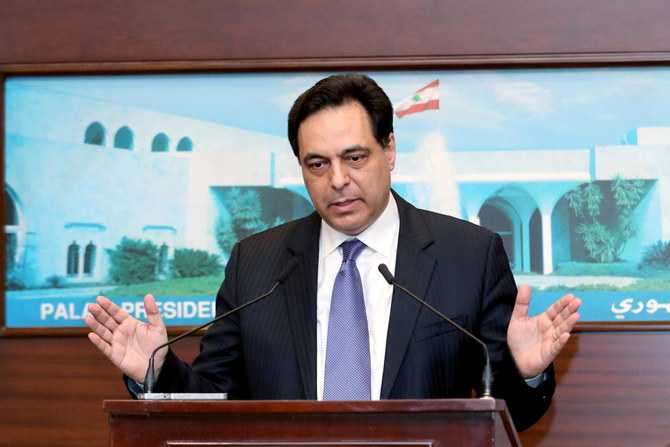
by NAJIA HOUSSARI — arabnews.com — BEIRUT: The judicial investigator of the Beirut port bombing has said he will interrogate caretaker Prime Minister Hassan Diab at 9 a.m. on Friday. The move means the judge has decided to proceed with his allegations against those accused of involvement in the explosion crime on Aug. 4, in which 202 people were killed. Judge Fadi Sawan was supposed to go to the Prime Minister’s office on Monday to interrogate Diab after he had charged him and 3 other ministers with “negligence causing the death and injury of hundreds of people.” The massive explosion of tons of ammonium nitrate injured more than 6,500 people and destroyed Beirut’s waterfront and entire residential neighborhoods.

Arab News learned from judicial sources that Judge Sawan also set next Friday as a date for the questioning of the former Minister of Public Works and Transport Ghazi Zaiter. On Tuesday, Judge Sawan is scheduled to question two defendants, a member of the Higher Council of Customs, Hani Hajj Shehadeh, and the former customs chief, Moussa Hazimeh. The former Minister of Finance, Ali Hassan Khalil, and the former Minister of Public Works and Transportation, Youssef Fenianos, is to be questioned on Thursday. Zaiter and Hassan Khalil said that they would not appear before Judge Sawan for questioning because “Sawan is violating constitutional principles.” The Prime Minister’s media office repeated Diab’s previous position, which “respects the constitution that has been violated by Judge Sawan.” On Monday, Diab resumed his job as usual in the Prime Minister’s office according to a schedule that did not include an appointment with Judge Sawan. Mohammed Fahmy, interior minister in the caretaker government, confirmed his rejection of “targeting the prime minister’s position in the Beirut port explosion case because of the consequences of a 7-year-old complicated file cannot be blamed on a prime minister who has only been in office for a few months.”

Read more
Increase Pressure on Corrupt Lebanese Politicians

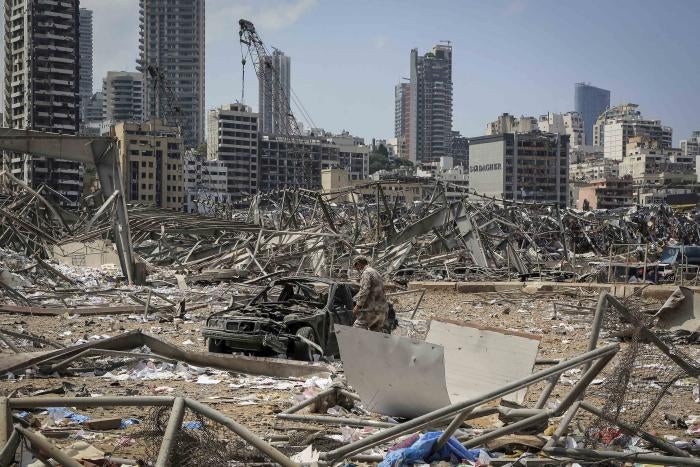
Aftermath of the explosion in Beirut’s port that devastated the city, killing more than 200 people, injuring more than 6,000, and leaving 300,000 people without shelter.

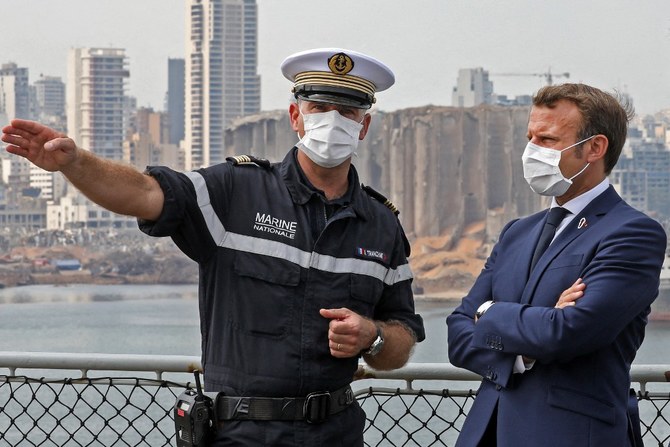
By Bénédicte Jeannerod — Aya Majzoub — hrw.org/news/ — Two days after the catastrophic August 4 explosion that devastated half of Beirut, Lebanon’s capital, and killed more than 200 people, President Emmanuel Macron walked through the city’s gutted streets. Surrounded by Beirut’s residents enraged over their leaders’ wanton disregard for their lives, Macron reassured them that, “I’m not here to help them, I’m here to help you.” Macron said all the right things. He promised that much-needed aid would not fall into corrupt hands, he called for an international investigation and warned that “the time for responsibility has arrived,” and he insisted on the importance of political and economic reforms. But almost four months later, there is hardly anything to show for Macron’s proclamations. Life for almost everyone in Lebanon has continued to get worse. More and more people are sliding into poverty, with over half the population struggling to afford basic necessities. The physical damage is still striking in the hardest-hit neighborhoods, scores of buildings are at risk of collapse, and thousands of families have still not been able to return home. Even though senior Lebanese political and security officials knew about the presence of recklessly stored ammonium nitrate in Beirut’s port, none have been held accountable yet in a domestic investigation riddled with due process violations and allegations of political interference.

Lebanon’s leaders have not even been able to form a government. Instead, the same political leaders conduct business as usual and prioritize sectarian and clientelist considerations while the country falls apart. Unfortunately, anyone in Lebanon could have told Macron that betting that the same political elite who have been robbing the country would carry out reforms that weakened their stranglehold wasn’t going to happen — at least not without tremendous domestic and international pressure. It is crucial that Macron doesn’t jettison his ambitious Lebanon plan as a “risky bet” that didn’t pay off. Releasing the pressure on Lebanon’s leaders now risks emboldening the corrupt political system – which France helped establish throughout history – and lends credence to these leaders’ claims that there is no alternative. It also risks further disillusioning an angry, disenfranchised citizenry who are increasingly choosing to emigrate as they lose hope for a better future in the country. If Macron really wants to help the Lebanese people, he needs to take the punitive measures on those Lebanese leaders responsible for ongoing abuses that he promised in September and mobilize broader international support for them, including from the US and EU.

Read more
HomeDonors grow increasingly impatient with Lebanese politicians Donors grow increasingly impatient with Lebanese politicians

Donors grow increasingly impatient with Lebanese politicians

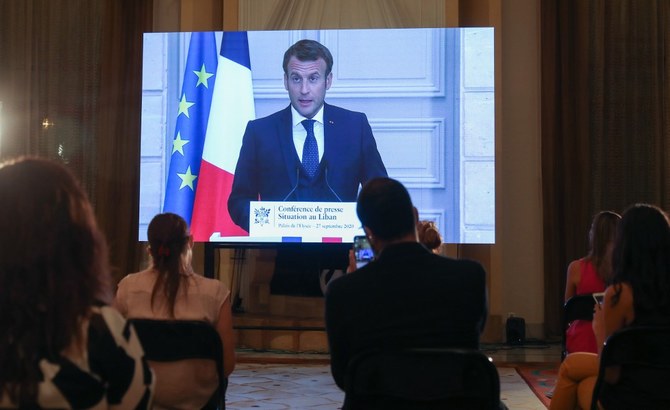
by arabnews.com — NAJIA HOUSSARI — BEIRUT: As the UN hosted a second International Conference on Assistance and Support to Beirut on Wednesday, there was growing impatience among donors with Lebanese politicians. The virtual event, chaired by French President Emmanuel Macron and UN Secretary-General António Guterres, aimed to coordinate international aid efforts in support of the Lebanese people as the country continues to face political, economic and social challenges. The participants — including heads of state, international organizations, donors, NGOs and civil-society representatives — discussed the results of the first conference, which was organized by France after the Beirut port explosion and held on Aug. 9. It resulted in pledges of aid worth about $300 million in a fund managed by the World Bank that will be channeled through UN agencies and NGOs rather than Lebanese state institutions. However, delegates expressed impatience with the failure of political factions in Lebanon to resolve their differences and work together for the good of their country. Four months after the Aug. 4 explosion in Beirut, and the subsequent resignation of Hassan Diab’s government, a new government has yet to be formed, delaying the economic and political reforms needed to begin efforts to resolve the financial crisis.

According to Reuters, the French presidency on Wednesday said: “No measures required in the French road map for Lebanon have been implemented and the Lebanese Central Bank’s accounts haven’t been audited.” It added: “American sanctions imposed on the Lebanese political class have not had any effect so far and will not help in forming a government.” This came after the leak of a conversation in which Dorothy Shea, the US ambassador to Lebanon, asked Nabih Berri, speaker of the Lebanese parliament, to “distance himself from Hezbollah.” She also hinted that “Washington will reject any government in which Hezbollah is represented and there won’t be any foreign aid without radical change.”

Read more
Beirut beware: Your ‘savior’ is running out of patience

by HAFED AL-GHWELL — arabnews.com — Despite external and domestic pressure to form a new Lebanese government, endless jockeying for key ministerial posts continues while the country remains on a slow path to implosion. If it is not the financial crisis that wiped out savings, it is an economic crisis that has decimated jobs and the viability of most small businesses. If it were not the Aug. 4 port blast that made thousands of homes uninhabitable and shut down hundreds of businesses, it is a pandemic that has shattered mobility and overwhelmed a dismal public health system. If it is not the governance crisis that has eroded confidence in political leadership, it is worsening sectarian fragmentation justifying a defense of the status quo instead of efforts to secure a future all Lebanese can share. All these issues affect every Lebanese regardless of age, sect, religion, status, political affiliation, level of education or any other demographic division. Yet surprisingly, there is little momentum and even less political will to find solutions.

Decades of close French-Lebanese ties have placed Paris at the forefront of developments in Lebanon’s political leadership. Virtual donor meetings are reminiscent of the post-civil war aid conferences; now, as then, funds will vanish, without any reforms against a backdrop of further civil unrest. Granted, French President Emmanuel Macron’s carrot of funding in exchange for reform does indicate wariness of a repeat of the 1990s post-civil war reconstruction fiasco if the same faces remain in power. Unfortunately, the changes Macron seeks are doomed to fail given the glacial pace of Lebanese governance crippled by incessant political wrangling. No carrot or stick can guarantee the Lebanese political elite will implement the desperately needed reforms in governance, finance, politics and the economy. Demanding the formation of a government of independent technocrats, however, necessary, will simply exacerbate gridlock and political wrangling. The same applies to calls for judiciary reforms and a commitment to elections within a year under new election laws. They run counter to how Lebanon’s political “old guard” have consistently tied their legitimacy and fortunes to how much political power they can wield in defense of their own interests.

Read more
Lebanon Refuses to ‘Gift’ Trump Progress in Border Talks with Israel

by Washington – Elie Youssef — aawsat.com/ — American sources revealed that they had from the start believed that the border negotiations between Lebanon and Israel would not reach any tangible results. The sources, which were in contact with the State Department team that sponsored the negotiations, said that the talks were “hastily” arranged. They revealed that they had urged the team against being hasty in launching the negotiations months before the American election. The team had sought a “political victory” in beginning the marine border talks, but the Trump administration’s defeat in the election means that it will not be employed for any political gain. Moreover, the sources said the team failed in understanding the “mentality” of the Lebanese side of the negotiations. They explained that they underestimated the reasons that could motivate the Lebanese to “accept any settlement that could help them resolve their crippling economic crisis.”

Indeed, the reality on the ground showed that the ruling Lebanese class does not care in the slightest about easing the crisis and is happy to leave the country in the hands of an armed group – Hezbollah – that is following a non-Lebanese agenda. “It was evident that the Lebanese negotiators will not offer a free gift” to Trump when he leaves office, said the sources. They would rather offer it to Joe Biden’s administration amid Iran’s hopes that it could salvage the 2015 nuclear deal or end US economic sanctions against it, they continued.

Read more
Troops deployed in Lebanon as new protests target the ‘privileged elite

Troops deployed in Lebanon as new protests target the ‘privileged elite’

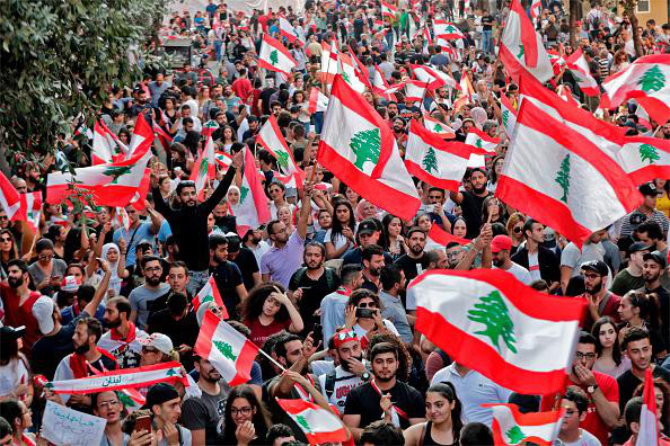
By NAJIA HOUSSARI – arabnews.com — BEIRUT: Lebanese Army troops were deployed near the home of parliamentary Speaker Nabih Berri on Saturday as protesters targeted people they believe are a “privileged elite.” Groups of demonstrators have followed political and economic leaders into restaurants and cafes to protest and accuse them of theft. They include former minister Adnan Kassar, the wife of the governor of the Banque du Liban, Nada Riad Salameh, and the secretary-general of the Future Movement, Ahmad Hariri. There was further anger on Saturday when video footage emerged of bodyguards for Hariri, cousin of Prime Minister-designate Saad Hariri, apparently attacking protesters inside an upmarket Italian restaurant in Beirut. Twitter user Usamaibn Munqid said: “The whole Lebanese political elite needs to be jailed whether it is Hariri, Aoun, Berri and many more.”

Read more