Khazen

For Lebanese, recovery too heavy to bear a month after blast

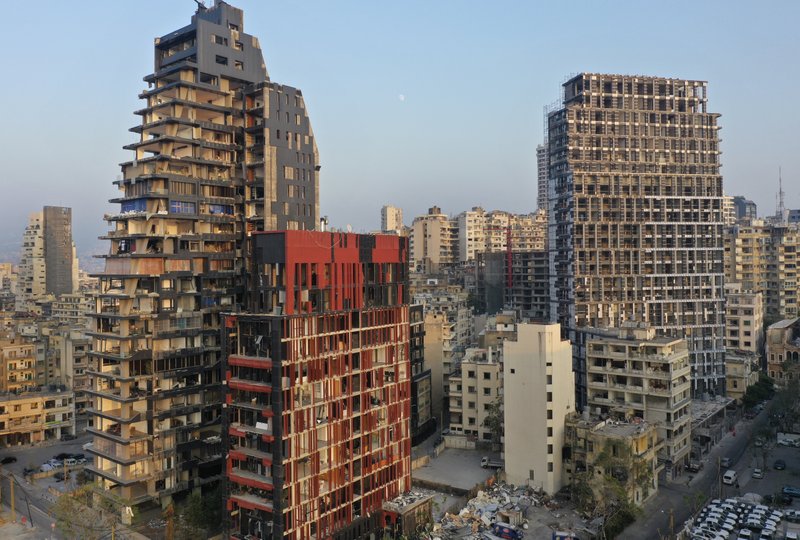
BEIRUT (AP) — By SARAH EL DEEB — — A month after Beirut’s devastating explosion, Ghassan Toubaji still sits under a gaping hole in his ceiling — he can look up through the dangling plaster, wires and metal struts and the broken brick roof and see a bit of sky. The 74-year-old survived the Aug. 4 blast with bruises, but his fall from its impact worsened his heart and blood circulation diseases. Between that and Lebanon’s crumbled economy, he can’t go back to work. He used the last of the dollars his wife had been hoarding — a precious commodity as the local currency’s value evaporates — to fix the windows shattered by the explosion.

Teams of volunteers, a symbol of the help-each-other spirit that’s grown up from the failures of Lebanon’s corrupt political class, came by his apartment and assessed the damage. They put plastic on the windows and promised glass for free eventually. Four weeks later they hadn’t come back. With a sweet patient smile, he said he appreciated how well meaning the young volunteers were. But he couldn’t wait — with humidity reaching 80% some days and the summer sun directed all day into his apartment, he had to do something. “Our house is hot as hell,” he said, sitting in baggy shorts and a tank top as he watched the news in the room with the hole overhead.

Lebanese families are still struggling with rebuilding in the wake of the massive explosion centered at Beirut’s port. Many, already unable to make ends meet because of the country’s economic meltdown, now can’t bear costs of making homes livable. Frustration is high, with the state almost nowhere to be seen and promised international help slow in coming. With winter and the rainy season only weeks away, aid groups are concerned they may not have time or resources for the mammoth job of repairing and rebuilding. Around 200,000 housing units, approximately 40,000 buildings, were damaged in the blast, 3,000 of them so severely they are currently uninhabitable, according to U.N. estimates.

Read more
On Beaches Quieted By The Pandemic, Lebanon Sees Sea Turtle Boom

by npr.org — RUTH SHERLOCK — Lebanon’s capital, Beirut, remains devastated by the massive explosion at the city’s port last month. The country is in the depths of an economic collapse, and the coronavirus is spreading. But as Lebanon reels from multiple tragedies, conservationists are pointing to one bright spot. They say a record number of endangered green sea turtles have come to nest on the country’s shores. Loggerhead turtles have also come in large numbers. Seventy-two-year-old Mona Khalil has spent the last 20 years defending a small piece of shoreline, less than a mile long, from the factories and private beach clubs that now carpet almost all of Lebanon’s coastline.

Al-Mansouri Beach is now one of Lebanon’s most important breeding grounds for turtles. Every nesting season, Khalil and a team of volunteers count turtle’s nests. They watch over them — protecting them from foxes and other animals and from humans — and then help the hatchlings on their journey back to the sea. The last time Khalil saw an increase in the number of green sea turtle nests was during another crisis in Lebanon — the war with Israel in 2006. Israeli gunboats floated just off shore of the beach. “The beach was deserted,” she recalls. Even back then, she only counted nine green sea turtle nests. This year, she has counted 20. “It’s amazing!” she says. “We haven’t had this number in two decades. It’s really something that is important for the world and not just for Lebanon.” Khalil says this is also a good year for loggerhead turtles after years of decline. She has counted 16 nests.

Read more
World Bank cancels loan for controversial Lebanon dam

by AFP — The World Bank said Friday it was canceling a loan to fund a dam in Lebanon that environmentalists claimed could destroy a valley rich in biodiversity. The Bisri Dam was partially suspended in June after the Washington-based development lender said it raised concerns about the project’s implementation, and given the government of Lebanon until September 4 to finalize key agreements related to operations and maintenance as well as the environment. In a statement, the World Bank said it had notified the government that it was withdrawing its financing “due to non-completion of the tasks that are preconditions to the commencement of construction.” “The canceled portion of the loan is $244 million and the cancelation is effective immediately,” the bank said.

Located in a valley 30 kilometres (20 miles) south of the capital, the dam aims to supply drinking water as well as irrigation for 1.6 million residents. Environmentalists and some farmers had disputed assurances from the government and the World Bank that the dam, to be built on a seismic fault line, does not increase the risk of earthquakes. Roland Nassour, an activist who has campaigned against the project, said he was delighted the loan had been cancelled. “Today one of the corruption deals in the country has collapsed,” said Nassour, the coordinator of the Save Bisri initiative, adding that popular anger had made the project a “burden” for the global lender.

Read more
Cardinal Parolin in Lebanon: The Church, Pope Francis are with you after Beirut explosion

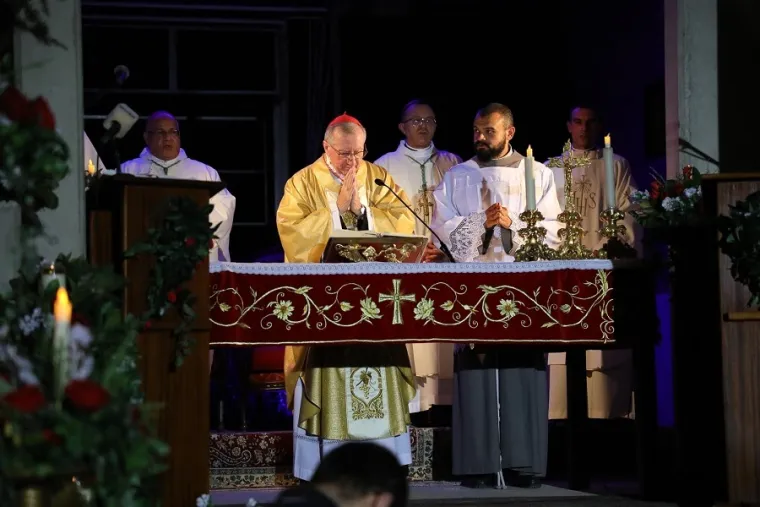
Cardinal Pietro Parolin says Mass at the Shrine of Our Lady of Lebanon in Harissa, Lebanon Sept. 3, 2020. Credit: Fr. Charbel Obeid/CNA.

By Hannah Brockhaus Vatican City, (CNA).- Cardinal Pietro Parolin told Lebanese Catholics at a Mass in Beirut Thursday that Pope Francis is close to them, and praying for them, during their time of suffering. “It is with great joy that I find myself among you today, in the blessed land of Lebanon, to express to you the closeness and solidarity of the Holy Father and, through him, of the whole Church,” the Vatican Secretary of State said Sept. 3. Parolin visited Beirut Sept. 3-4 as the representative of Pope Francis, a month after the city experienced a devastating blast which killed nearly 200 people, injured thousands, and left thousands without a home. The pope has called for Sept. 4 to be a universal day of prayer and fasting for the country.

Cardinal Parolin celebrated Mass for around 1,500 Maronite Catholics at the Shrine of Our Lady of Lebanon, a major pilgrimage site in the hills of Harissa, north of Beirut, on the evening of Sept. 3. “Lebanon has suffered too much and the past year has been the scene of several tragedies affecting the Lebanese people: the acute economic, social and political crisis which continues to rock the country, the coronavirus pandemic which has worsened the situation and most recently, a month ago, the tragic explosion of the port of Beirut which ripped open the capital of Lebanon and caused terrible misery,” Parolin said in his homily. “But the Lebanese are not alone. We accompany them all spiritually, morally and materially.”

Parolin also met with Lebanon’s President Michel Aoun, a Catholic, on the morning of Sept. 4. Cardinal Parolin brought the president greetings from Pope Francis and said that the pope was praying for Lebanon, according to Archbishop Paul Sayah, who is responsible for external relations for the Maronite Catholic Patriarchate of Antioch. Parolin told President Aoun that Pope Francis “wants you to know that you are not alone in these difficult times that you are experiencing,” Sayah told CNA. The Secretary of State will conclude his visit with a meeting with Maronite bishops, including Cardinal Bechara Boutros Rai, the Maronite Catholic patriarch of Antioch, during lunch Sept. 4.

Read more
Lebanese army finds more explosive chemicals outside Beirut port after huge blast

BEIRUT (Reuters) – Lebanon’s army said on Thursday it had found 4.35 tonnes of ammonium nitrate near the entrance to Beirut port, the site of a huge blast last month caused by a large stockpile of the same highly explosive chemical. Army engineers were “dealing with it,” according to an army statement carried by the […]

Read more
Pope surprises priest with Lebanese flag, calling him to microphone

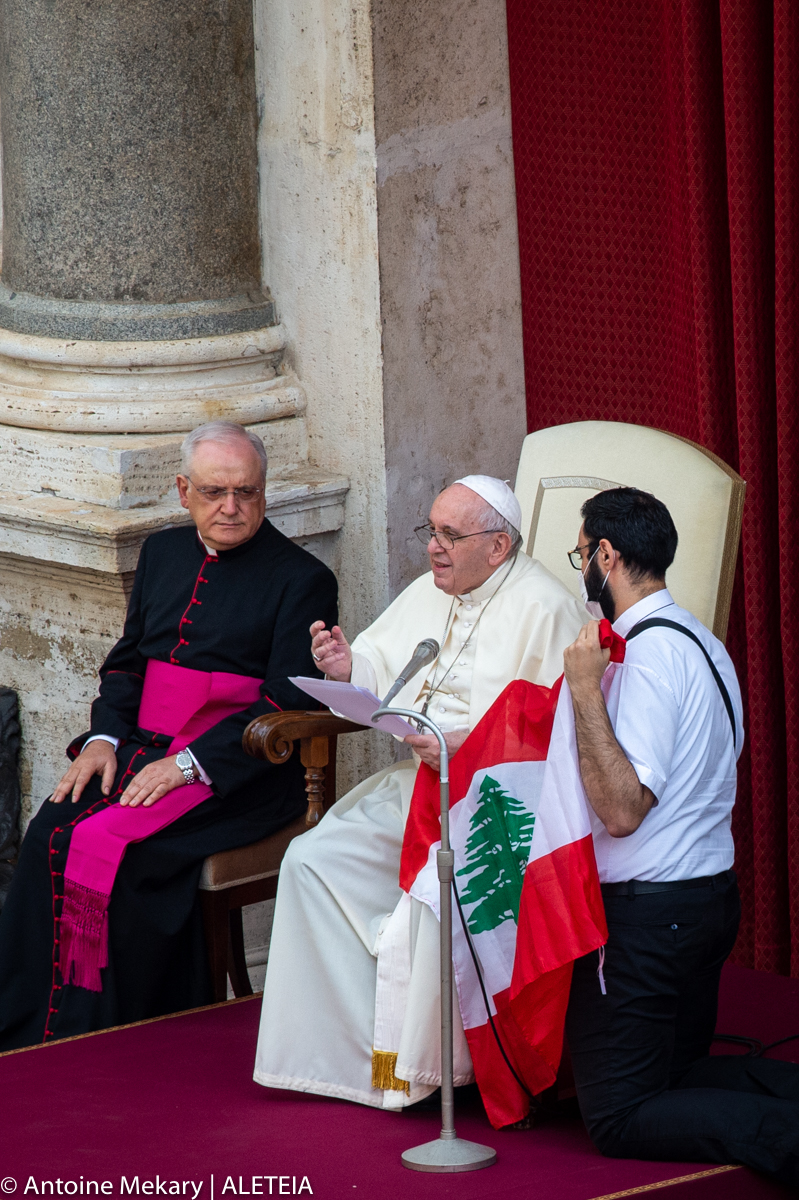
by aleteia.org — We need a miracle to change the hard hearts of those who govern [Lebanon],” Fr. Georges Breidi, a Maronite priest, told I.MEDIA on September 2. He is the priest with the big Lebanese flag that Pope Francis called to his side during the general audience as he announced that Friday, September 4, will be a global day of prayer and fasting for Lebanon. Father Breidi is a member of the Lebanese Maronite Missionary Congregation. Along with about 500 other pilgrims, he was able to attend the first general audience to be held in public since Italy began its lockdown last spring. Fr. Breidi has been a student in Rome for four years; he could not have imagined the scene that would occur. Knowing that the Argentinean pontiff was particularly affected by the situation in his country, he went to this audience with a flag. “I was almost sure he was going to bless it,” he said. While the Bishop of Rome did indeed kiss the flag when he arrived, the story didn’t end there. At the end of the audience, with the young priest at his side, the pontiff delivered a long plea for Lebanon. “I hope that the Holy Father’s message can change something; but to tell the truth we need a miracle to change the hard hearts of those who govern the country, our politicians, who have come to this point because of their corruption,” Father Breidi told I.MEDIA after the audience. “For more than 100 years, Lebanon has been a wealthy class in the Middle East, the Switzerland of the region, but today we’re facing a great catastrophe. I hope that the Holy Father’s message can change hearts so that peace may come.”

Read more
US Says Lebanese Government Must Pursue ‘Real Change’

by english.aawsat.com —US Secretary of State Mike Pompeo said Wednesday that any new Lebanese government must pursue fundamental reforms to benefit the Lebanese people and regional security. “Business as usual in Lebanon just is unacceptable,” Pompeo told reporters after an August 4 blast at the port in the capital Beirut killed at least 190 people, […]

Read more
Lebanese Philanthropist Lady Cochrane Dies of Blast Injuries, 98

by AP — BEIRUT— One of Lebanon’s most prominent philanthropists and a pioneer defender of the country’s heritage, Lady Yvonne Sursock Cochrane, has died from injuries she suffered in the massive Aug. 4 explosion that ripped through Beirut. She was 98. The family said Lady Cochrane passed away on Monday from her injuries. She was at home, at her family’s Sursock Palace, one of Beirut’s landmarks, when the explosion happened last month. The palace, a storied building that took 20 years to restore after the end of Lebanon’s 1975-1990 civil war, was badly damaged in the blast. At least 190 people were killed in the explosion at the Port of Beirut that also injured more than 6,000 and damaged tens of thousands of homes, including a number of the city’s heritage buildings. Lady Cochrane was born in Beirut on May 18, 1922. She is a member of the wealthy Sursock Greek Orthodox family, which was originally from the Byzantine capital, Constantinople, and settled here in the 18th century. She married Sir Desmond Cochrane in 1946.

Her family built a number of residential buildings, schools and hospitals in Beirut’s eastern neighborhood of Achrafieh, where an area is named after the Sursocks. One of Beirut’s best art museums owned by her family was also damaged in the blast. In 1960, she set up the Association for Protecting Natural Sites and Old Buildings in Lebanon to preserve the country’s cultural heritage and past. The association campaigned to preserve historic buildings, the National Museum, and turned restored sites into cultural sites in Beirut and other cities. Lady Cochrane was concerned about the demise of Beirut’s architectural wealth and its mismanagement by the state. She fought against the destruction of old houses and real estate developers who sought to change the character of Beirut. “Beirut lives by the wind that comes from the sea,” she said in a 2008 interview with Monocle, criticizing the reconstruction of downtown Beirut, including building skyscrapers at the seafront, after the end of the civil war.

Read more
Macron Gives Lebanese Leaders Two Months to Start Reform Process

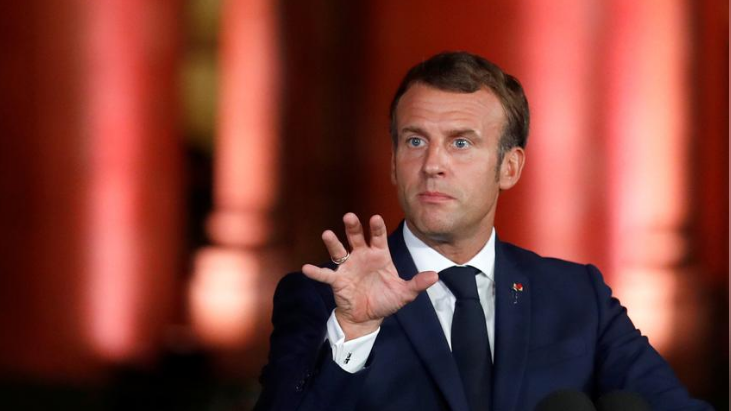
by CGTN with input from AFP – Reuters —French President Emmanuel Macron said on Tuesday Lebanese political leaders had agreed to form a government of experts in the next two weeks and that he expected the government to start delivering on a roadmap of reforms within six to eight weeks. “There is no blank check,” Macron told a news conference in the Lebanese capital. If reforms, including an audit of the central bank, were not being passed within that deadline, international aid would be withheld, he added. Macron was in Beirut for a second time since an August 4 explosion which killed more than 180 people, laid waste to entire city districts and fuelled popular rage against the country’s political elite. He attended muted celebrations marking the centenary of Greater Lebanon, shortly after political leaders settled on a new prime minister, Mustapha Adib, to form a cabinet and lead the country out of political turmoil and an economic crisis that was already crippling the country before the portside blast. “What all political parties without exception have committed to this evening right here, is that the formation of this government will not take more than 15 days,” he said.

Macron set himself an ambitious goal for his return visit: to push for deep change, but without being seen as meddling in the former French mandate. “This is the last chance for the Lebanese system,” he warned earlier. “It’s a risky bet I’m making, I am aware of it… I am putting the only thing I have on the table: my political capital,” he told news website Politico. Macron spoke to the press after meeting top Lebanese politicians, while clashes erupted in central Beirut between security forces and protesters rejecting the new prime minister. One held a poster aloft urging Macron: “Do not cooperate with the corrupt and criminal.” The French leader arrived Monday, just hours after Adib, a little-known 48-year-old academic and former ambassador to Germany, was designated to form a government. (With input from AFP, Reuters)

Read more
Lebanese express doubts about their new prime minister

Lebanon's newly-appointed Prime Minister Mustapha Adib (C) visits Beirut's badly-hit Gemmayzeh neighbourhood, on August 31, 2020. AFP

By Nadia Al Faour — thenational.ae — Lebanese officials named a little-known diplomat as the country’s new prime minister as French President French Emmanuel Macron travelled to Beirut on Monday. Mustapha Adib, 48, has been given the task of dragging Lebanon back from the cliff face and persuading Mr Macron to provide much-needed financial support to the bankrupt country. The name featured prominently in Google searches over the past 48 hours, with even seasoned political watchers rushing to familiarise themselves with the new leader. Many of those supported Mr Adib had not heard of him until hours before the parliamentary session where he secured 90 votes, easily beating his nearest rival, Nawaf Salam. The idea of a no-name leader being entrusted with saving the crisis-ridden country did not inspire confidence among many Lebanese. They have been calling for an overhaul of a political class widely blamed for crises including the August 4 port blast that ravaged half of Beirut.

I don’t believe in anyone any more,” said Rony Abdel Malak, 33. “The government will do whatever Hezbollah wants it to do. This new guy will start with good intentions then after a few weeks he’ll fall under the influence of the corrupt. “This is a never-ending cycle in Lebanon and it won’t stop until you remove the religious and the fanatics from it.” Until yesterday, Mr Adib served as Lebanon’s ambassador to Germany and previously worked as an aide to a former prime minister, the billionaire Najib Miqati, who is from the same city in North Lebanon, Tripoli. Mr Adib, who was a political appointment as ambassador, owes his career to powerful patrons. Analysts say he would be reluctant to turn on them now even as Lebanon lurches from one catastrophe to the next.

Read more