Khazen

Why Franco-Lebanese ties transcend strategic, economic interests

Relation between the Khazen’s and the French

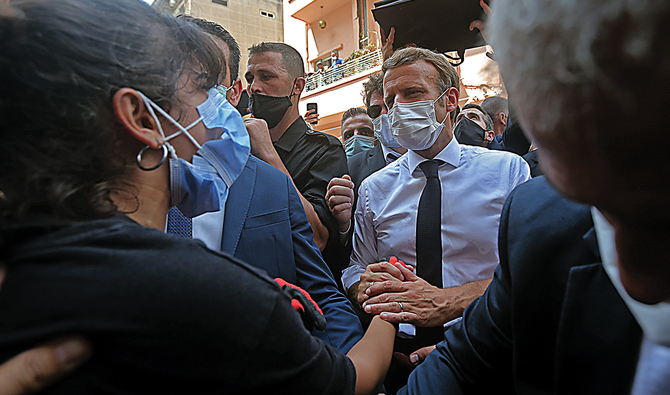
By ANTONIO MUNIOZ — Arabnews — PARIS: The symbolism could not have been stronger. On Sept. 1, 1920, French Gen. Henri Gouraud, representing the French mandate authority, proclaimed the State of Greater Lebanon from the Pine Residence in Beirut. On that day, Lebanon set out on its path toward independence, which it gained — for better or worse — 23 years later, on Nov. 22, 1943. One hundred years later, as French President Emmanuel Macron inspected the devastation caused by the massive explosion of Aug. 4, 2020 at the Beirut port, Lebanese people, expressing their anger at the incompetence of the Lebanon’s authorities, called for the country to be placed under “French mandate for the coming 10 years.” The French leader promised to return on Sept. 1 for the centenary celebrations of the creation of Lebanon. Meanwhile, Paris stepped up its efforts to support those affected by the explosion, and to urge Lebanese leaders to begin much-needed reforms to deal with the serious economic and financial crisis facing the country.

French Foreign Minister Jean-Yves Le Drian’s July 8 cri de coeur aimed at the Lebanese authorities — “Help us help you, dammit!” — reflected growing concern in Paris over the very future of Lebanon. Relations between the two countries go back much further than the historic date in 1920, which only consecrated ties that were several hundreds of years old. One can trace the beginning of France’s links with Lebanon to St. Louis, the 13th-century monarch who recognized the Maronite nation in Mount Lebanon and was committed to ensuring its protection. However, it was the capitulation agreements between the Ottoman empire under Suleiman the Magnificent and the European powers, including France, ruled by Francois I, that paved the way for France in the 14th century to forge deeper relations with the Lebanese, with the aim of defending the empire’s minorities, especially Christians. In 1860, after the massacres of Christians in Mount Lebanon, the French, under Napoleon III, intervened militarily to restore order. This allowed the creation, on a political level, of the Mutasarrifate, an administrative authority that ushered in a period of stability until the First World War.

Read more
Protesters await Macron as he meets leading Lebanese singer Fairouz

Why Fairuz Will Meet Emmanuel Macron During His Lebanon Visit

by reuters.com — BEIRUT (Reuters) – French President Emmanuel Macron began his trip to Beirut on Monday by visiting Fairouz, one of the Arab world’s most famous singers whose haunting voice has been Lebanon’s soundtrack from its glamorous heyday through its conflicts and latest trauma. Anger at Lebanon’s political elite over an economic meltdown and this month’s devastating port blast was evident as Macron arrived at the home of the 85-year old artist, feted as a national treasure and symbol of peace, transcending factional and sectarian divides in Lebanon and beyond. Protesters were seen in live television broadcasts gathered outside, carrying placards reading “No cabinet by, or with, the murderers” and “Don’t be on the wrong side of history!”.

Before stepping inside, Macron acknowledged them with a slight bow. Some were screaming “Adib No”, referring to new prime minister Mustapha Adib who was named by Lebanese leaders on Monday under French pressure. Macron is visiting Beirut for the second time in less than a month to press for a new government made up of experts untainted by corruption and capable of rooting out graft, waste and negligence as well as rebuilding after the Aug. 4 explosion that wrecked swathes of Beirut, killing 190 people. Songs by Fairouz dedicated to Beirut played on loop by local broadcasters showing images of the blast and its aftermath.

Read more
Lebanese ambassador Adib poised to be designated Prime Minister

by middleeasteye.net — Lebanon’s ambassador to Germany Mustapha Adib is poised to be designated prime minister on Monday after winning the support of major parties to form a new government facing a crippling financial crisis and the aftermath of the Beirut port explosion. The nomination followed contacts by French President Emmanuel Macron over the last 48 hours to press Lebanese leaders to agree on a candidate, two senior Lebanese officials said, just ahead of a visit by the French leader to Lebanon this week. Macron has taken centre stage in international efforts to get Lebanon’s fractious leaders to start addressing a financial crisis that had devastated the economy even before the August 4 port blast that killed some 190 people. A French presidency source said Macron had been in contact by phone with the main protagonists on Saturday and Sunday. “The president is informed of the negotiations underway in Beirut,” the source said. Macron arrives in Beirut late on Monday.

Last week, contacts among Lebanese leaders to agree a new prime minister were deadlocked. One of the two senior Lebanese sources said Macron’s role had been essential in clinching the agreement on Adib. The previous government led by Hassan Diab quit on August 10 over the port blast in which a massive amount of unsafely stored chemicals detonated. Adib has a doctorate in law and political science and previously served as an adviser to Najib Mikati, a former prime minister. He has served as ambassador to Germany since 2013. The post of prime minister must go to a Sunni Muslim in Lebanon’s sectarian system. Adib’s candidacy won vital political backing on Sunday from former prime ministers including Saad al-Hariri, who heads the biggest Sunni party, the Future Movement.

Read more
Lebanese writer wins prestigious French prize for first novel

Dima Abdallah (swediteur.com)

by thearabweekly — PARIS- Lebanese novelist Dima Abdallah won the prestigious French prize “Envoyé par La Poste” for the year 2020 for her first novel “Mauvaises Herbes” (Bad Weeds), which narrates events of the Lebanese civil war through the eyes of a young girl and her father. Abdallah, 43, an archaeologist who specialises in late antiquity, will receive the award and a 2,500 euro prize on September 8 at La Poste’s Museum. Created by the French public postal service company La Poste, the “Envoyé par La Poste” prize rewards a manuscript (the first novel or story) sent by mail, without any specific recommendation, that is deemed by the publisher and their reading committee to have the most promise and merit publication.

Read more
Lebanese presidency to convene consultations on Monday to designate new PM

by reuters — BEIRUT: The Lebanese presidency will convene consultations with parliamentary blocs on Monday to designate a new prime minister, the presidency said, after the government quit earlier this month following the catastrophic explosion at Beirut port. Lebanon’s fractious sectarian parties have so far failed to agree on who should lead the next government. […]

Read more
France’s Macron to head to Beirut to pressure Lebanese political elite

by reuters — PARIS: French President Emmanuel Macron will head to Beirut next week to pressure local politicians into pressing ahead with the creation of a government that can implement urgent reforms, a French presidential official said on Friday. “The president has said it he will not give up. He made a commitment to do […]

Read more
Champagne pushes Lebanese president on ‘real reforms’ after explosion

 Canada’s foreign minister pushed for Lebanon’s president to pursue economic and political reforms as he expressed Canadian solidarity with the embattled Lebanese people. Foreign Affairs Minister Francois-Philippe Champagne met face to face Thursday with Lebanese President Michel Aoun in Beirut, before taking a close-up look at the burned-out hulk of the city’s decimated port. “My […]

Read more
Lebanese banks that can’t raise capital must leave market, says central bank governor

Lebanese  Central Bank governor Riad Salameh says banks that cannot increase their capital by 20 per cent by the end of February 2021 will have to get out of the market. — Reuters pic

by reuters — BEIRUT ― Lebanese banks that cannot increase their capital by 20 per cent by the end of February 2021 will have to get out of the market, Central Bank governor Riad Salameh told Reuters yesterday. Those leaving would do so by giving their shares to the central bank, Salameh added. He said he could not speculate how many of Lebanon’s nearly 40 banks would exit the market. “We hope all the banks will meet the criteria,” he said in a phone interview. “But after February, those who do not will have to get out of the market…The deposits will be preserved because the bank will not be put into a bankruptcy situation.” The central bank’s foreign currency reserves stand at US$19.5 billion (RM81 billion) and obligatory reserve at US$17.5 billion, he said. Lebanon’s cash-strapped banks have frozen savers out of their dollar deposits and largely blocked transfers abroad since late last year as the country sank into a financial meltdown on a scale it has never seen.

The central bank wants domestic banks to boost liquidity at their correspondent banks abroad, with which they do not have sufficient funds, Salameh said. The state, one of the world’s most indebted, defaulted on its foreign currency debt in March, citing critically low reserves. Inflation and poverty have soared as the crisis wiped out the value of the local currency on the informal market. With the country running out of dollars, the central bank has kept providing foreign currency for fuel, wheat and medicine imports at an official peg. Salameh told Reuters he could not say how long the central bank could keep subsidising essential imports which is “depleting reserves”. He has been cited as saying the bank cannot use its obligatory reserve to finance trade once it reaches the threshold. “We are not about to float the currency and therefore for the time being we are living with these two exchange rates,” he said, adding that this decision also lies with the government.

Read more
Lebanese cardinal says international court could look at Beirut blast

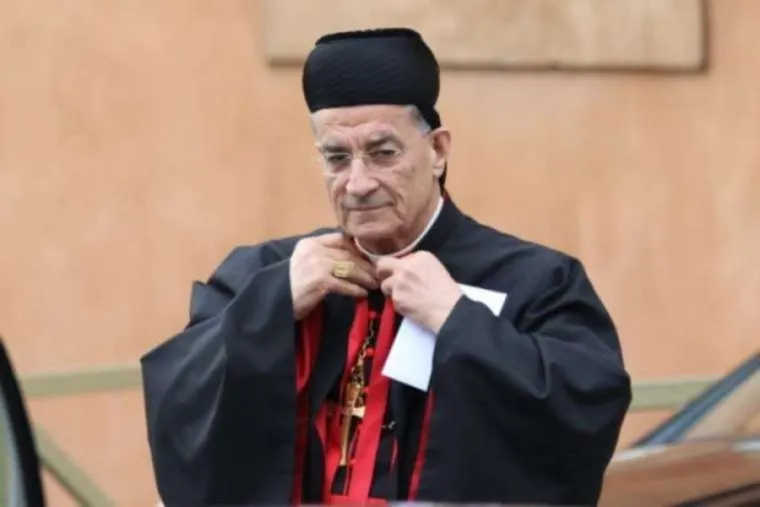
Cardinal Bechara Boutros Rai, the Maronite Patriarch, at the Vatican March 5, 2013. Credit: InterMirifica.net

CNA Staff (CNA).- The Maronite Catholic Patriarch of Antioch has said an international court may need to examine the circumstances that led to a massive explosion in Beirut on August 4. Speaking to media on Aug. 26 after a visit to a Catholic school in Beirut, Cardinal Bechara Boutros Rai said that while the Lebanese judiciary must look into the explosion, “if it fails, we must go to the international court.” Boutros called the explosion, which killed at least 180 people and injured thousands, “a major crime and a crime against humanity. After six years of the presence of deadly substances, no one moves a finger. It is unacceptable. They do not have the right to remain idle.”

Thousands of people were left homeless by the explosion, which destroyed entire streets. The Beirut neighborhood of Gemmayze, where the cardinal visited the school Wednesday, was hit particularly hard. The explosion originated after a warehouse storing tonnes of the explosive material ammonium nitrate, fireworks, and other flammable materials, caught fire. The explosive materials had been stored in the warehouse, seemingly unprotected, since 2013. The initial fire is believed to have started from a welding mishap.

Read more
France sends reform roadmap to Lebanon

French President Emmanuel Macron is welcomed by Lebanese President Michel Aoun in Beirut, Lebanon on August 06, 2020 [Lebanese Presidency/Anadolu Agency]

by middleeastmonitor.com — French President Emmanuel Macron has sent a roadmap to Lebanese politicians outlining political and financial reforms needed to unlock foreign aid and rescue the country from multiple crises including an economic meltdown, Reuters reports. The two-page “concept paper” delivered by the French ambassador to Beirut, and seen by Reuters, laid out detailed measures, many of them long demanded by foreign donors. They include an audit of the central bank, appointment of an interim government capable of enacting urgent reforms, and early legislative elections within a year. A French Foreign Ministry official declined comment. Macron’s Elysee office did not immediately respond to a Reuters request for comment.

Lebanon’s now-caretaker government, which took office in January with the support of the Iran-backed Hezbollah movement and its allies, failed to make progress in talks with the International Monetary Fund (IMF) for a bailout due to inaction on reforms and a dispute over the size of financial losses. The government resigned over this month’s huge Beirut port explosion that killed at least 180 people, injured some 6,000 and destroyed entire neighbourhoods, and renewed protests against a political elite over endemic corruption and mismanagement that has led to a deep financial crisis. “The priority must go to the rapid formation of a government, to avoid a power vacuum which will leave Lebanon to sink further into the crisis,” the French paper reads.

Read more