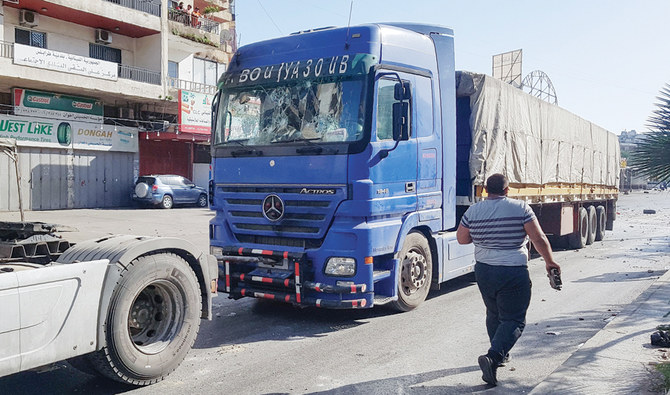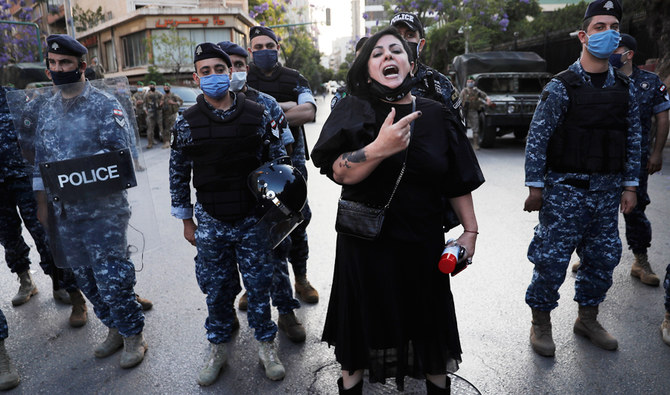
by arabnews.com — NAJIA HOUSSARI — BEIRUT: An increasing number of activists in Lebanon are being arrested amid mounting criticism on social media of the government’s handling of the country’s worsening economy. In the latest such incident, activist Michel Chamoun was arrested on Thursday by state security for writing comments on social media that were deemed humiliating to President Michel Aoun. Dozens of protesters blocked the main road linking Beirut to Jbeil and Tripoli, demanding the immediate release of Chamoun and chanting slogans and insults against Aoun and Free Patriotic Movement leader Gebran Bassil. This led to clashes with security forces before army commandos and military police intervened. An army officer and a number of protesters were injured.
On Thursday evening, Chamoun was released after Melhem Khalaf, head of the Beirut Bar Association, intervened. Chamoun said he was released due to pressure from the protesters, and prior to his release he had “to sign a pledge not to insult the president of the republic anymore.” But he insisted: “I will criticize anyone I want as we live in a democratic republic.” After his release, Chamoun headed with Khalaf to join the protesters on Jounieh highway. Then the protesters opened the road for traffic. Lawyer Hassan Bazzi, a member of the Lawyers’ Committee to Defend Protesters in Lebanon, told Arab News: “Freedom of expression in Lebanon is sacred, as stressed by the Bar Association. It’s protected by the Lebanese constitution.” But, he said, “what activists on social media don’t know is that there are limits to criticism, and the law forbids insulting the president of the republic.” Bazzi added: “People can no longer stand the pressure they live under due to the dire financial and economic situation, which has made them lose faith in the country.” It is “unacceptable for the political authority to try to intimidate activists, or to threaten them with arrest unless they delete their comments,” he said. “This is something to be done only upon a ruling by a judge upon the request of the public prosecutor. However, all security agencies try to intimidate opponents.”