Khazen

Saudi Arabia and SoftBank: How MBS’s $35bn gamble on future tech backfired

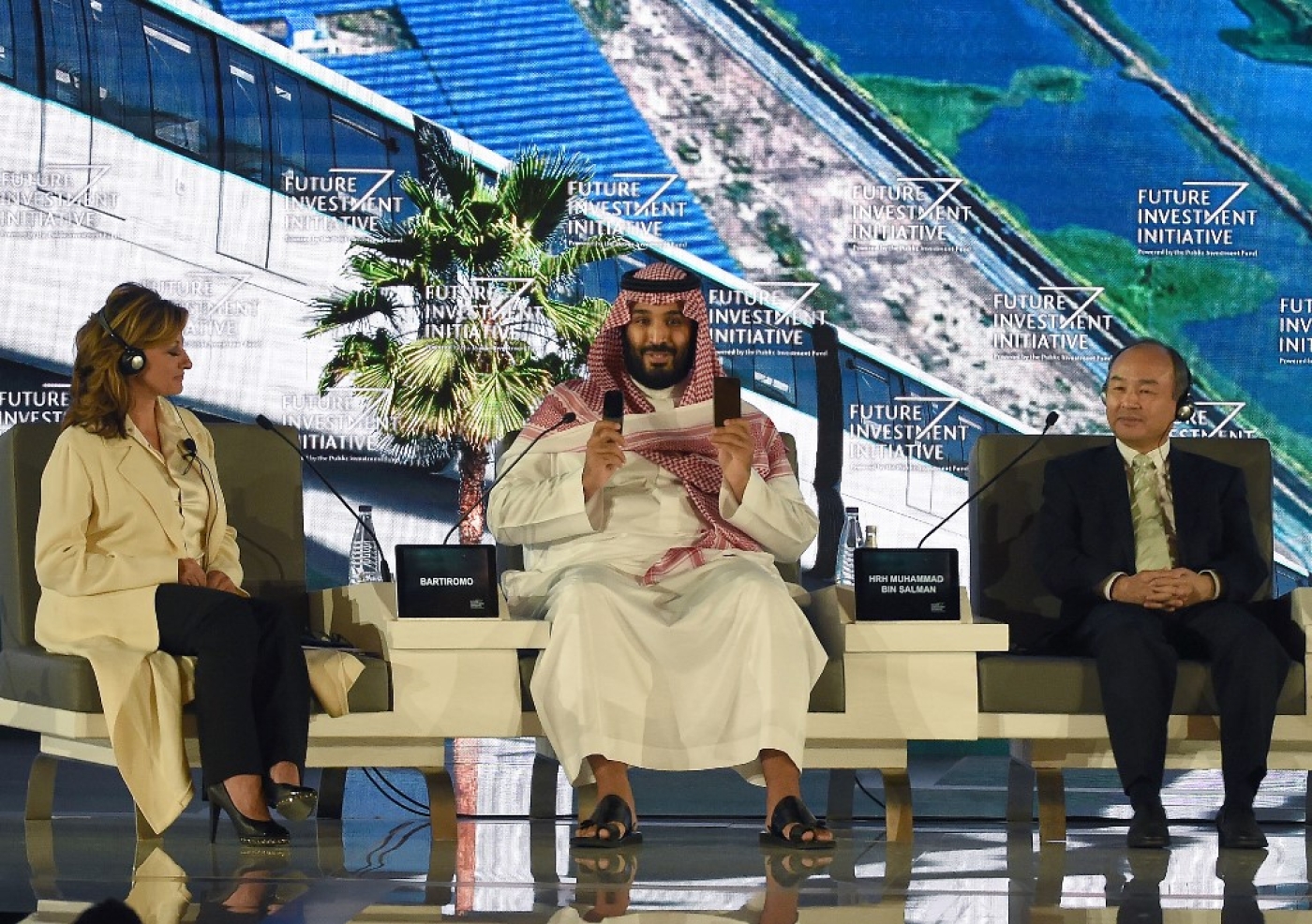
by middleeasteye.net — By Paul Cochrane — When Saudi Arabia’s Public Investment Fund was brought under the direct control of Crown Prince Mohammed bin Salman in 2015, and the fund’s programme was announced in 2017, it was under a mandate to invest at home and abroad to be a financial enabler of the kingdom’s economic diversification efforts. One of its earliest and biggest splashes was in Tokyo-based SoftBank’s $100bn Vision Fund, which invested in high-profile technology companies and, in keeping with its name, aimed to bankroll futuristic developments in artificial intelligence, robotics and gene-sequencing. Saudi Arabia, along with Abu Dhabi’s sovereign wealth fund, Mubadala, contributed almost two-thirds of the fund’s capital, with PIF investing some $35bn.

The investment with the Japanese conglomerate seemed a perfect match for the kingdom’s Vision 2030, outlined in 2016, with SoftBank making a commitment to enable diversification efforts through involvement in technology, renewable energy and in MBS’s $500bn Neom mega-city project on the Red Sea coast. SoftBank’s links to Saudi and MBS, by then the kingdom’s crown prince, came under scrutiny in October 2018 following the murder of journalist Jamal Khashoggi, but it largely managed to ride out the negative publicity. Just a year ago, the media gushed about SoftBank being a major disruptor on the start-up and venture capital tech scene, while a second Vision Fund was announced. Riyadh was initially keen on getting involved but backed away last year as problems emerged with the first fund, according to Rory Fyfe, managing director of Mena Advisors, a regional research and consultancy company in London.

Read more
Renault and Nissan are desperate for help. The alliance Carlos Ghosn built could be their only hope

Renault–Nissan–Mitsubishi Alliance - Wikipedia

London (CNN Business)The coronavirus pandemic may be forcing Renault and Nissan to rethink their strained relationship. Already under huge pressure from slumping sales and profits in 2019, the collapse in global car demand this year could push the French and Japanese companies much closer together to cut costs and share the burden of building a new generation of electric vehicles. The carmakers have been partners since 1999, cooperating on strategy and product development while never taking the plunge and completing a full merger. Together with junior partner Mitsubishi Motors, the unique industry alliance employs roughly 450,000 people and in 2018 it sold roughly one in every nine cars around the world. Yet the partnership began its third decade in turmoil. The 2018 arrest of former alliance boss Carlos Ghosn, a turnaround expert credited with keeping Renault and Nissan in business, sparked a series of leadership changes at both carmakers, confusion over their strategy and questions over whether the sputtering relationship had outlived its usefulness.

Renault participated in merger talks with a European rival, and there were major questions over how the alliance would revive its fortunes in North America, where Nissan is a significant player but its French counterpart is not. Analysts also raised questions about cultural differences at the companies. The companies have so far largely maintained separate manufacturing facilities. Sharing production at the plant in Sunderland could be a sign that the carmakers have set aside their differences and are responding to the crisis by helping each other to cut costs. Ghosn, who was arrested on charges of understating his income, has always denied charges of financial impropriety. He had hoped to bring the companies much closer together, and he has blamed his arrest on a Nissan conspiracy aimed at preventing further integration with Renault. Nissan disputes this narrative.

Read more
Lebanese may turn to Bitcoin to protect themselves from the effects of the country’s economic crisis

by blocksats.com — According to a poll widely published on Twitter, more than half of the 6,661 voters would choose to receive their salary in Bitcoin. Although they prefer to receive dollar bills, they are not interested in receiving the money in their own fiat currency, which has collapsed against the US currency. In 2020, economic turmoil and distrust in banks that increased during the coronavirus caused people to adopt the world’s main digital asset.

$ Cash (paper)
38.8%
 
Lollar – Direct Deposit
1.6%
 
Lira @ 3000
2.1%
 
Bitcoin
57.5%

Unprecedented economic collapse The result makes sense, given that Lebanon is facing an unprecedented economic collapse, where prices for basic goods have doubled in at least the past two months, leaving them out of reach of half the population. Prime Minister Hassan Diab also acknowledged that Lebanon is on the verge of an “unimaginable food crisis”. Its long-standing currency continues to fall and is still being used to pay for imports. The crisis is likely to hit the impoverished communities more strongly and put more pressure on the middle class, widening the gap between the elite and the rest. The banking system in the country is also destabilized, with protests over central banks and bank branches increasing.

Read more
Solidere makes a comeback to profitability despite crisis

Traders are seen busy working in BEMO Bank's dealing room before the end of Beirut's stock exchange trading session in Beirut, Lebanon in this April 3, 2006

By Osama Habib, The Daily Star Beirut – The real estate giant Solidere made a comeback to profitability after selling close to $500 million in properties over the past two years, allowing it to settle all its debts, the company’s vice president Ghazi Youssef said Friday. “We did relatively well despite the crisis that engulfed Lebanon. We sold around $450 million to $500 million worth of land in the Downtown district in the past two years. We had debts of around $600 million in the past and now I can say we are no longer in the red,” Youssef told The Daily Star over the telephone. Youssef expressed his belief that many Lebanese have chosen to invest their money in real estate. “There is around $5 billion in cash in the market and it seems some [people] have preferred to buy land in Solidere because they think it’s a sound investment,” he added.

Solidere has been struggling with the acute political and financial crisis that struck Lebanon in recent years. The company implemented a restructuring plan to cut costs last year. However, rigid capitals control imposed by the banks since late last year, coupled with the sharp devaluation of the Lebanese pound, drove many investors and bank customers to search for a safer investment, especially since most of them could not transfer money abroad or carry out financial transactions with other countries.

Read more
Why some Middle East autocrats are harder to oust than others

by middleeasteye.net — Christopher Phillips — The political futures of both Syrian President Bashar al-Assad and Turkish President Recep Tayyip Erdogan have recently been the subject of speculation. For Assad, a dispute with his wealthy cousin amid grumblings from his ally, Russia, has prompted some to wonder whether his bloody reign may soon end. For Erdogan, the fallout from the Covid-19 crisis and associated economic uncertainty has led to murmurs about his potential departure. Yet, such speculation rarely outlines how these neighbouring strongmen would actually be toppled. Both rule over regimes, whether inherited (in Assad’s case) or created (in Erdogan’s), that make it difficult for rivals – from either within the ruling establishment or without – to overthrow them.

‘Coup-proofing’ the state: As is the case in many autocratic states, Assad and Erdogan have tried to “coup-proof” their regimes to ensure they can withstand far more dramatic setbacks than either currently faces. Coup-proofing is, according to author James Quinlivan, “the set of actions a regime takes to prevent a military coup”. This is more common in states such as Turkey and Syria, where there is a history of military intervention in politics. The methods vary from state to state, but Quinlivan notes similarities in the coup-proofing of Saudi Arabia, Syria and Saddam Hussein’s Iraq. Standout methods include packing key security positions with those tied to the ruler by family, ethnicity or religion; building up armed forces parallel to the regular military; and developing multiple overlapping internal security agencies monitoring the military and one another to prevent coups.

Assad inherited a regime that his father had coup-proofed par excellence. The extent of successful coup-proofing was seen when he avoided any serious attempt by establishment insiders to topple him, despite losing more than half of the country at one point during the recent civil war. Though thousands of soldiers defected and joined the opposition, those in key security positions, mostly from his own Alawi sect and family, stayed loyal. Similarly, the key security divisions fighting rebels in the early stages of the conflict were the “parallel structures”: the Republican Guard and the 4th Armoured Division, armed with the best equipment to defend the regime. Though it is unknown whether there were attempts at coups – there were several rumours – their absence suggests the myriad security agencies Syria had on the eve of the war proved effective.

Read more
President Trump: Churches should reopen ‘right now’

President Donald Trump. Credit: JStone/Shutterstock.

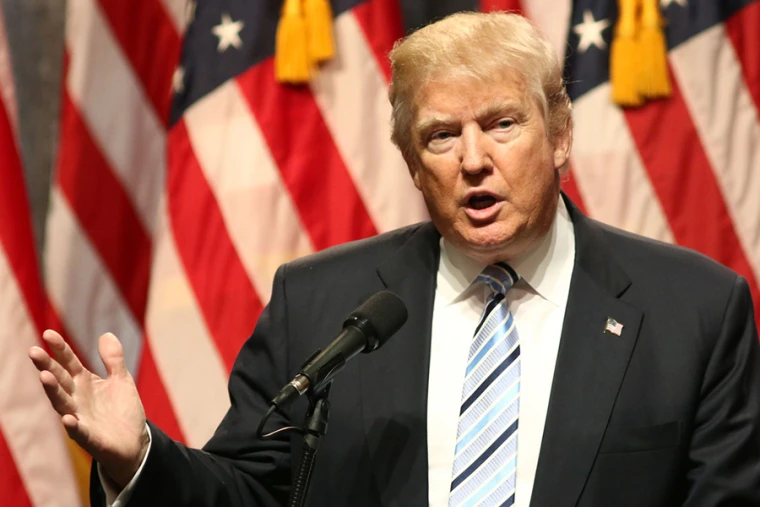
By Matt Hadro (CNA).- President Donald Trump on Friday called on state governors to reopen churches “right now.” At a Friday press briefing, Trump said that the U.S. Centers for Disease Control (CDC) would “at my direction” be issuing new guidance for churches to reopen. He said he was identifying houses of worship as “essential places that provide essential services,” noting that state governors had classified such establishments as liquor stores and abortion clinics as providing essential services, but not churches. The White House and the CDC have for weeks reportedly been in the process of drafting and publishing new guidelines for churches to reopen. On Friday, CNA learned that, according to someone familiar with the deliberations, the new CDC guidance is expected on Friday afternoon and will differ from its previous interim guidance for faith communities that was issued in March, at the outset of the U.S. pandemic. That guidance was reportedly not cleared by the White House before publishing. That guidance was reportedly met with concern by many in the faith community for certain provisions that seemed to intrude on the autonomy of religious groups, such as one recommendation that Jews should be allowed to use electronic devices on the Sabbath to stream services online.

The new guidance, CNA was told, would be more sensitive to the autonomy of churches and religions and will apply a “lighter touch” to them, functioning as a set of recommendations rather than instructions, and implying that actions taken by state and local governments that go beyond the federal recommendations are inappropriate. It has the input of lawyers with experience in religious freedom cases. The guidance will include a section for state and local leaders, saying they should recognize religious gatherings as something unique and different from other gatherings and protected by the First Amendment; it will imply that states should not be treating churches more strictly than they are treating other public gatherings or businesses reopening. Churches, however, will not be officially classified as “essential” establishments, CNA was told, as that classification can vary state-by-state in its implications for religious groups. However, calling churches “essential” in the administration’s “messaging” on the guidance was reportedly discussed.

Read more
Lebanon PM marks 100 days in office as protestors storm ministry

Lebanon is in throes of an economic meltdown that has crushed businesses, thrown tens of thousands of people out of work and led its currency to dramatically depreciate [File: Bloomberg]

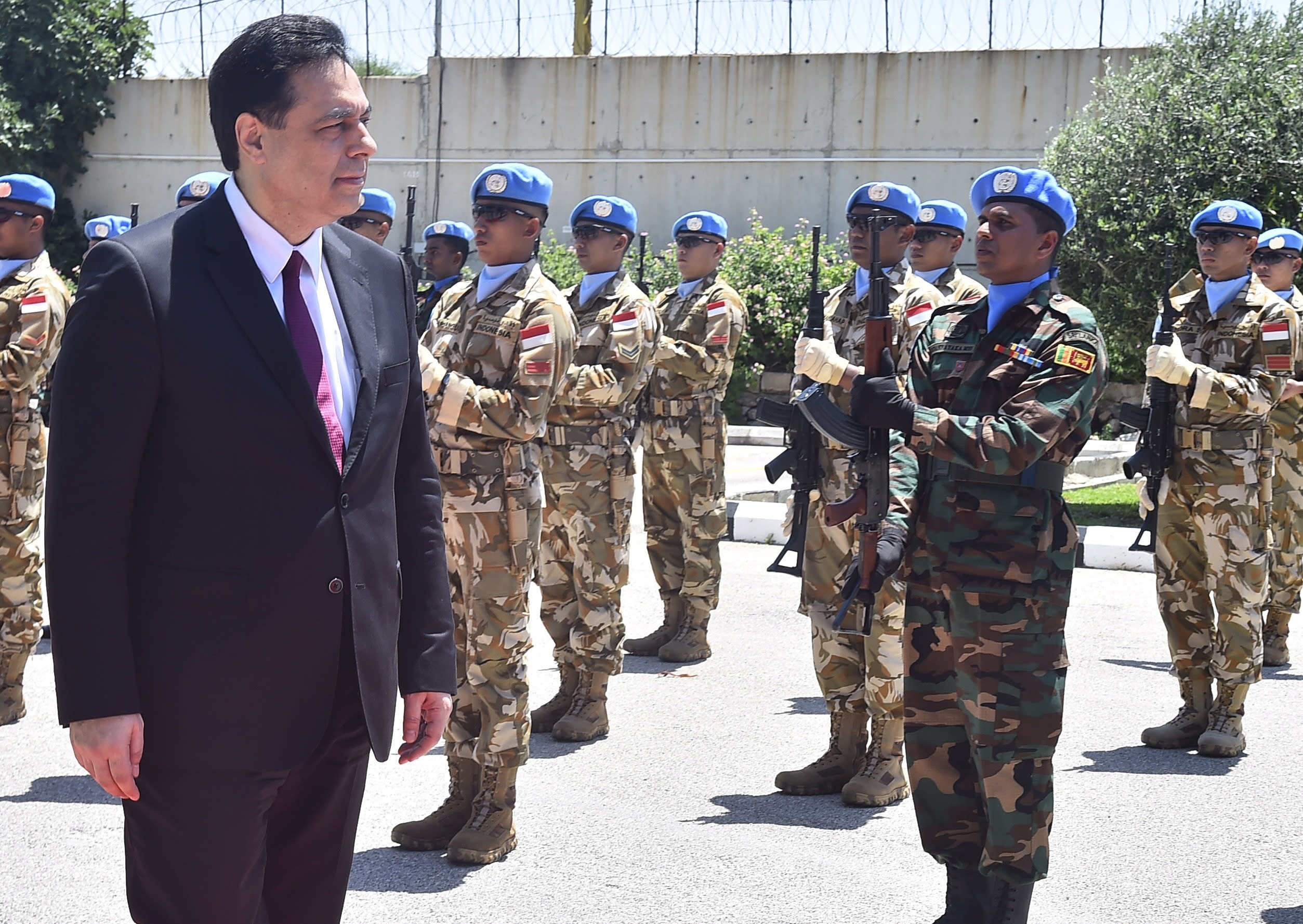
by aljazeera.com — by Timour Azhari — Beirut, Lebanon – Lebanese Prime Minister Hassan Diab on Thursday marked 100 days in office by touting his government’s achievements during a speech at the Grand Serail – the seat of government power in Beirut. But a few blocks away, the mood was decidedly uncelebratory, as protestors once again took to the streets to vent their frustrations with a broken apparatus of a state that is not reforming fast enough to quell their anger. Comparing Lebanon to a rapidly-sinking ship that his three-month-old government is saving against all odds, Diab emphasised his government’s push for anti-corruption legislation, as well as its attempts to secure more than $20bn in aid from the international community to rescue Lebanon’s crisis-ridden economy. “One hundred days ago, the ship was being rocked by incoming waves, and water was entering it from many big holes. The fuel tanks were empty, the motors powerless,” Diab said. “The ship was sinking rapidly, and the lifeboats were either missing or of no use. One hundred days ago we had no other choice but to take over command of the ship.” “A few adventurers stood on the deck of the boat in front of scared and worried eyes. They told the passengers, ‘Let us attempt rescue,'” Diab went on. “Each of those adventures went about closing the holes and fixing the malfunctions. They used their bodies as sails and held the helm, and the voyage began.”

Read more
Lebanese Prime Minister Warns of Food Crisis

An anti-government protester yells as she and others block a main highway outside the Ministry of Energy and Water after…

by voanews.com — Dale Gavlak — AMMAN, JORDAN – Prime Minister Hassan Diab says Lebanon, now suffering from an acute financial crunch and facing a COVID-19 outbreak, is also at risk of starvation. He warns that the multiple crises could spark a new migration to Europe and is asking the United States and Europe for financial help. The financial crisis is on a scale never seen before in the country. Inflation, poverty and unemployment have soared in Lebanon in recent months, with prices of goods doubling in many cases. Diab says the crisis could result in people being unable to buy bread, a staple. Analyst Michael Young says there are only two ways ahead for Lebanon. One is to carry out overdue reforms that will permit the International Monetary Fund to provide $10 billion in the first phase of a bailout plan. Young says he believes it is the only available key to unlocking wider foreign aid from the World Bank and the West. The other choice, he told The National newspaper, is to follow the path leading to “bankruptcy, state collapse, chaos, possibly famine, and mass emigration.”

Professor Habib Malik of the Lebanese American University says reforms are badly needed, telling VOA that Lebanon faces difficult, stark choices that won’t be easy to enact. “Lebanon is suffering from multiple, very profound challenges,” he said. “We know the IMF is not a charitable organization. They will come with all kinds of very austere conditions. This will translate into suffering for those who did not cause the problem but who have received the short end of the stick. The same political class who did all of this is just going to hang around. It’s the same criminal political class that got us here.”

Read more
Lebanon’s Banks Urge Government to Avoid Domestic Debt Default

Police line up outside the headquarters of the Lebanese central bank during an anti-government demonstration in Beirut on April 28.

by bloomberg.com — Dana Khraiche — Lebanese banks are urging the government to sell state assets and defer maturities to avoid defaulting on its domestic debt and driving the country’s finances into an even deeper crisis. The Association of Banks in Lebanon made the recommendations in a response to the economic recovery plan the government is discussing with the International Monetary Fund after seeking $10 billion in assistance. Defaulting on domestic debt would “plunge Lebanon’s output to a level somewhere beyond Yemen’s and Cambodia’s and our people would be impoverished for the next decade,” Salim Sfeir, head of the banking lobby, said during a parliamentary committee hearing on Wednesday.

The government defaulted on $30 billion of Eurobonds in March and is now seeking to hold talks with bondholders, mainly local banks, to revamp its debt. That’s fueling concern among lenders that they may be driven to the wall. The country’s crisis has been years in the making, but financial conditions deteriorated rapidly in 2019 as political upheaval toppled the government of Premier Saad Hariri and foreign currency reserves began to run low, forcing businesses to turn to money changers for dollars they need to pay for imports. The banks are proposing that the government create a $40 billion “defeasance fund” that could settle its debt to the central bank “fairly,” according to a document seen by Bloomberg. 

The fund would issue long-dated and interest-bearing securities to the central bank in exchange for a final settlement of the government’s debt. Lenders have parked more than half of their liquidity at the central bank, which holds about $34 billion in local currency debt. Banks would also negotiate a “relief package” on domestic bonds by offering significant coupon reductions through a voluntary debt exchange. They hold domestic debit valued at $14 billion. “This default-avoiding internal exchange can be executed both quickly and smoothly in the interest of all stakeholders,” according to the document. “Avoiding an internal default would indeed preserve existing and future depositors’ confidence.”

Read more
Lebanon’s RAMCO reaches agreement with migrant workers after weeks-long strike

by middleeasteye.net — Adam Chamseddine — Lebanese waste-management company RAMCO has reached a temporary agreement with hundreds of migrant workers to slightly increase their salaries after a weeks-long strike against a cut in their wages, the Bangladeshi embassy in Beirut has said. Around 400 foreign workers, mostly from Bangladesh and India, took a stand against RAMCO more than a month ago after the company began slashing their wages and paying them in the local Lebanese currency rather than US dollars. Since Lebanon’s unprecedented financial crisis late last year, the Lebanese pound has lost a staggering 60 percent of its value.

With the currency currently trading at LL4,200 to the dollar, but RAMCO pegging the conversion to the official exchange rate of LL1,500 Lebanese pounds, it now takes almost three times as many pounds to buy the same amount of dollars. Feeling the pinch, dozens of workers held a protest outside the company’s storage site in Beirut last week, blocking waste collection trucks from leaving the building. Video of riot police violently suppressing the protest were widely shared online. Armored police, which were summoned by the company, could be seen beating the foreign workers with sticks and using tear gas to disperse the crowd. “I used to transfer my salary to my family in Bangladesh in dollars, but now that I’m getting paid in Lebanese pound, I have to exchange it at the black market rate, which amounts to very little”, one worker told Middle East Eye on condition of anonymity. He said his previous salary of $120, now paid in pounds, was worth just $42.

Read more