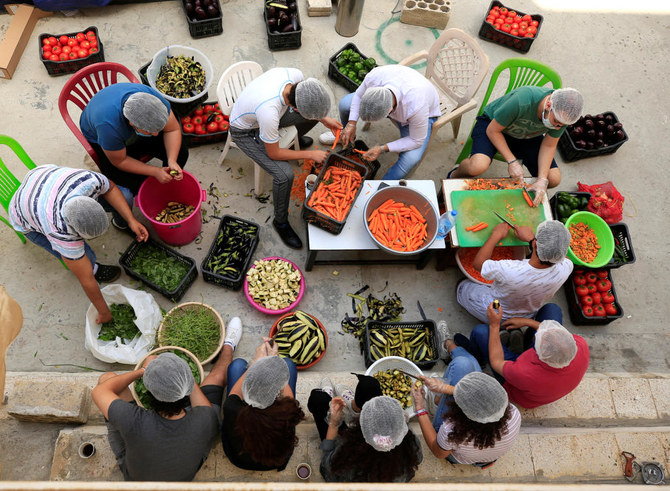
by reuters — BEIRUT: At a street market in southern Beirut, Lebanese crowd around volunteers handing out free rations of bread and pasta, staples that have become a lifeline to families whose living standards have plunged during a financial crisis. “People can’t buy meat or fish anymore. Chicken is getting more expensive. They can only afford vegetables and bread,” said Salwa Hable, an organizer helping distribute the privately donated food. Lebanon’s economic crisis has brought mounting hardship for its roughly 6 million people. Prices have soared, the result of a dollar crunch that has sunk the local currency since October and eviscerated purchasing power. “It’s going to soon turn into hunger protests,” said Hable.
It was getting harder to solicit donations from better-off Lebanese, themselves feeling the pinch of the most destabilising crisis since the 1975-1990 civil war, she said. The worsening conditions have already threatened more serious unrest. Last month protesters defying a coronavirus curfew rioted, burning banks and leaving a demonstrator dead. Prime Minister Hassan Diab said last week the double-blow of the financial meltdown and coronavirus pandemic could tip Lebanon into a full-blown food crisis as basics like bread become unaffordable. People are eating less, with butchers complaining of shrinking sales, restaurants empty, and families making do with simple carbohydrates — even during the holy month of Ramadan, typically a time of nightly feasts. “We stopped buying fruits for ourselves. We get something small for my daughter, but that’s it,” said George Ortass, 46, a taxi driver.