Khazen

Algeria and Lebanon embroiled in defective fuel scandal

by middleeasteye.net — Algeria’s president, Abdelmadjid Tebboune, has launched an investigation into a wide-reaching scandal that has embroiled Algerian state energy firm Sonatrach for the last month in Lebanon. Lebanese officials have accused Sonatrach of delivering defective fuel to state-owned Electricity of Lebanon (EDL), and have made 20 arrests since April, including Sonatrach’s Lebanese representative, Tarek Faoual. Last week, Sonatrach denied “the inaccurate and untrue allegations about the involvement of a senior Sonatrach official in this case”, stating that Faoual was an independent maritime agent, working for a subsidiary on behalf of Sonatrach Petroleum Corporation (SPC). Algerian presidential spokesperson, Mohand Oussaid Belaid, on Wednesday described the scandal as a “Lebanese-Lebanese issue” and stated that “Algeria as a state will not be involved” but that “Algerian justice will take care of the part concerning Algeria”. SPC also released a press release to protest the “vile coordinated defamation campaign aimed at damaging the reputation of the company”. Belaid’s comments came a week after Lebanese Minister of Energy and Water Raymond Ghajar received Algerian ambassador to Lebanon, Abdelkrim Rekibi, to discuss the case.

‘Secret’ contract

In the same week, Lebanese MP Paula Yacoubian blasted the “secret” nature of the contract signed between the Algerian national oil company and the Lebanese state in 2005, the same year Algeria announced that its extensive gas reserves were open for business. “The defective fuel case is a huge scandal, documented by numerous reports,” Yacoubian stated at a press conference in parliament, denouncing how certain parties “are beginning work to bury it”. “Petroleum waste is sent to Lebanon and the investigation into this must include the company that operates the central shipping,” the lawmaker added, referring to Sonatrach, also accusing “community leaders and senior politicians” of involvement in the scandal. Last month, EDL informed Lebanese courts that the London branch of Sonatrach had delivered “defective” fuel in its two most recent shipments.

Read more
Beirut reimposes lockdown as army arrests smugglers on Syrian border

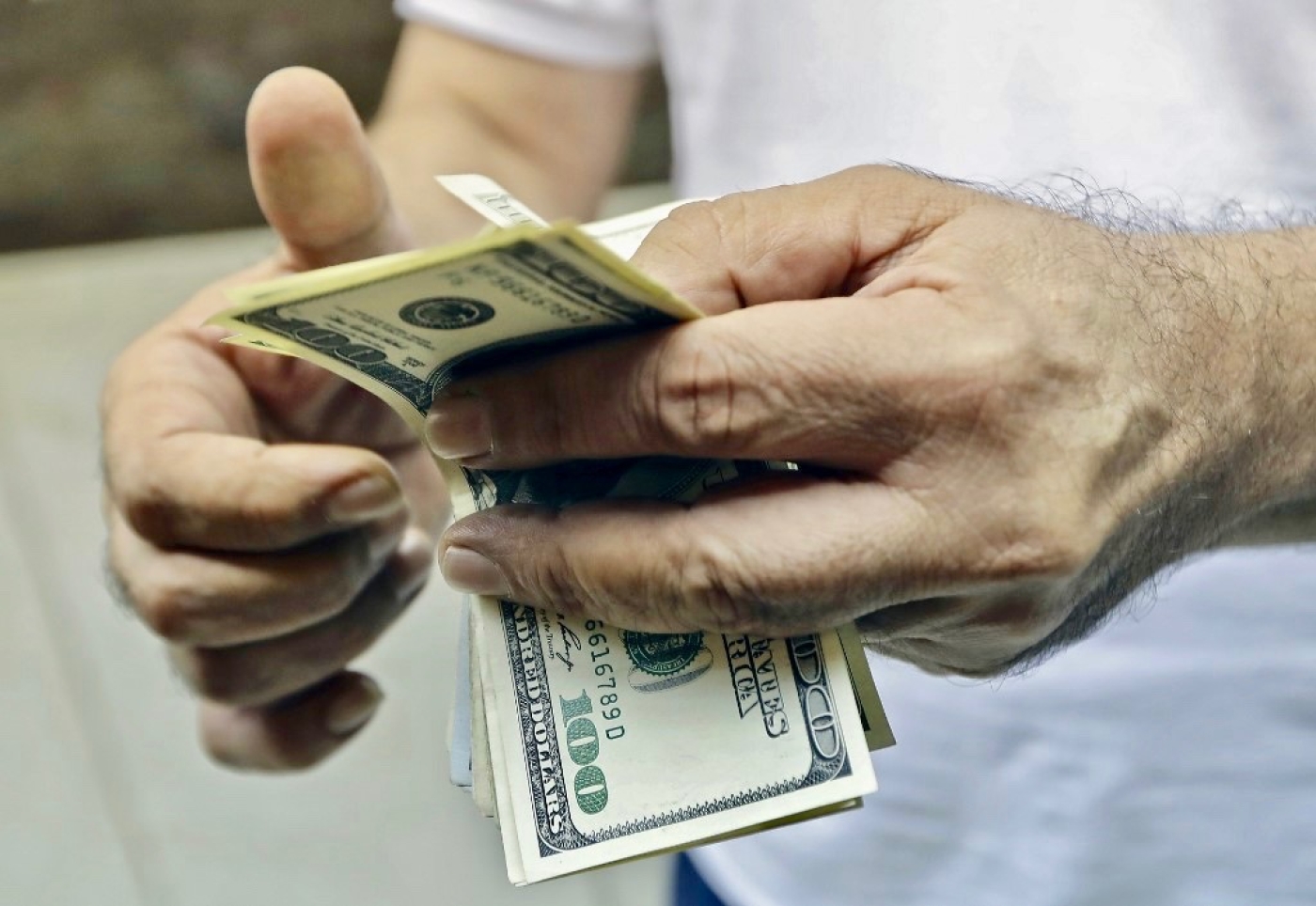
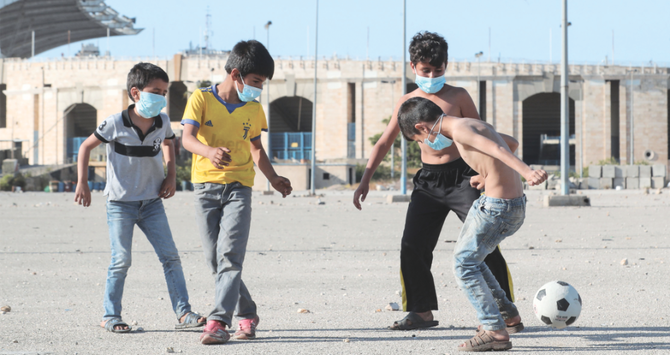
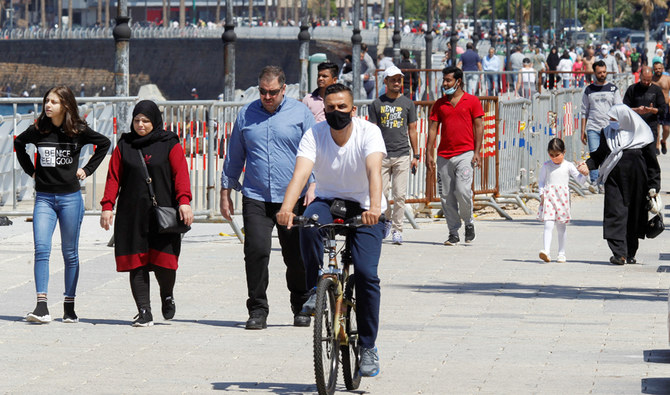
by arabnews.com — NAJIA HOUSSARI — The Lebanese Army, Internal Security Forces (ISF) and municipal police patrolled the streets to catch anyone violating the measures, while ISF armored vehicles were deployed on the streets of Beirut and check points were set up across the country. The exchange rate of the dollar to the Lebanese pound (LBP) slightly decreased on the black market in light of the closure of banks and money exchange shops. It was bought for LBP4,150 and sold for LBP4,250. Pharmacies, bakeries, food stores and gas stations were exempted from closing, while security forces caught and issued tickets to beachgoers. People in Tripoli were outraged by the total lockdown amid the economic crisis they are suffering from. Some even tried to open their shops by force on Wednesday night but, the security forces prevented them from doing so.

During a Cabinet meeting held on Thursday, the minister of health, Hamad Hassan, announced: “The ministry’s medical teams were deployed in various regions across the country as part of a widespread campaign aimed at testing those who came in contact with confirmed cases and those suspected of carrying the virus, in order to update the data related to the country’s epidemiological situation.” Hassan is scheduled to provide the government with a report on Sunday, showcasing the information gathered during the lockdown “so that we can work accordingly.” The third phase of the country’s repatriation process started on Thursday with Middle East Airlines (MEA) aircraft bringing back Lebanese nationals who had been tested for COVID-19 from Istanbul, Riyadh, Paris, Abuja, Abu Dhabi and London. Lebanese diplomatic sources told Arab News: “The repatriation of Lebanese citizens will continue to take place by air. So far, we do not intend to bring them back by sea.”

Read more
ISG Urges Govt. to Engage Lebanese People in Financial Plan Consultations

W460

by naharnet — The International Support Group of Lebanon on Wednesday called on the Lebanese government to “engage all relevant stakeholders, most importantly the Lebanese people, in consultations” on its financial rescue plan. “The ISG takes due note of the unanimous adoption by the Government of Lebanon of its Financial Recovery Plan as a constructive framework for future reforms as well as its decision to request an IMF program as a first step in the right direction,” the ISG said in a statement. “The ISG also takes due note of the assessment by the World Bank that the Plan recognizes the nature and depth of the crisis, the necessary structural reforms and adjustments needed to ensure a vibrant economy with sustainable growth and productive sectors, in a business climate and conditions favorable for private sector development and the prosperity of the Lebanese people,” it added. Recognizing the importance of “domestic political support” necessary for “successful conduct and rapid completion of negotiations with the IMF, the ISG encourages the Government of Lebanon to engage all relevant stakeholders, most importantly the Lebanese people in consultations on the contents of the plan and ways to expedite its implementation,” the Group went on to say. It added: “Equally, the ISG encourages the Government and Parliament to work together in creating the necessary conditions for timely implementation of the needed reforms and to ensure full transparency and accountability as demanded by the citizens of Lebanon.”

Read more
Lebanon to shut down again for 4 days

by arabnews.com — NAJIA HOUSSARI — BEIRUT: Lebanon’s government on Tuesday ordered the “full closure” of the country for four days, starting Wednesday night, as it seeks to ward off a coronavirus resurgence after easing some restrictions. The rise in new infections follows a drop in cases to zero last week. “This achievement is at risk of collapsing” because some people have not complied with the guidelines, Prime Minister Hassan Diab was quoted as saying during a Cabinet meeting. He said the government will re-evaluate its original five-stage plan for gradually reopening the economy. Hospitals, as well as the food and agriculture sectors, are excluded from the closure. Interior Minister Mohammed Fahmi said: “During the lockdown days, evacuation flights of Lebanese from abroad wishing to return will be completed.” But Dr. Abdul Rahman Al-Bizri, infectious disease specialist and member of the National Emergency Committee on COVID-19, told Arab News that the high number of infections is due to “chaos abroad during the process of repatriation of Lebanese wishing to return … and the chaos inside as result of the lack of follow-up.” He said: “The full-closure step is worthless if the government doesn’t come up with a plan by Monday to contain the epidemic.”

Read more
Lebanese designers fight coronavirus with fashion face masks

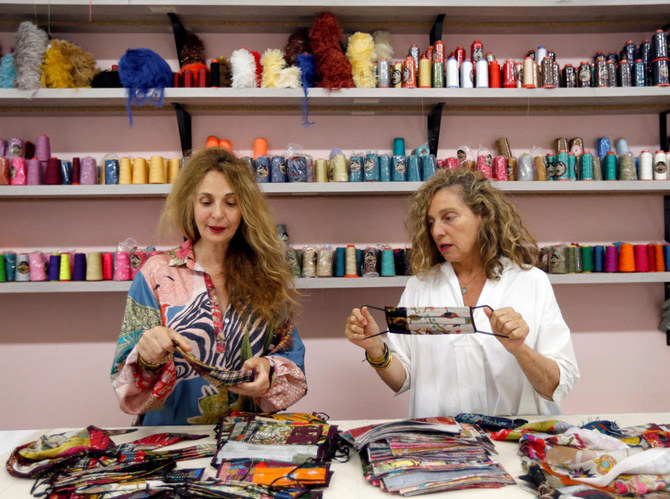
by reuters — BEIRUT: Beirut-based designer Bokja specializes in making upholstered furniture with vintage fabric but the studio’s workers now dedicate their time to sewing colorful silk face masks to curb the spread of the new coronavirus. Profits from the masks, costing about $35, go to nurses on the frontline of Lebanon’s fight against the disease, which has compounded woes in a country wrestling with economic meltdown. “I saw a nurse from the Rafik Hariri Hospital crying on TV…so we decided that part of the proceeds will go to them,” said co-founder Huda Baroudi. Baroudi’s business is one of several that have converted production of items like furniture and clothing to masks. She said nurses have even ordered some. “They help boost morale” said Baroudi. Lebanon has been under lockdown since mid-March to curb an outbreak that has infected 859 people and killed 26. Authorities are warning of a new wave after cases surged in recent days, as the government eased some curbs and allowed businesses to reopen. Safety rules at supermarkets, pharmacies and shops require people to wear masks. “Face masks are a sad thing but when we gave it this form, and each one is different, it took us back to Bokja’s ideology which is to find beauty in ugliness,” said Maria Hibri, the second founder of Bokja.

Read more
Lebanon hit by smugglers as IMF discussions begin

by NAJIA HOUSSARI — arabnews.com — BEIRUT: A Lebanese customs force was attacked by a large group on Monday as they seized two trucks carrying camouflaged tanks filled with about 22,000 liters of diesel, which were heading to a northern border area with Syria. The Lebanese General Directorate of Customs said that the patrol “used the help of the Lebanese Army, which stopped the fleeing two trucks at one its checkpoints in the area, and they were seized in preparation for taking appropriate measures against the smugglers and the group that protected them.” The news of the illegal smuggling operations between Lebanon and Syria has overshadowed news of the economic crises facing Lebanon, especially as the materials being smuggled are diesel and flour, which are precious goods subsidized by the Lebanese state.

A resident of the northern border area with Syria told Arab News: “No one can control the borders that extend hundreds of kilometers in the north and the Bekaa.” He added: “Diesel smuggling operations are not new, but with the collapse of the Syrian pound and the Lebanese pound, subsidized diesel smuggling has become more active. The price of a liter of diesel in Syria is equivalent to LBP 70,000, while the price of a liter of diesel in Lebanon is LBP 10,000. Smuggling this item brings profits to Lebanese and Syrian smugglers.” He pointed out that smuggling operations do not need to transport trucks loaded with diesel to the Syrian territories; a truck only needs to stop on one of the Lebanese highlands at a certain border point before extending its pipes to exchange the diesel between tanks inside Syrian territory. He added that there are also fixed pipes at other border points, especially in the upper Hermel border in the Bekaa.

Read more
Lebanon Fears Second Coronavirus Wave as New Infections Surge

by english.aawsat.com — Lebanese authorities warned of a new wave of coronavirus cases after the number jumped to its highest point in more than a month as the government eased some restrictions on public life. The country has been under lockdown since mid-March to rein in an outbreak that has infected 859 people and killed […]

Read more
Lebanese Zugzwang and Harlequin’s Choice

by gatestoneinstitute.org — Amir Taheri — As Lebanese protests continue, albeit with varying degrees of intensity, speculation over what has caused the current crisis is also rife. The list of woes that afflict Lebanon is long. There is a banking crisis caused by a Ponzi-like scheme introduced by the Central Bank three years ago to attract foreign money. Recent falls in the price of oil have led to a sharp drop on remittances by Lebanese working in oil-rich countries but building their egg-nests back home. A bloated civil service, created by politicians trying to buy votes or curry favor with their respective sects by inventing unnecessary jobs, is becoming too costly for an ailing economy. Corruption, the bane of many developing nations, has gone beyond the limits of an aberration to become almost a way of life. Add to all that a prolonged political crisis caused by the way the sectarian system distributes power and one would have a perfect storm. All in all, it is certain that a majority of Lebanese are unhappy about their current situation and worried about the future, the two key ingredients of a cocktail of grievances that incites a nation to revolt. However, what if the real cause of the current zugzwang is somewhere else, somewhere beyond shabby economic management and Third World-style corruption?

What Lebanon is facing may be a redefinition of its existence as a nation-state. All nation-states are constructed in accordance with a paradigm that reflects the content of their essence, the shape of their existence and the vision of their future. Lebanon is one of those states destined to reflect internal diversity and build a place in the international arena as a haven for peace, creativity, dialogue, exchange and compromise by rival outside powers. It may be a cliché to suggest that Lebanon is meant to be a Middle Eastern Switzerland, just as Uruguay is a haven of peace in South America, Singapore in Asia and Austria in Central Europe. Whenever Lebanon played that role, it thrived. Whenever it diverged from that role, or was pushed out of it by foreign powers, it suffered. In 1958, barely a decade after independence, Lebanon was classed by the International Monetary Fund (IMF) as the richest country in the Middle East and North Africa in terms of gross domestic product per head of population. In the IMF’s first report on the region, Libya was classed as the poorest nation while Turkey came second after Lebanon and Iran was fifth after Egypt. More importantly, Lebanon played a leading cultural role in what was to be marketed as “the Arab World” from the 1960s onwards.

Read more
Lebanon’s Christians return to Mass — under social distancing guidelines

by AP – BEIRUT – Lebanon’s churches have welcomed worshippers for the first time in nearly two months. Most churches were closed to the public to limit the spread of coronavirus, but Lebanese authorities have started easing restrictions that were imposed in March. Churches and mosques are now permitted to welcome worshippers for congregational prayers […]

Read more
Tension in Lebanon over ‘political comeback’ by Hariri brother

by arabnews.com — BEIRUT: Allies of former Lebanese Prime Minister Saad Hariri reacted with scorn on Sunday after an apparent attempt by his elder brother Bahaa Hariri to return to the political arena. Mustafa Alloush, a member of the political bureau of Saad’s Future Movement, told Arab News he was surprised by Bahaa’s sudden “zeal for Lebanon, from which he has been away since the assassination of his father.” The two men’s father, former Prime Minister Rafik Hariri, died when his convoy in central Beirut was targeted by a van bomb widely attributed to Hezbollah in February 2005. Alloush was responding to a statement by Bahaa Hariri in which he offered his support to forces calling for political change in Lebanon. Bahaa said that after the end of the coronavirus pandemic, Lebanon would return to a corrupt and greedy system that used hollow sectarian rhetoric to “steal our country’s capabilities.” He called for the restoration of “the dignity of the Lebanese people, which has been lost” because of a corrupt political system. “There is no strong, responsible, honest or economically robust state to shoulder the burden of inspiring activity across the country,” he said. Bahaa expressed support for “the rightful demands” of “the people’s revolution against the system of corruption and illegal weapons.” He criticized the tendency of most politicians and political parties after his father’s assassination in 2005 to accumulate power and money at the expense of the country and citizens’ interests by forming multiparty alliances.

Read more