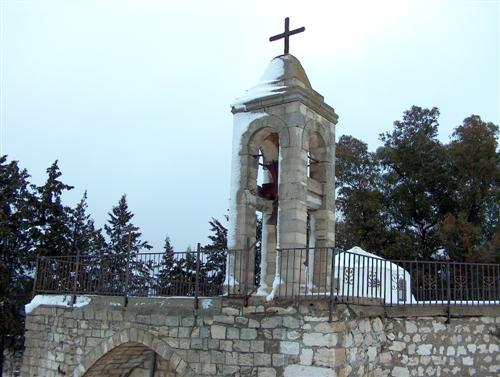
by npr.org — High above the Mediterranean Sea, up a mountain wreathed in springtime mist and drizzle, is the monastery where the beloved Lebanese St. Charbel is buried. A hermit who died in 1898, Charbel was canonized in 1977. He is revered for his healing miracles among Lebanon’s Christians, who likely number at least a million. In a country where a financial crisis has left health care threadbare and unreliable, many have begun turning to the saint to ward off the coronavirus. “He gives us faith and strength, especially in this time of sickness,” said Elie Badr, standing by the tomb outside the monastery earlier this month. “He is the only cure, in my opinion.”
A museum in the monastery’s crypt exhibits prostheses and calipers — left behind by people who prayed to Charbel and recovered. The monastery itself is nearly 200 years old and follows the traditions of the Lebanese Maronite Order of monks, founded in 1695. Badr wore a mask, kept his distance and held a small bag of mud, which he had just scooped up with a spoon from the grave. He planned to boil it up at home. “St. Charbel instructed that the soil be boiled and drunk as it is a medicine,” he said. He planned to give it to his elderly aunt and mother to drink. His faith in the saint is profound, but he also believes in medical science: he is an X-ray technician in a hospital. “We try as much as we can to help the sick and provide them with services,” he said. “And with the strength of St. Charbel, we are able to do our part.”




![Lebanese Minister of Interior and Municipalities, Mohamed Fehmi, holds a press conference on coronavirus (Covid-19) in Beirut, Lebanon on 22 March 2020. [Hussam Chbaro - Anadolu Agency]](https://i1.wp.com/www.middleeastmonitor.com/wp-content/uploads/2020/03/20200323_2_41498460_53309952.jpg?resize=1200%2C800&quality=85&strip=all&ssl=1)