Khazen

Cities in crisis to defy coronavirus quarantines

img

(MENAFN – Asia Times) TRIPOLI — On the eve of a nationwide Covid-19 lockdown, a group of men blocked off the modern gates of Tripoli, the stretch of highway leading to Lebanon’s second-largest city. It was March 17, and the country’s neglected northern metropolis, which looks out to the Mediterranean and borders Syria, still had not recorded any novel coronavirus cases. The impoverished protesters were incensed the government was threatening their livelihoods with a nationwide lockdown. ‘Someone came to me asking for 1,000 LBP (50 cents) because he can’t even buy bread for his kids. I had a package, so I gave it to him and kept three slices for my own kids. This is where we’re at!? Isn’t it shameful!’ one man cried out in a video filmed on a mobile phone. ‘I swear to God, I saw a guy sell his cooking gas canister to buy milk for his kids!’ A young man, a struggling taxi driver in the city, lambasted the government for waiting a month after the first Covid-19 case was flagged to cut off air travel. ‘If they were smart, they would have shut down the airport from the beginning, because it came from the airport, not the land border,’ he said.

Lebanon’s first cases of coronavirus were citizens flying back from Shiite religious pilgrimages to Iran, with the first positive test result announced February 21. At the time, Iran was not yet a global epicenter for Covid-19 – with less than two dozen cases – but in the three-and-a-half weeks that followed, alarm grew over daily flights from Qom and other Iranian cities. Residents of Tripoli, with its population overwhelmingly Sunni, appeared initially more insulated, but the Beirut-based outbreak has since made its way up the coast and to the mountainous districts above the city. Other cases later arrived via Egypt. On Tuesday, the confirmed cases had risen above 300. ‘The government didn’t act from the beginning. Now they want to fix it and be smart. So they put us in this health lockdown,’ said the taxi driver. ‘But if you want to do a lockdown, you need to give people the means to survive it. Tripoli isn’t Beirut, we’re living day by day.’ ‘They’re saying it’s going to be a 15-day shutdown,’ another man chimed in. ‘How are people supposed to eat if their shops are closed and they don’t have work?’

Read more
Security forces deployed to enforce Lebanon lockdown

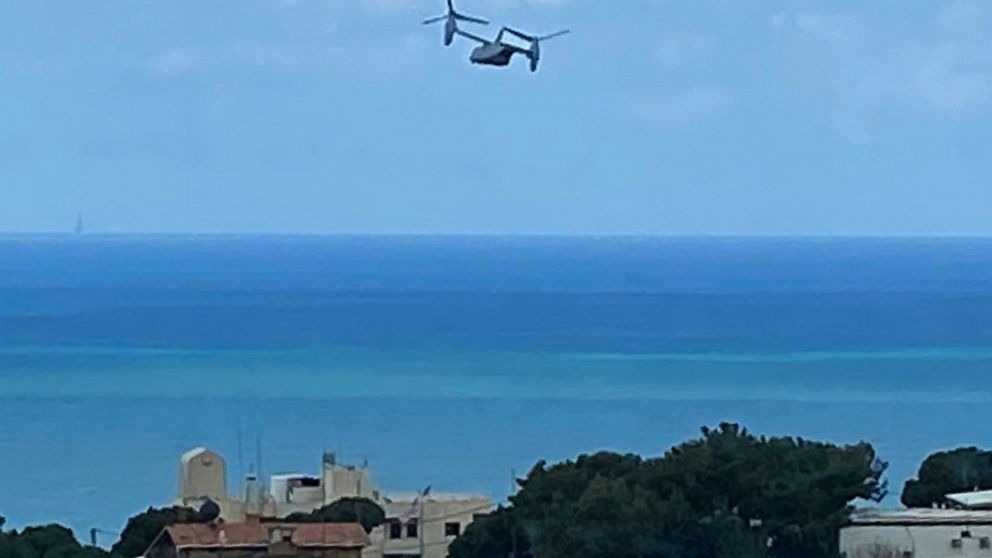
By Emily Lewis BEIRUT saudigazette.com.sa — Lebanon’s military and security forces deployed across the country Sunday after the government announced a clampdown on those not complying with orders aimed at slowing the spread of the novel coronavirus. Army helicopters toured the skies, calling on residents through loudspeakers not to venture out “in the interests of your own safety,” while soldiers set up roadblocks and carried out foot patrols on the streets. The Internal Security Forces said its members had begun taking “stricter measures” to ensure the public was following government orders to stay in their homes except in cases of “extreme necessity.” Those who fail to do so could be met with a fine and imprisonment of up to 3 years.

The ramping up of military and security presence to curb the COVID-19 coronavirus came in response to failure to heed official orders to stay inside, Interior Minister Mohamad Fahmi said. There were 248 confirmed cases of the COVID-19 coronavirus as of Sunday afternoon, according to the Health Ministry. Four people have died from the virus. “The number of people infected with the virus has increased dramatically, and we have moved beyond the stage of containment,” Fahmi said in a televised speech, in which he detailed the measures first announced by Prime Minister Hassan Diab a day earlier. “Any violation that poses a threat to public safety will be suppressed,” Fahmi added. All of the country’s security agencies will coordinate together with municipal authorities to ensure compliance with the rules. People will be able to buy essential goods such as food and medicine, but will be prevented from gathering in groups or spending time outside without a good reason, the minister said.

Read more
Sea and air shipping to Lebanon uninterrupted by virus chaos

by arabnews.com — NAJIA HOUSSARI — BEIRUT: Lebanon remains open to naval and air shipping despite interruptions from the coronavirus (COVID-19) pandemic. Meanwhile, health and security authorities are struggling to prevent the virus from spinning out of control. On Monday, there was a slight increase in the number of new cases, with the Ministry of Health announcing that the total number of infections was 256 cases. Lebanese Minister of Health Dr. Hamad Hassan said: “80 of 160 beds are vacant in Rafik Hariri University Hospital, designated to receive cases of infection by the coronavirus.” Lebanese lawmaker Michel Moawad announced on Monday that the number of infections has increased in the northern district of Zgharta and that “a total lockdown will be imposed on the region.”

Lebanese people are still confining themselves to their homes under the monitoring of the army and security forces, which were put in charge of reporting any violation of the lockdown. Monday saw the first recorded case among UN Interim Force In Lebanon (UNIFIL) forces, with one of its soldiers contracting the virus. He was confined at the UNIFIL hospital in Naqoura. Andrea Tenenti, UNIFIL spokesperson, said that all precautions were taken to prevent the spread of the virus, adding that the soldier was on leave and returned on March 15, and that he was immediately quarantined. Four other soldiers who were in direct contact with the infected soldier were put in confinement. Tests were done on all four, with three testing negative. UNIFIL is still waiting for the result of the fourth soldier.

A meeting was held on Monday in the Port of Beirut to decide measures to prevent the spread of the virus. The port management declared its commitment to providing masks and other protection materials for visitors. Hassan Koraytem, managing director of the Port of Beirut, said: “The port building, offices and entrances controlled by the army, general security, customs and state security will all be sterilized.” He added that “a circular will be issued to all shipping and goods clearing companies not to deploy personnel who are more vulnerable to the disease than others, especially people above 60 with chronic diseases.” On Monday, there was a slight increase in the number of new cases.

Read more
Roundup: Lebanese engineers to develop local ventilator prototype amid COVID-19 spread

Image result for ventilator

by Dana Halawi BEIRUT,(Xinhua) — Lebanese engineers and medical experts are developing local ventilator prototype amid the spread of COVID-19. Hussein Al Haj Hassan, a Lebanese telecom and network engineer, initiates the ventilator prototype project with Hisham Issa, an electrical engineer and Hussein Hamdan, a mechanical engineer. “We are happy to see that our initiative has made a huge impact not only on the personal level but also on the corporate level where we have seen many factories and companies starting to work on such prototypes, which will help Lebanon to get prepared in case the number of patients increase,” Al Haj Hassan said, adding that the product is a critical medical device which needs time to be produced.

The engineer said his team, consisting of 300 people, aims to meet basic requirements with its product by gathering information from medical doctors. Ventilators are machines that help people breathe when they can’t breathe on their own. The machine works by delivering air through a tube in the patient’s windpipe into the lungs. “What we worry about for now are technical challenges. When we succeed with the prototype we will go to the funding phase,” the young engineer said. He noted that that the Industry Ministry showed high interest in and great support for the project. Lebanese officials have voiced their concerns about the shortage in the needed materials to fight against COVID-19 including ventilators, masks and disinfectants. According to the Health Ministry, there exists a total of 1,185 ventilators in Lebanon with 750 of them functionable while the rest need maintenance. Among the 750 functionable ventilators, 500 are currently in use while the rest are stored for COVID-19 emergency cases. Meanwhile, the Association of Lebanese Banks recently allocated six million U.S. dollars for the import of 120 new ventilators. Lebanon’s number of COVID-19 infections has reached 248 so far. Enditem

Read more
Former member of Israel-backed militia killed in Lebanon

By BASSEM MROUE Associated Press — BEIRUT — Unknown assailants shot dead a former member of an Israeli-backed Lebanese militia on Sunday, security officials said. The killing came three days after a jailed Lebanese-American man who belonged to the same militia was released in Beirut and flown to the U.S. Two Lebanese security officials said Antoine Hayek was killed with several bullets from a pistol equipped with a silencer inside his grocery store in the southern village of Mieh Mieh, near the port city of Sidon. They spoke on condition of anonymity because they were not authorized to speak to the media. According to Lebanese media, Hayek had been a warden at a prison run by the South Lebanon Army militia during Israel’s 18-year occupation of southern Lebanon, which ended in 2000. The Lebanese-American man, Amer Fakhoury, had been jailed in Lebanon since September and charged with murder and torture of prisoners at the same SLA-run prison — charges he denied. A Lebanese judge ordered him released last week, saying more than 10 years had passed since the alleged crimes.

Read more
Flying roses: Drone fetes Lebanon mothers despite coronavirus

Three Lebanese students have come up with a new service to celebrate Mother's Day without flouting social distancing restrictions in place due to the novel coronavirus

Jounieh (Lebanon) (AFP) In a quiet Lebanese town under lockdown over the novel coronavirus, a drone buzzed towards a balcony on Saturday to deliver a red rose to a mother grinning in surprise. The COVID-19 pandemic may have put a damper on Mother’s Day in Lebanon this year, but three students have come up with a new service to celebrate the occasion without flouting social distancing restrictions. Down in the street in the coastal town of Jounieh, 18-year-old Christopher Ibrahim texts a teenager who has ordered a flower drop-off for his mother, asking him to bring the family onto the balcony.

He slips a single rose in a ring hanging under the aircraft and it lifts off into the air to carry the flower to its intended recipient. “It’s Mother’s Day and everything’s closed,” said the engineering student, wearing a light blue face mask. For almost a week, most Lebanese have been ordered to remain at home to stem the spread of COVID-19. The airport has closed and all non-essential businesses have been told to shutter. Lebanon has recorded 206 cases of the novel coronavirus so far, and counted four deaths. “I wanted to think of something that would enable people make their mothers happy in the safest way — without there being contact with anyone,” Ibrahim said.

Read more
Lebanese PM Orders Security Forces to Enforce Curfew, Egypt Shuts Mosques over Virus

aawsat.com — Lebanese Prime Minister Hassan Diab asked the security forces on Saturday to enforce stricter measures to keep people at home and prevent gatherings to rein in the coronavirus outbreak. In an address to the nation, Diab said this would include patrols and checkpoints. He called on the Lebanese to go out only if absolutely necessary and warned that the rising number of infections “foreshadows an imminent danger threatening society.” The health ministry recorded on Saturday a 29 percent rise in cases from the day before, bringing the total to 230, Diab said. Four people have died in the past month. Lebanon’s government declared a medical state of emergency earlier this week and ordered most of the country closed, including the airport.

Experts warn the country’s healthcare system is ill-prepared, as a financial crisis and dollar shortages have for months drained it of critical supplies. “The interior ministry and army command … will announce binding plans that will protect the health of the Lebanese,” Diab said on Saturday. “It is a very difficult and tough period. Let us reduce our losses.” For almost a week, most Lebanese have been ordered to remain at home to stem the spread of COVID-19. The airport has closed and all non-essential businesses have been told to shutter.

Egypt shuts mosques

Egypt on Saturday ordered mosques and churches to shut their doors to worshippers in an effort to curb the spread of the coronavirus, after calls for the government to follow steps taken by neighboring countries. Egypt has so far registered 285 confirmed coronavirus cases including eight deaths. The Ministry of Islamic Endowments said it would shut all mosques for two weeks “for the necessity of preserving souls”, but will allow them to broadcast prayer calls through loudspeakers. Egypt has more than 100,000 mosques.

Read more
Coronavirus: Photos, videos show empty Beirut Rafic Hariri airport

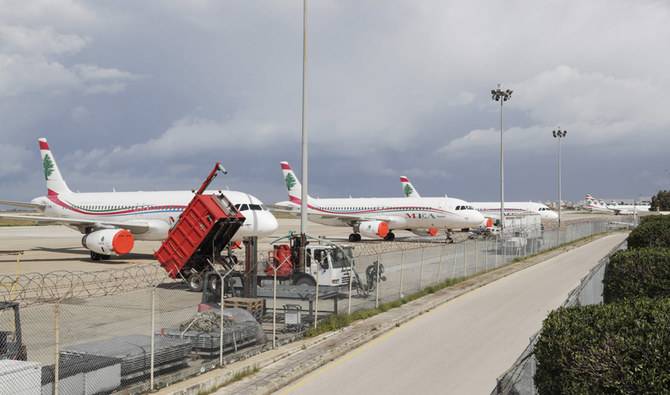
  Photos and videos of Lebanon’s once bustling airport, but now completely empty, surfaced online amid the coronavirus outbreak. Beirut Rafic Hariri International Airport, often criticized for being too crowded to function properly, was shut down on Wednesday as part of the country’s precautionary measures to stop the spread of covid-19. “Beirut airport completely shut […]

Read more
Lebanon summons US ambassador over release of ‘Butcher of Khiam

by middleeasteye.net — Lebanon’s foreign minister summoned the US ambassador on Friday to discuss how a US citizen accused of war crimes was transferred out of the country from the American embassy. Lebanese Foreign Minister Nassif Hitti sought an explanation from Ambassador Dorothy Shea on the “circumstances leading Amer Fakhoury out of the American embassy in Awkar, and out of Lebanon,” the country’s official news agency NNA said. Fakhoury had taken refuge in the embassy on Monday, after a military court dropped charges of killing and torturing detainees at Khiam Prison during the Israeli occupation before 2000. Before Israel’s withdrawal from Lebanon in 2000, Fakhoury had served at the Israeli-backed Khiam Prison, where former detainees say he was involved in torture. He was known as the “Butcher of Khiam,” but his family denies that he dealt directly with prisoners.

The notorious detention facility was run by the South Lebanon Army, a pro-Israel militia, in coordination with the Israeli military. Fakhoury fled Lebanon in 2000 and eventually settled in New Hampshire, where he became an American citizen. He was arrested in Lebanon last September after returning to visit the country. US legislators had been ramping up pressure for Fakhoury’s release. Last month, senators introduced a bipartisan bill to impose sanctions on officials involved in his imprisonment. Amid the mounting pressure, Fakhoury, who suffers from cancer, was cleared of all charges because his supposed crimes occurred decades ago – beyond Lebanon’s 10-year statute of limitations on torture. US President Donald Trump thanked the Lebanese government for securing his release, but many officials in Beirut insisted that there was no deal with Washington. Still, advocates of former prisoners remained hopeful, as a judge imposed a travel ban on Fakhoury.

Read more
In coronavirus lockdown, Lebanese banks turn off dollar tap

Lebanon's central bank is seen closed, after the government declared a medical state of emergency as part of the preventive measures against the spread of coronavirus disease (COVID-19) [Mohamed Azakir/Reuters]

by reuters — Since Lebanon was placed on lockdown to curb the spread of coronavirus, cash-strapped banks have cut access to dollars for depositors already separated from much of their savings by months of tightening controls. The health ministry has recorded 163 infections from coronavirus so far, and experts warn Lebanon’s healthcare system may be ill-prepared, as dollar shortages have for months drained it of critical supplies. The outbreak has compounded Lebanon’s woes, coming after it declared that it could not pay its hefty debt obligations and needs foreign currency reserves for key imports.Lebanese Prime Minister Hassan Diab earlier this month said that the country will seek to restructure its massive debt as currency reserves dwindle amid an acute financial crisis. Lebanon’s economic troubles have weakened the local currency, resulting in shuttered businesses, job losses and informal capital controls from banks severely restricting foreign exchange withdrawals and transfers abroad. Lebanon’s cabinet exempted banks from closing when declaring the lockdown, saying they could maintain daily operations “at a minimum level”, without specifying the ground rules.

Read more