Khazen

Mideast airlines lose $7B as airports shut to combat virus

DUBAI, United Arab Emirates (AP) — Seven Middle Eastern countries have suspended all commercial flights due to a fast-spreading new virus as the aviation industry’s largest trade association announced Thursday that airlines in the region have already lost more than $7 billion in revenue. The International Air Transport Association, which represents around 290 airlines worldwide, said the travel restrictions that countries have imposed to slow down the spread of the virus “have more far-reaching implications than anything we have seen before.” In the Middle East alone, 16,000 passenger flights have been cancelled since the end of January. The financial losses translate into hundreds of thousands of jobs at risk, IATA said. The Middle East has some 20,000 cases of the virus, with most cases in Iran or linked to travel from Iran. The virus killed another 149 people in the past 24 hours in Iran, pushing the death toll there to 1,284 amid over 18,000 confirmed cases.

Already, major carriers like Emirates have urged pilots and cabin crew to take unpaid leave. Reports have emerged that Qatar Airways laid off several hundred employees. The airline did not immediately respond to a request for comment. Job losses in the Middle East have especially far-reaching consequences to the millions of foreign workers who send remittances back home to families in India, Pakistan, the Philippines and eastern European countries. Gulf states like Qatar and the United Arab Emirates rely heavily on foreigners to work as airport support staff, pilots, cleaners and cabin crew. “A lot of jobs are at risk, economies of the nations are being impacted and airline business in the Middle East is taking a bit hit,” Muhammad Albakri, IATA’s regional vice president for Africa and the Middle East, said in a phone conference with reporters. “We are suffering, we are struggling. We are bleeding,” he said in his most urgent appeal yet to governments to step in and urgently help many of these state-owned airlines by cutting taxes and offering direct financial assistance. Late on Wednesday, the last commercial flights arrived in Egypt and Lebanon before a lockdown took place at midnight. They were the latest two countries in the Middle East to shut down airports and suspend all passenger flights. Saudi Arabia, Iraq, Jordan, Tunisia and Morocco had already imposed bans on flights.

Read more
Trump thanks Lebanese govt for help “freeing” Fakhoury

by dailystar.com.lb — BEIRUT: U.S. President Donald Trump Thursday thanked the Lebanese government for helping to return the notorious Israeli-linked former commader and prison governor Amer Fakhoury to the U.S. “Fakhoury is on his way back to the United States after being imprisoned in Lebanon since September 2019 … We are very grateful to the Lebanese government for working with us and we are very proud of his family,” Trump said. Fakhoury was aquitted Monday of charges including torture, murder, attempted murder of inmates, and kidnapping of thousands of Lebanese citizens in south Lebanon’s Khiam prison – a facility he oversaw between 1985 and 2000. At least 10 people died at the prison during Fakhoury’s tenure at Khiam.

Read more
Lebanese turn to distance learning amid coronavirus disruptions

by executive-magazine.com — Eva Hashem — We are in the midst of a global pandemic. The novel coronavirus that has swept across the globe is having far reaching ramifications for our health systems and for the global economy. For Lebanese students, though among the demographic least likely to suffer severe health consequences from contracting COVID-19, the impact has been immediate and detrimental to a school year already besought with difficulties. Some institutions in Lebanon had sent students home before the Ministry of Education and Higher Education made the decision to close schools and universities on February 28 until March 9, a decision that has since been expanded into a country-wide lockdown until March 29. Lebanese students who were already in catch-up mode from the school disruptions at the height of the protests last year are now facing further disruptions, cancelled exams, and increasingly uncertain futures.

This crisis requires drastic measures. In order to slow the spread of the virus and flatten the curve (keeping cases at a manageable level so not to overwhelm healthcare systems) the Lebanese government has asked Lebanese to stay at home where possible. But these measures, while necessary, are also creating a crisis for our education system. Questions administers, teachers, students, and parents are now facing are those over the fate of this academic year, of standardized tests, and of the viability of our current education system in the long run should pandemics should as COVID-19 become more frequent occurrences. Comparatively speaking, Lebanese schools and universities have reacted quickly to this crisis and the need to ensure that students continue to learn and progress from home. The answer, at least as a short term measure to ensure continuity and stability in Lebanese education for all learners amid limited resources, was distance learning. Across Lebanon, stakeholders and school and university directors have instructed their teaching staff (supervisors, coordinators, and instructors) to swiftly activate an online learning system to connect institutions to parents and students through educational platforms.

Read more
A Rare Glimpse Into Lebanon’s $30 Billion Restructuring Plan

A Rare Glimpse Into Lebanon’s $30 Billion Restructuring Plan

by finance.yahoo.com — Marton Eder and Dana Khraiche —Sovereign bond restructurings are rarely smooth. Lebanon’s looks like it will be particularly rocky. The rules underpinning the nation’s looming debt overhaul may complicate efforts to gather enough support to change the terms of its bonds. At the same time, they could protect the country from some of the issues that left Argentina with lengthy court battles. So say Mark Weidemaier and Mitu Gulati, law professors at the University of North Carolina and Duke University, who published online reports about the nation’s $30 billion of international bonds after reviewing the detailed terms laid out in the Fiscal Agency Agreement. That document has only been available to bondholders at the office of Lebanon’s fiscal agent in Luxembourg. “Lebanon’s FAA explicitly allows it to do what got Argentina into trouble,” they said in a post on the Creditslips academic blog. The terms make it “more difficult for holdouts to complain when the government pays restructuring participants (and everyone else) while leaving holdouts with nothing,” they said.

Pari Passu: The so-called pari-passu clauses, used to guarantee equal treatment of creditors, may be a rare positive element for Lebanon in a revamp fraught with difficulties. More stringent terms in Argentina’s case left it battling holdouts in court for more than a decade. Markets have already priced in the difficulties. Most dollar bonds are trading below 25 cents on the dollar, indicating losses of more than 75% on the face value of notes. Lebanon’s foreign-currency credit rating was cut to restricted default by Fitch Ratings on Wednesday.

Read more
Lebanon faces coronavirus shutdown

BEIRUT (Reuters) – Beirut’s usually congested streets were largely free of cars and pedestrians stayed away from its seafront Corniche as government measures to curb the spread of coronavirus took effect with varying degrees of success on Monday. Police ordered closed several shops that were open in Beirut in violation of the shutdown order, and […]

Read more
WORLD Lebanese judge denied release of Lebanese-American accused of torture during war

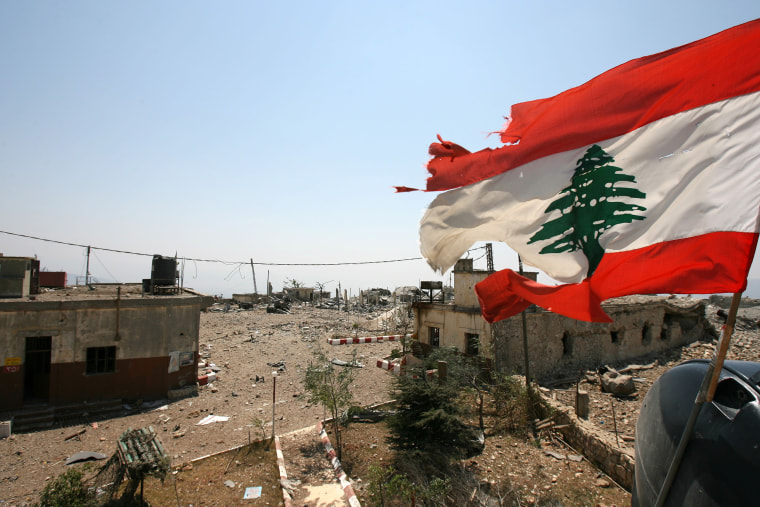
Image: Lebanese flag over Khiam Prison

By The Associated Press BEIRUT— A Lebanese military judge Tuesday appealed a verdict by the military tribunal that ordered the release of a Lebanese-American held since September on charges of working for an Israeli-backed militia two decades ago, state-run National News Agency said. Judge Ghassan Khoury asked the Military Court of Appeals to strike down an earlier ruling in favor of Amer Fakhoury and issue an arrest warrant against him. He asked that Fakhoury be put on trial again on charges of kidnapping, torturing and detaining Lebanese citizens as well as “killing and attempting to kill others,” according to NNA. On Monday, Fakhoury was ordered released because more than 10 years had passed since he allegedly tortured prisoners at a jail run by the so-called South Lebanon Army militia.

Some local media reported that Fakhoury was released but there was no official confirmation. Later on Tuesday, a judge of urgent matters in the southern town of Nabatiyeh issued a ruling preventing Fakhoury from leaving Lebanon for two months. Judge Ahmad Mezher’s decision came after a request filed by former inmates.

Read more
Ways Virus Has Changed Financial, Business Worlds

7 Ways Virus Has Changed Financial, Business Worlds

by newsmax.com — Global markets and businesses big and small opened the week to a landscape seemingly altered by the coronavirus pandemic. A host of retail chains have shut their doors or diminished hours of business. Banks are taking steps to keep cash on hand, lots of it. Markets in Asia, Europe and the U.S. are plunging. Following is a quick look at how the outbreak is impacting the financial and business sector, as well as millions of workers and customers.

FINANCE: The biggest banks in the U.S. moved in unison to conserve cash through the first half of the year. The Financial Services Forum, which represents Bank of America, Bank of New York Mellon, Citigroup, Goldman Sachs, JP Morgan Chase, Morgan Stanley, State Street, and Wells Fargo, said members would suspend stock buybacks for first quarter and the second quarter due to the virus outbreak. In a prepared statement, the group said the decision “is consistent with our collective objective to use our significant capital and liquidity to provide maximum support to individuals, small businesses, and the broader economy through lending and other important services.” The financial sector is among the hardest hit Monday. Shares of Citigroup, Bank of America and JPMorgan plunged as billions in bank valuation evaporated. Citigroup, down 17%, led the way.

Read more
Lebanon military court orders Lebanese-American be released

Image result for fakhoury

by BASSEM MROUE — BEIRUT (AP) — A military tribunal in Beirut on Monday ordered the release of a Lebanese-American held in the country for nearly six months on charges of working for an Israeli-backed militia two decades ago, Lebanon’s state-run news agency said. Amer Fakhoury was ordered released because more than 10 years had passed since he allegedly tortured prisoners at a jail run by the so-called South Lebanon Army, the National News Agency said. Fakhoury, 57, is is a former SLA member who became a U.S. citizen last year, and is now a restaurant owner in Dover, New Hampshire. His case has been closely followed in his home state of New Hampshire, where U.S. Sen. Jeanne Shaheen and other officials have called for imposing sanctions on Lebanon to pressure Beirut to release him. Fakhoury has not been attending questioning sessions in Lebanon over the past few months, after being hospitalized with stage 4 lymphoma. It was not immediately clear if he will be set free, as he’s facing another case filed by former prisoners who say they were tortured by him.

Read more
Federal Reserve cuts rates to zero and launches massive $700 billion quantitative easing program

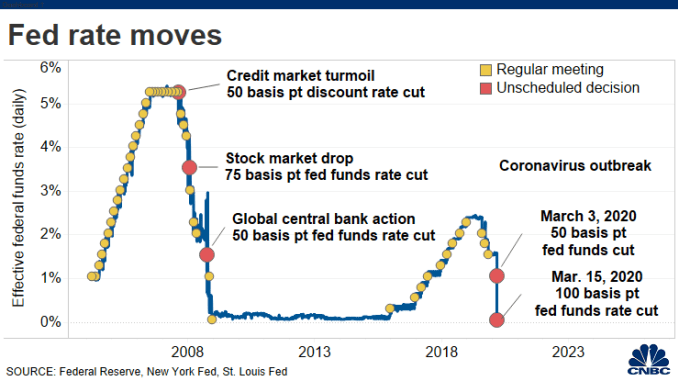
20200303 Fed Rate cuts

by Steve Liesman – cnbc — The Federal Reserve, saying “the coronavirus outbreak has harmed communities and disrupted economic activity in many countries, including the United States,” cut interest rates to essentially zero on Sunday and launched a massive $700 billion quantitative easing program to shelter the economy from the effects of the virus. The new fed funds rate, used as a benchmark both for short-term lending for financial institutions and as a peg to many consumer rates, will now be targeted at 0% to 0.25% down from a previous target range of 1% to 1.25%. Facing highly disrupted financial markets, the Fed also slashed the rate of emergency lending at the discount window for banks by 125 basis points to 0.25%, and lengthened the term of loans to 90 days. Despite the aggressive move, the market’s initial response was negative. Dow futures pointed to a decline of some 1,000 points at the Wall Street open Monday morning. The discount window “plays an important role in supporting the liquidity and stability of the banking system and the effective implementation of monetary policy … [and] supports the smooth flow of credit to households and businesses,” a separate Fed note said. The discount window is part of the Fed’s function as the “lender of last resort” to the banking industry. Institutions can use the window for liquidity needs, though some are reluctant to do as it can indicate they are experiencing financial issues and thus sends a bad message.

Global coordinated action

Read more
Govt. Closes Private, Public Institutions, Shuts Airport from Wednesday – State of Medical Emergency

W460

by naharnet — The government on Sunday declared “general mobilization” over the coronavirus crisis and announced a two-week lockdown of the country. The lockdown measures include asking citizens to “stay home unless it is extremely necessary” and a two-week closure of public and private institutions as well as the airport and the land and sea ports of entry. The airport will be closed from Wednesday until March 29 to all flights except for cargo planes and passenger planes carrying UNIFIL members, diplomatic crews, staff of international organizations and employees of firms linked to oil and gas drilling in Block 4 of Lebanon’s Exclusive Economic Zone.

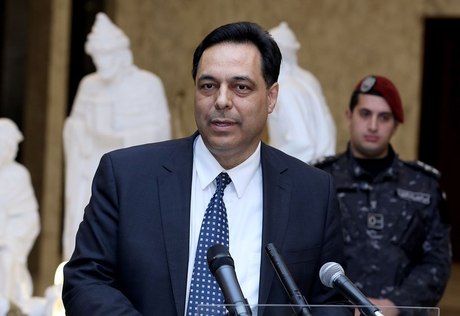
Lebanese citizens, foreign family members and holders of Lebanese residency permits will meanwhile be allowed to return to Lebanon from March 15 until March 18 on the condition that they test negative for coronavirus after taking PCR tests. “This decision does not apply to those coming from countries already under a travel ban: France, Egypt, Syria, Iraq, Germany, Spain, the UK, Italy, Iran, China (including Hong Kong, Macau and Taiwan), and South Korea,” the Cabinet said in a statement issued after an emergency meeting and recited by Information Minister Manal Abdul Samad. The closure of institutions, from March 15 until March 29, will meanwhile exclude public institutions that perform vital tasks and private firms related to “food security” and the medical sector as well as banks, money exchange shops and import and export companies. “We are in a health emergency and the government declares general mobilization until March 29,” Prime Minister Hassan Diab said after the cabinet session. “It is time for cooperation, mobilizing capabilities, volunteering and making initiatives to save others and the Lebanese,” he added.

Read more