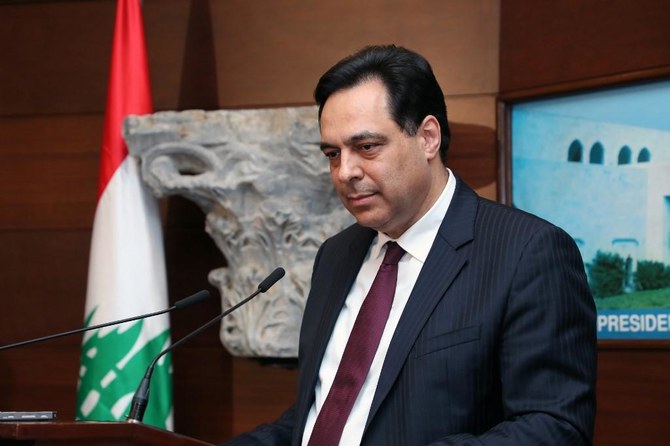
by arabnews.com – NAJIA HOUSSARI – BEIRUT: Meetings between Lebanese officials and a delegation from the International Monetary Fund began on Tuesday in an attempt to find a solution to the nation’s financial crisis. Lebanon asked the IMF six days ago for help to develop an economic rescue plan in light of a $1.2billion Eurobond debt that is due for repayment on March 9. It is the first of three looming debts due between now and June, worth $2.5bn in total, plus an additional $2bn in interest on a $30 billion debt portfolio.
The participants in the meetings will include Lebanese Prime Minister Hassan Diab, central bank Governor Riad Salameh and representatives of the Banking Control Commission of Lebanon. “Lebanon’s economic and financial crisis is being addressed to mitigate its repercussions,” President Michel Aoun told the UK’s Senior Defense Adviser for Middle Eastern Affairs, Lt. Gen. Sir John Lorimer. “The IMF will provide its technical expertise in setting up a plan. “The unstable situation in several Middle Eastern countries in general, and in Syria in particular, has negatively affected Lebanon.” Amal Movement MP Yassin Jaber said: “Lebanon will wait for what the IMF delegation has to say. It will advise Lebanon and will not impose anything. It will then be up to the 20-minister cabinet to decide whether or not to take the advice.” The economic uncertainty has caused chaos in the money markets, and anger at what many see as profiteering by the banks and money changers. They have hiked the exchange rate against the dollar to 2,500 Lebanese pounds, even though the official exchange rate remains at 1,507, and in defiance of an agreement to limit the rate to 2,000 pounds. “The banks’ practices are a form of systematic fraud. They are confiscating the depositors’ money after having (imposed) high interest rates and reaped huge profits,” said MP Mohammad Kabbara.




![Hariri says he received criticism from within his party over the past months and acknowledged 'shortcomings' [Aziz Taher/Reuters]](https://www.aljazeera.com/mritems/imagecache/mbdxxlarge/mritems/Images/2020/2/14/a3915f45a80344ff83fab731be1e69d8_18.jpg)