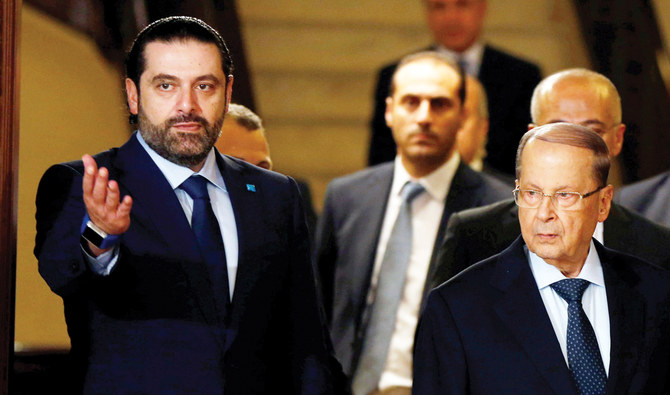
by arabnews.com — BEIRUT: Tensions between Lebanon’s president and former prime minister have flared after they accused each other of being to blame for the turmoil engulfing the country. A recession, massive street protests and a political crisis have created financial and security chaos. Lebanon has had a caretaker government since Oct. 29, when Saad Hariri resigned as prime minister after nearly two weeks of protests. He has clashed with President Michel Aoun about the leadership and composition of a new administration. “The problem with the president is that he is acting as if nothing has happened in the country, and he is trying to act smart by endorsing the demands of the revolution, and my stance is clear, I will not be represented in this government and I will not nominate anyone, nor will I give it a confidence vote,” said Hariri. “Now they are targeting the political legacy of the Hariri family, and they will try to hold it responsible for all the calamities that have befallen the country, but whoever tries to bury Hariri’s legacy will be as if he would be burying himself. Let us see who really stole from the country. I will not cover anyone, and they should do the same thing.”
Aoun responded to Hariri by saying: “Does he envy me for my resilience and calmness in trying to control the situation, or does he want me to act foolishly and badly? We waited for 100 days for him (Hariri) and nothing came out. We waited for someone who kept hesitating. I want, and I do not want, as if someone was playing with a daisy. A government cannot be formed in this manner.”