By Zerina Kapetanovic, Ranveer Chandra, Tusher Chakraborty, and Andrew Nelson –sinews.siam.org —
The global demand for food is expected to increase by 70% by the year 2050 compared to 2010 levels. Achieving this increase in food production has become even more challenging as the resources we rely on are starting to diminish. For instance, water levels are receding, the amount of arable land is decreasing, and climate change has become more imminent. Data driven agriculture techniques can help alleviate the world’s food problem by reducing waste in resources, increasing yield, and ensuring sustainable farming practices. In particular, studies have shown that precision irrigation techniques can increase yield by 45% all the while reducing water intake by 37% [1]. Such results extend to other precision agriculture techniques as well. While the efficacy of data driven agriculture has been demonstrated, these techniques are sparsely adopted in today’s farming practices. This is primarily due to the expensive cost of data collection and the challenging environment of typical farming locations.
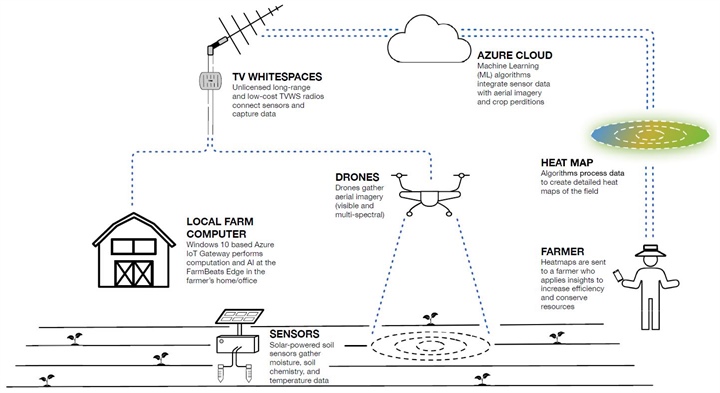
To enable data driven agriculture, a seamless data collection system is needed. In other words, this would be an end-to-end IoT system where sensors collect data, such as soil moisture or temperature, and stream to the cloud to perform data analytics. In turn, providing insights for farmers to enable precision agriculture techniques. For example, soil moisture data can be used to determine where water should be applied and where it is not needed. However, enabling an IoT system for agriculture faces several significant challenges, those being power, connectivity, and overall system cost.
![Millions of Lebanese have been affected by unofficial capital controls imposed on their withdrawals from banks, as the government fears capital flight [File: Jamal Saidi/Reuters]](https://www.aljazeera.com/mritems/imagecache/mbdxxlarge/mritems/Images/2019/11/27/8a776153eaa448f4bd25c86c43f23729_18.jpg)