BEIRUT, (Xinhua) — Lebanese Tourism Minister Avedis Guidanian said on Saturday that the armed attack late in June in Mount Lebanon had a negative impact on tourism. “We did not witness any cancellations for reservations already made by tourists but we also did not see any new reservations after the security incident,” Guidanian was quoted […]
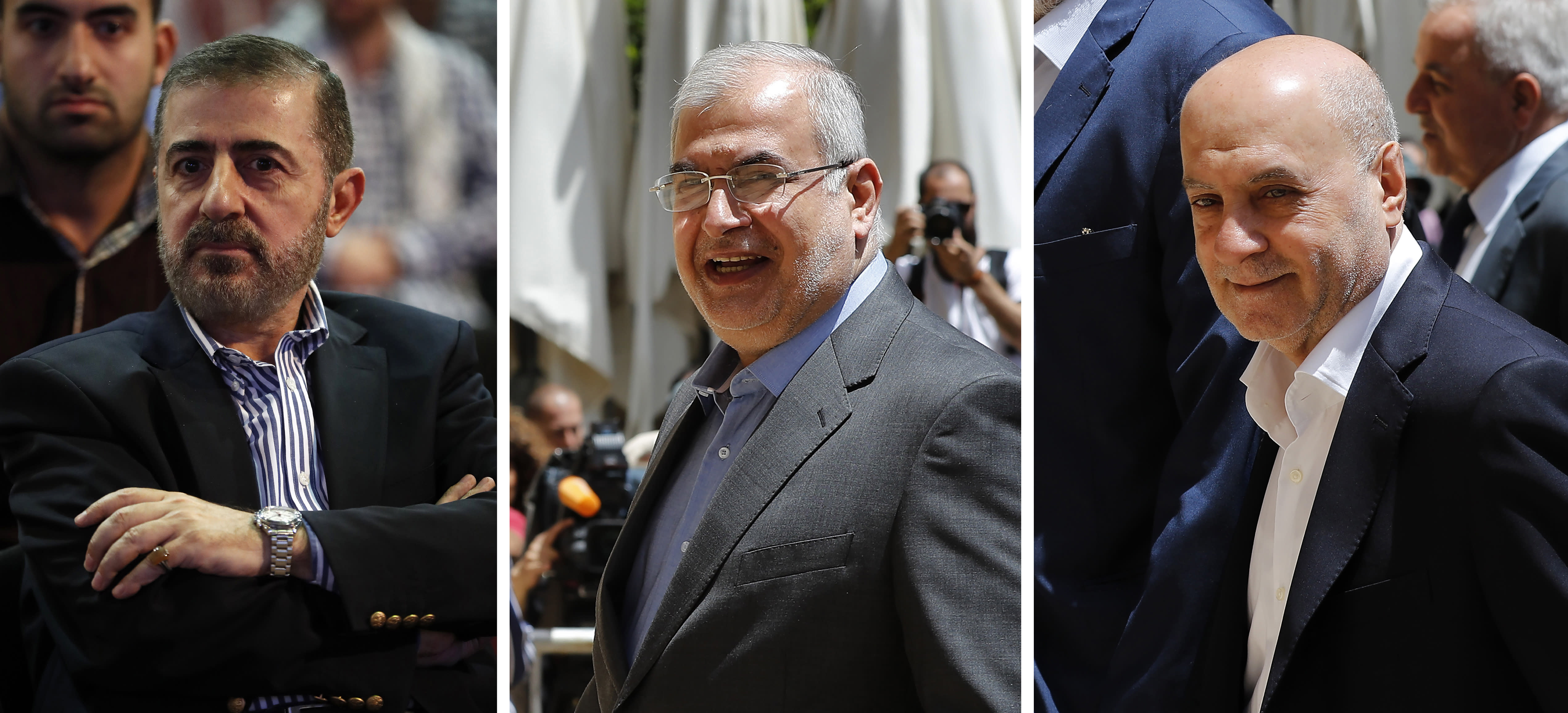
WASHINGTON (AP) — The Treasury Department on Tuesday targeted a Hezbollah security official and two members of Lebanon’s parliament suspected of using their positions to further the aims of the Tehran-backed militia and “bolster Iran’s malign activities.” It’s the first time that the U.S. has targeted lawmakers currently seated in Lebanon’s parliament. Trump administration officials said Treasury’s action makes clear that there is no dividing line between Hezbollah’s political and militant wings. The U.S. designated lawmakers Amin Sherri and Mohammad Raad as well as Hezbollah security official Wafiq Safa under a U.S. executive order, which targets terrorists and those providing support to terrorists or acts of terrorism. “Hezbollah uses its operatives in Lebanon’s parliament to manipulate institutions in support of the terrorist group’s financial and security interests, and to bolster Iran’s malign activities,” said Sigal Mandelker, undersecretary for terrorism and financial intelligence.
Lebanon’s finance minister, Ali Hassan Khalil, denounced the sanctions and said they did nothing to foster financial stability in the country. “There is no justification whatsoever for escalating these sanctions,” he tweeted. Hezbollah lawmaker Ali Fayyad described the U.S. move as “an insult for all the Lebanese people.” He told reporters the Lebanese government must take a stand against the sanctions because they infringe on Lebanese sovereignty. Hezbollah, whose Arabic name translates into “Party of God,” was established by Iran’s Revolutionary Guard during Lebanon’s civil war in the 1980s.

by Khaled Yacoub Oweis –thenational.ae –– Whenever Lebanon was teetering on the financial brink in the 1990s, the country’s then prime minister, the late Rafic Hariri, boarded his private Boeing twin-aisle aircraft and flew to Riyadh. The kingdom would arrange emergency help from the Gulf that staved off the economic pressures, until the next crisis loomed. Lebanon’s already huge public debt at that time has multiplied many times and Hariri’s son Saad is now prime minister, facing a similar problem. Beirut is up against deep financial strain but his father’s release valve is shut. Rafic had both a larger-than-life stature and deep trust in Riyadh and the UAE, but today the regional situation is very different. The elder Hariri also had a strained but sometimes working relationship with Hezbollah – right up to the moment he did not. The group is accused of his 2005 assassination and refuses to hand over four of its members indicted by a UN tribunal for involvement. But Hezbollah’s influence has grown over the years.
The Iran-backed Shiite group has increasingly used its status as the most significant armed actor in Lebanon to undermine its Saudi-backed rivals, intervene unilaterally in Syria and challenge Sunni states elsewhere in the Middle East. Its anti-Saudi rhetoric has helped fan Sunni-Shiite tensions across the region. The group, which has the loyalty of a large bloc in the Lebanese parliament, risks depriving Lebanon, including its own domestic supporters, when a crisis hits that requires the kind of immediate cash that only the major Sunni Gulf states have the means or the potential will to deliver. These states are reluctant to help now, concerned that their money may end up in the hands of Hezbollah, which they largely see as having taken over the Lebanese state, according to sources involved in international efforts to support the country economically.

by Rebecca Collard — PRI’s The World — What finally pushed Firas Yordi to leave Venezuela last year wasn’t the shortage of food and medicine, or the loss of his family’s once-profitable businesses, or rising insecurity. It was a kidnapping attempt on his four-year-old son. In mid-2017, two men on a motorcycle tried to snatch him outside the family’s factory, likely for ransom. “Luckily there were many of us inside and we ran out and stopped them,” Yordi recalls. He sent his family out of the country and looked at options to leave Venezuela.
But unlike most of the 4 million Venezuelans who have sought refuge in neighboring states, Yordi ended up much further afield — in the Lebanese capital, Beirut. He became one of a growing number of Venezuelans of Lebanese descent doing a reverse migration, fleeing Venezuela’s financial crisis and finding refuge in the country of their ancestors. Yordi’s father emigrated from Lebanon to Venezuela 50 years ago after fleeing escalating tensions and financial instability. By the time he arrived, Venezuela already had a sizable and successful Lebanese community.
“I never thought I would be living and working in this country,” Yordi says of Lebanon. “My father came from a very humble background. It was tough times in Lebanon back then, and violence was happening.” A history of Lebanon-Venezuela migration The first Lebanese immigrated to Venezuela in the 1860s. Then, in 1915, the Great Famine of Mount Lebanon struck. As many as 200,000 people died, and tens of thousands more fled what had been the Ottoman Empire. Thousands headed for promised lands of Latin America, where many already family. Then, in the 1960s and 70s, a third wave on Lebanese immigration headed toward South America as Lebanon’s neighbors went to war. Today, more people of Lebanese descent live outside Lebanon than within it, and millions of them are in Latin America. Lebanon’s own population is 4 million. Yordi’s family thrived in Venezuela. They had several mechanic shops and a factory that made beds and mattresses. On his phone, Yordi scrolls through pictures of their life before the crisis — scuba diving, family vacations, weddings and their two-story home with a pool. “Business was well and life was very well for years and years, but then it started to deteriorate,” he says. Things got tough, but the Yordis stayed, not wanting to give up everything they had built. Yordi tears up as he tells about his decision to leave.

by Matt Novak –paleofuture–– Amazon was founded on July 5, 1994, and launched its online store in 1995, letting people buy books from the comfort of their homes. Twenty-five years after its inception, Amazon now sells everything from taco holders shaped like dinosaurs to tongue brushes that humans can use to lick their cats. And you’d have to be living under a rock to not know about Amazon. But what did people think of Amazon in its early days—the days before the tongue brushes? Today we’ve got a sample from the mid-90s before founder Jeff Bezos was a billionaire. In November of 1995, Knight-Ridder distributed an article that was published in newspapers around the country explaining that you can find almost any book at this “Internet store” called Amazon.
Of course, hooking up to the internet was a much more novel experience in 1995. But if you had a connection, and millions of Americans were getting online in the mid-90s, you had access to over 1 million titles. The Knight-Ridder article noted a few things that might be weird to people in the year 2019. First, you could pay by credit card or you could call a toll-free number and give your credit card number over the phone. You could even fax the credit card info if that was your thing. Secondly, shipping was $3 per order plus $0.95 per book. Today, Amazon has free shipping for all orders over $25 and for anyone who subscribes to the company’s Prime membership. But what did people think of this new service on the so-called Information Superhighway? The first thing almost everyone mentioned was the impressively wide selection of books.
BEIRUT, (Xinhua) — Lebanese Economy and Trade Minister Mansour Bteish on Thursday called on the United Arab Emirates (UAE) to invest in productive sectors in Lebanon, the National News Agency reported. “UAE’s investment in productive sectors will contribute to creating job opportunities in the country while increasing exports from Lebanon,” Bteish said during his meeting […]
by nsider.com — An image outage across Facebook, Instagram, and WhatsApp gives a behind-the-scenes look at how Facebook’s AI sees your photos. The outage, which started on Wednesday and affected Facebook’s 1.5 billion-plus daily active users and rendered Instagram all but unusable, stopped social-media images from loading and left in their place descriptions like: “image […]
Beirut (AsiaNews) – The peace plan proposed by Jared Kushner and the US administration, presented as “the deal of the century” for peace between Israelis and Palestinians and throughout the Middle East, is actually “the slap of the century,” this according Maronite Patriarch Card Bechara al-Rahi. During his homily yesterday in Gherfine (Jbeil) during the […]
At 121 months, the U.S. economy is believed to have entered the longest expansion in the nation’s history, pending confirmation from official growth figures. It’s been a gradual climb higher, with the economy growing on average 2.3% each year since June 2009. In that time, unemployment has fallen to near its lowest level in half […]
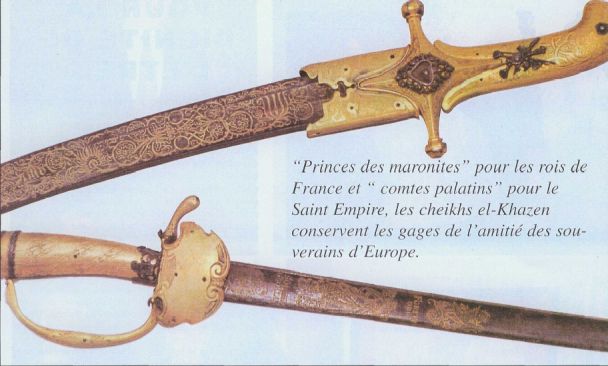


Population Movements to Keserwan - The Khazens and The Maans
ما جاء عن الثورة في المقاطعة الكسروانية
ثورة أهالي كسروان على المشايخ الخوازنة وأسبابها
Origins of the "Prince of Maronite" Title
Growing diversity: the Khazin sheiks and the clergy in the first decades of the 18th century
Historical Members:
Barbar Beik El Khazen [English]
Patriach Toubia Kaiss El Khazen(Biography & Life Part1 Part2) (Arabic)
Patriach Youssef Dargham El Khazen (Cont'd)
Cheikh Bishara Jafal El Khazen
Patriarch Youssef Raji El Khazen
The Martyrs Cheikh Philippe & Cheikh Farid El Khazen
Cheikh Nawfal El Khazen (Consul De France)
Cheikh Hossun El Khazen (Consul De France)
Cheikh Abou-Nawfal El Khazen (Consul De France)
Cheikh Francis Abee Nader & his son Yousef
Cheikh Abou-Kanso El Khazen (Consul De France)
Cheikh Abou Nader El Khazen
Cheikh Chafic El Khazen
Cheikh Keserwan El Khazen
Cheikh Serhal El Khazen [English]
Cheikh Rafiq El Khazen [English]
Cheikh Hanna El Khazen
Cheikha Arzi El Khazen
Marie El Khazen