by lebaneseexaminer.com —Greece is expected to welcome more tourists from Lebanon in 2018, according to travel agencies that participated in the recent ‘Greek Tourism Workshop‘ held in Beirut. Organizers believe the number of Lebanese tourists in Greece is expected to rise by at least 20 percent. “Greek culture has a lot in common with the […]
by businessinsider — The opening of the new US embassy in Jerusalem sparked violent protests in both Gaza and the West Bank on Monday, leaving dozens of Palestinians dead and wounding thousands. Estimates Monday afternoon indicate Israeli forces have killed at least 52 Palestinians and injured more than 1,600. by en.annahar.com — BEIRUT: The […]
by Rabih K lebaneseexaminer.com — Sony Pictures Classics has acquired North and Latin American rights to Lebanese film “Capernaum,” one of the top contenders for the Palme d’Or award, Variety reports. Capernaum tells the story of a young boy who sues his parents for “giving me life in a world of pain and suffering.” The […]

by middleeastmonitor.com Lebanon’s Prime Minister Saad al-Hariri has replaced his chief of staff after his Future Party lost more than a third of its seats in parliamentary elections a week ago. The Future Party won 21 seats, down from the 33 won in the country’s last elections held in 2009. In a post-election speech last week Hariri said the party had been expecting a better result and there had been “gaps” in how it conducted its campaign, for which people would be held responsible. Hariri’s office announced the resignation of Nader al-Hariri, a cousin of the prime minister, late on Saturday. It said Mohamed Mnaimne had replaced him in a temporary capacity.
Despite Future’s losses, Hariri is still the frontrunner to form the next government, as the Sunni Muslim leader with the biggest bloc in parliament. Lebanon’s prime minister has to be a Sunni under its sectarian power sharing system. The Iran-backed Hezbollah group and factions and individuals that support its possession of weapons made significant gains last Sunday, winning more than half the seats in parliament. Hezbollah’s powerful arsenal has been a point of contention in Lebanon for years. The staunchly anti-Hezbollah Lebanese Forces won 15 seats, almost doubling their MPs. The current parliament’s term expires 20 May, and difficult negotiations are expected over the division of positions in the new government.
Hariri Expects to Form Next Lebanese Government
Nabih Berri, the leader of the Amal Movement, who has been the Parliament Speaker since 1992, is likely to be elected to the post for the sixth consecutive time. However, there are still some issues that need to be resolved before the formation of the new government. According to local media, the parliament will convene on May 22 to elect the Parliament Speaker under the presidency of the Lebanese Forces (Phalange) Party and former Deputy Prime Minister Michel Murr. Under the Taif Accord that ended Lebanon’s civil war in 1989, President Michel Aoun will hold talks with Lebanese blocs in parliament to discuss the government formation. According to Taif Accord, the president is elected from among Christians; the prime minister is picked up from among Sunnis and Parliament Speaker will be a Shia. Sources close to Aoun’s Free Patriotic Movement said that Hariri was likely to be chosen to head up the new government. According to the sources, Hariri has the strongest and biggest political bloc among Sunnis.
In a statement, Parliament Speaker Nabih Berri said Hariri was his candidate for premiership, despite his stance on the Ministry of Finance. He said the formation of the new government might be delayed due to the current political issues. Hariri had earlier said the Taif Accord did not stipulate that the finance portfolio be given to a Shia — something Berri had demanded earlier. Samir Geagea, head of Lebanese Forces Party and a former ally of Hariri, said in televised statements that the political agenda had to be set first before Hariri was assigned with forming a government. He asserted that the former government wasn’t that successful. Lebanese political sources said the major issues on the political agenda include shielding Lebanon against political escalations and maintaining security and stability. Hezbollah, with whom Hariri didn’t form an alliance during the election, is expected to oppose Hariri’s premiership.
by AFP — To television viewers, he is the FBI agent who hunts down Al-Qaeda. But in real-life, Ali Soufan is just as extraordinary, a Muslim immigrant who fled war to live the American dream. Born in Lebanon, a child of the West Asian country’s brutal 1975-1990 civil war, he migrated to the U.S. as […]
by reuters — WASHINGTON – The U.S. military is committed to supporting and providing assistance to the Lebanese armed forces, the Pentagon said on Friday, despite the Iran-backed Hezbollah group and its allies making significant gains in parliamentary election. The United States, which has given Lebanon’s army substantial support, classifies the heavily armed Hezbollah as […]
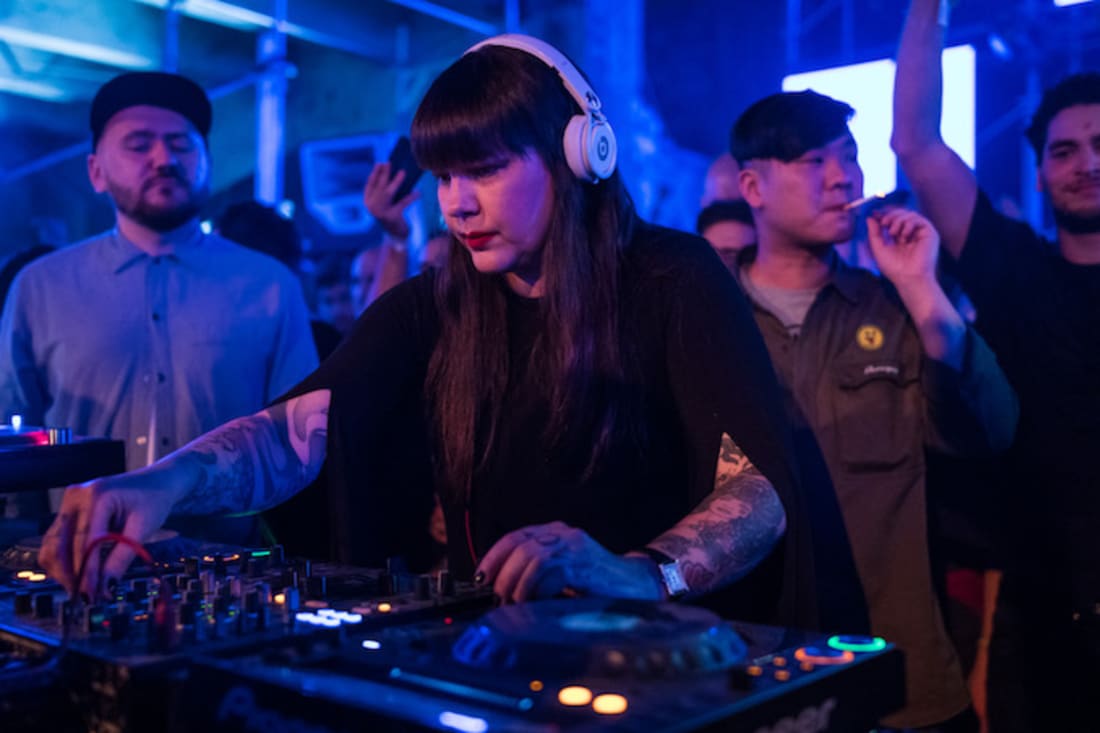
by complex.com JAMES KEITH — Before travelling to Lebanon’s capital of Beirut, I mentioned to some friends I’d be going and, not surprisingly, their reactions became increasingly alarmed the closer it came to my flight. I’d researched as best I could and I could find no reason not to go, but with our government aiming airstrikes at neighbouring Syria, just 50 miles away, I admit I wondered if I was making the right decision. The second I set foot on Lebanese soil, however, I started to feel a bit silly. “There are so many other places that I’ve been that feel sketchy,” says Louis from Chaos In The CBD, “and we haven’t felt that at all while we’ve been here. That’s why travelling is so important, that you experience it for yourself and you’re not fed everything through a television screen.”
Beirut, if you didn’t know, is more-or-less an even mix of Christians and Muslims (both Sunni and Shia), all of whom live side-by-side. Because of that, beautifully grande mosques and ornate churches compete for larger and larger chunks of the skyline. Food-wise, there are even more competing influences — the Mediterranean, North Africa and various areas of the Middle East can all be tasted — as well the true Lebanese originals. Beautifully fresh salads, intensely flavoured meats and gluttonous desserts can be found in literally every direction, on every corner, down every side street. Cafes, restaurants, clubs, shopping malls and apartment blocks seem to crop up daily and the gaps in between those are filled by cranes and scaffolding. Where something new and inviting hasn’t been built, construction workers can be seen remedying that. We didn’t get much time to see that though because we were there for Boiler Room and Ballantine’s True Music: Hybrid Sounds show that, as the name suggest, was a mix of local and international artists as well as a mix of electronic and analogue.

By Heba Kanso BEIRUT(Thomson Reuters Foundation) – In a central Beirut cafe, transgender model Sasha Elijah flips open a paper fan and whips out her new ice cream cone-shaped high-heeled shoes for a potential drag costume. It is a deliberately provocative display of femininity from Sasha, who is on a mission to challenge the stigma and taboo of being transgender in the Middle East through her modelling, drag shows and social media. The 21-year-old’s costumes are as colourful and complex as the journey that led to her coming out as Sasha in Lebanon, a seemingly progressive society that she says remains deeply rooted in religious and political conservatism. “I created Sasha so I can face society … I had to elevate myself, not just the physical self, but with my mindset,” she told the Thomson Reuters Foundation in the capital Beirut. “If I was still the person who I was six years ago, I couldn’t survive, and I couldn’t walk within the society,” said Sasha, who battled low self-confidence and depression before coming out as transgender.
Lebanon will on Saturday launch its second gay pride week in Beirut, after breaking new ground last year by becoming the first Arab country to hold such an event. While the gay rights movement has steadily grown in Beirut, homosexual acts are still punishable by up to a year in prison under Lebanese law – although a judge last year threw that into question when he said homosexuality was not a crime. Gay, lesbian, bisexual and transgender people face persecution in many countries in the region, where some risk fines, jail and even death. Social exclusion and abuse are common. Homosexuality is not explicitly criminalised in Egypt, but LGBT people have long been targeted under laws on debauchery. Dozens of people were detained in a recent crackdown in Egypt when fans attending a rock concert raised a rainbow flag in a rare show of public support for LGBT rights in the conservative Muslim country. Ameen Rhayem, representative of the Arab Foundation for Freedoms and Equality (AFE) which campaigns for gender and LGBT rights, said many in Lebanon still struggled to accept difference. “Lebanon is better than Jordan, Saudi Arabia and Egypt. But people think life in Lebanon for the LGBT community is easy, but to be honest it is not,” said Rhayem. “Yes, Lebanon is more visible with the LGBT community than anybody else in the region, but there are still attacks and arrests of trans people in Lebanon.”
BEIRUT (AP) – Current Parliament speaker Nabih Berri is urging his colleagues to form a new government quickly, following general elections held last week. Parliament Speaker Nabih Berri says Lebanon cannot tolerate any delays because of growing regional tensions and a struggling economy. Parliament Speake Nabih Berri has held the post for more than 25 […]

This article does not necessarily represent khazen.org
middleeasteye.net – In the weeks leading up to Lebanon’s 6 May elections – the first for nine years – much was made of the important role women were supposedly going to play. The numbers were striking: a country where only four women were MPs out of the 128 seats, 86 female candidates were standing for office, an increase of 74 from 2009 when just 12 women ran for parliament. What’s more, the vast majority of them were running outside of the traditional party system, as independent candidates. For many commentators, this surge in women’s participation was a token for change. In the end, however, just six made it to parliament. According to Myriam Sfeir, associate director of the Lebanese American University’s Institute for Women’s Studies in the Arab World, the traditional political system’s hold over the country was just too strong. “People are not ready to relinquish their sectarian affiliations,” she said.
Battle lost before it began
In some ways the battle for greater female participation was lost before the election even began. In 2017, politicians wrangled for weeks over a new law on how to hold elections, resulting in legislation so complex that Prime Minister Saad Hariri blamed it for the poor voter turnout. And while the new law attempted to be all things to all men, it noticeably fell short in one key aspect: adding a quota for women in parliament. At the time, Hariri’s Future Movement was a loud voice backing the introduction of a quota to ensure 30 percent female participation in parliament. Yet the initiative hit fierce resistance from other parties, and the idea was quickly scrapped. But many refuse to be deterred. The women’s ministry, in partnership with the United Nations and European Union, subsequently ran a campaign ahead of the election promoting parity between the sexes.
Across Lebanon the slogan “Half the population, half the parliament” was displayed on billboards, television and social media. In Lebanon’s new parliament, however, just 4.7 percent of its MPs are women. Many blame Lebanon’s new electoral law, which is a mix of proportional list voting – which should have encouraged non-traditional candidates, like women – undermined by a preferential vote, whereby the voter chooses their favourite personality on the list to give that candidate priority over others. As a result, said Ammar Abboud, an expert in electoral law and member of the Lebanese Association for Democratic Elections, hopes that a greater number of candidates would translate into a greater number of MPs were misplaced. “With the preferential vote, members of the same list find themselves competing against each other. To minimise their losses, some candidates put women on their lists precisely because they were less likely to get preferential votes,” Abboud said.

Population Movements to Keserwan - The Khazens and The Maans
ما جاء عن الثورة في المقاطعة الكسروانية
ثورة أهالي كسروان على المشايخ الخوازنة وأسبابها
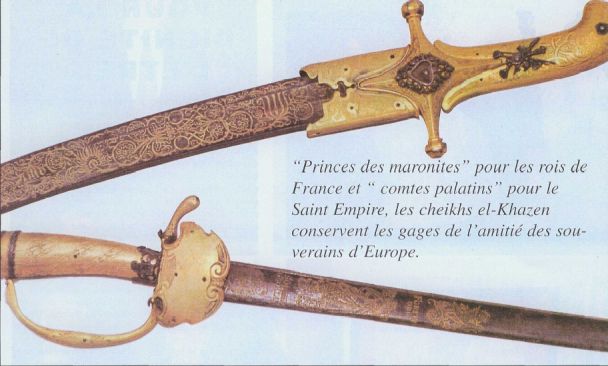
Origins of the "Prince of Maronite" Title
Growing diversity: the Khazin sheiks and the clergy in the first decades of the 18th century
Historical Members:
Barbar Beik El Khazen [English]
Patriach Toubia Kaiss El Khazen(Biography & Life Part1 Part2) (Arabic)
Patriach Youssef Dargham El Khazen (Cont'd)
Cheikh Bishara Jafal El Khazen
Patriarch Youssef Raji El Khazen
The Martyrs Cheikh Philippe & Cheikh Farid El Khazen
Cheikh Nawfal El Khazen (Consul De France)
Cheikh Hossun El Khazen (Consul De France)
Cheikh Abou-Nawfal El Khazen (Consul De France)
Cheikh Francis Abee Nader & his son Yousef
Cheikh Abou-Kanso El Khazen (Consul De France)
Cheikh Abou Nader El Khazen
Cheikh Chafic El Khazen
Cheikh Keserwan El Khazen
Cheikh Serhal El Khazen [English]
Cheikh Rafiq El Khazen [English]
Cheikh Hanna El Khazen
Cheikha Arzi El Khazen
Marie El Khazen